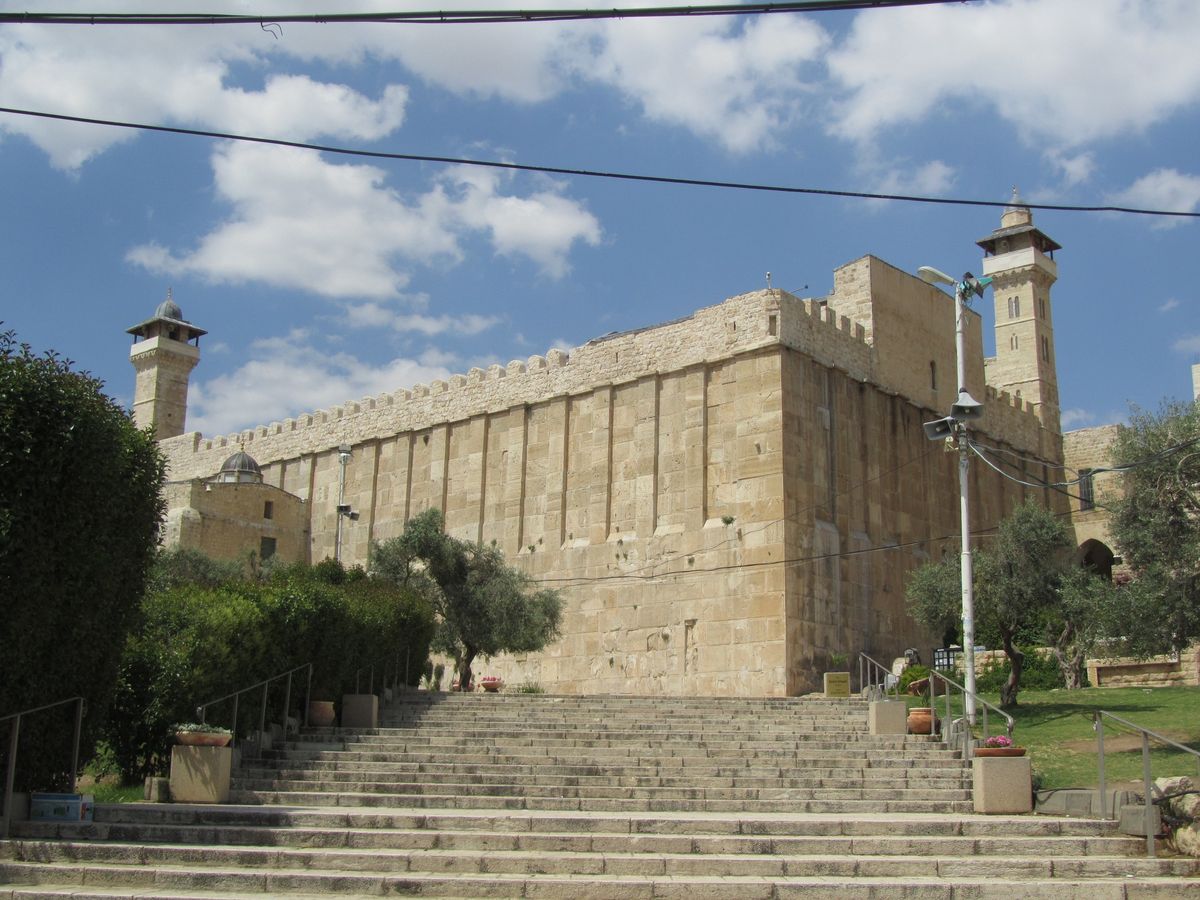
Israel has moved to assume planning authority at the Tomb of the Patriarchs in Hebron, approving a long-delayed project to install a canopy over the Jewish prayer courtyard at the site. The decision, confirmed this week by the Civil Administration, has drawn sharp criticism from the Palestinian Authority, which denounced the move as part of a broader “Judaization” effort.
According to Israeli officials, the authority was transferred from the Hebron municipality after years of repeated refusals to approve the roofing project. The Civil Administration said the decision was taken strictly to advance the construction permit and followed sustained rejections by both the municipality and the Islamic Waqf, which manages the site. Once the planning powers were withdrawn, the Supreme Planning Council approved the project.
Israeli authorities stressed that the move does not alter the status quo at the compound. They said prayer arrangements, time allocations and the division of worship spaces between Jewish and Muslim worshippers will remain unchanged. The administration emphasized that the project is infrastructural in nature and intended to address exposure to the elements in the Jewish prayer area, which has never been roofed, unlike the Muslim section that has been covered since the Crusader period.
The Palestinian Authority rejected that framing. Its foreign ministry accused Israel of bypassing existing legal frameworks and violating the 1997 Hebron Accords, which require Israeli coordination with the Hebron municipality for construction at the site. The PA argued that the transfer of authority represents a unilateral seizure of control aimed at entrenching Israeli dominance over the Ibrahimi Mosque compound.
Hamas issued a similar condemnation, describing the move as a dangerous step toward altering the identity of the site.
The Hebron municipality has petitioned Israel’s High Court of Justice against the transfer of authority, and Israel has been ordered to respond in the coming days. A hearing is expected next week.
The Tomb of the Patriarchs, revered by Jews and Muslims alike as the burial place of biblical figures, has long been a focal point of religious and political tension. Following the 1994 massacre carried out by Baruch Goldstein, the site was divided into separate Jewish and Muslim prayer areas with distinct entrances. Israeli officials note that Jewish worshippers currently have access to only about a third of the structure and require Waqf approval for even minor maintenance.
As with previous infrastructure decisions at the site, Israeli courts have in the past sided with accessibility and safety projects despite Palestinian objections, underscoring how even technical planning issues at the compound quickly become flashpoints in the broader Israeli-Palestinian conflict.