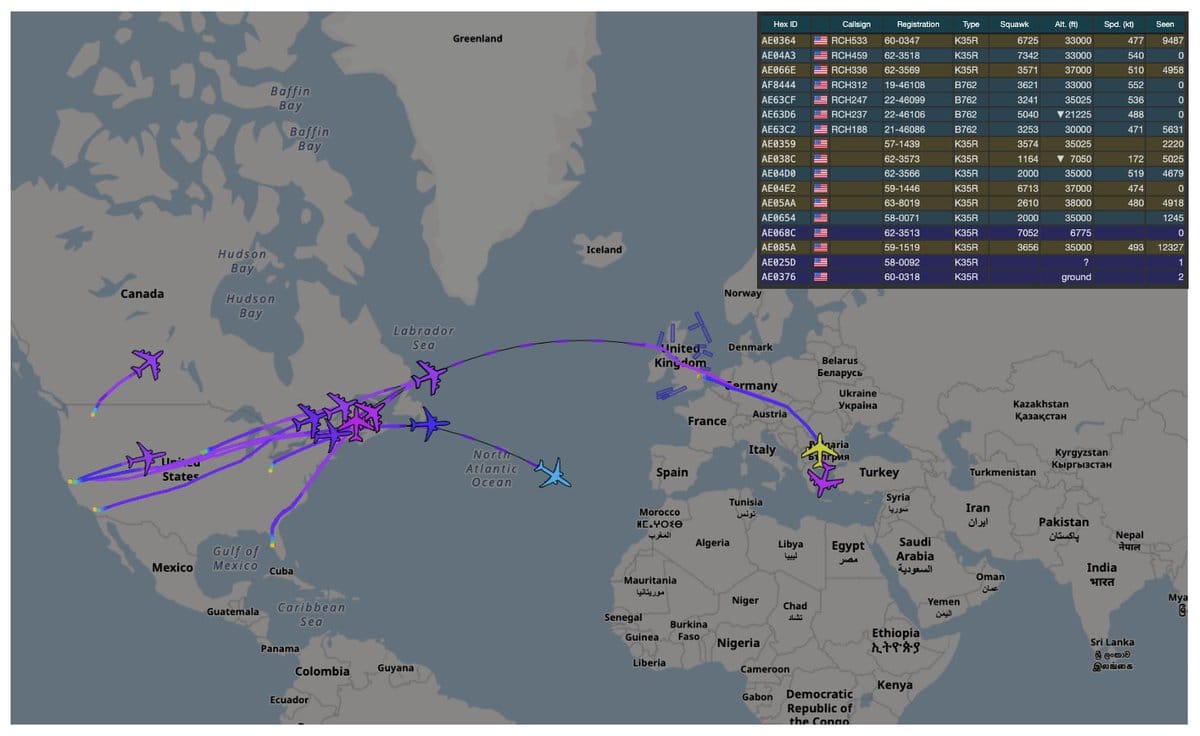
Open-source intelligence and aviation experts have documented an unprecedented wave of movements, including six E-3G Sentry AWACS aircraft, vital for airborne command and control, deploying from U.S. bases in the last 32 hours. Two of these radar-equipped behemoths flew from Elmendorf Air Force Base in Alaska to RAF Mildenhall in the UK, while four originated from Tinker Air Force Base in Oklahoma, landing at Ramstein Air Base in Germany.
These AWACS, with their ability to orchestrate complex air battles and detect threats from afar, are seen as a critical linchpin in any potential confrontation, especially against Iran's drone and missile swarms.
The tanker frenzy is equally alarming: KC-135 Stratotankers and KC-46 Pegasus aircraft have been crisscrossing the Atlantic, staging through Europe to support long-range fighter transits. Sources indicate a surge of over 20 tankers at key hubs like Al Udeid Air Base in Qatar, enabling sustained operations that could stretch from the Persian Gulf to Iranian airspace. meforum.org This aerial refueling backbone is essential for keeping stealth fighters like F-22 Raptors and F-35 Lightning IIs aloft for extended missions, amid reports of 36 F-16s and 12 F-22s already en route to regional bases.
Analysts from defense intelligence firm Janes warn that these "constant flights of tanker and transport aircraft" signal preparations for prolonged, high-intensity operations, far beyond routine exercises.
The U.S. military's actions align with President Donald Trump's vows to dismantle Iran's nuclear ambitions, even as indirect talks in Geneva inch forward on uranium enrichment and ballistic missiles.
Yet, with over 250 cargo flights flooding the region in recent weeks, the buildup evokes memories of past flashpoints, raising fears of a spark that could ignite a wider conflict. Analysts say that this is the biggest US buildup in the region since the Gulf War.
Iranian officials have responded with defiance, deploying naval assets near U.S. carriers and canceling planned exercises after U.S. warnings, underscoring the razor-thin line between diplomacy and disaster.
As negotiators prepare for another round, the skies over the Middle East grow heavier with the weight of potential confrontation.