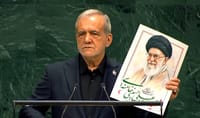
Iranian President Masoud Pezeshkian has issued a defiant message to the international community, asserting that his nation will never abandon its "right" to a nuclear program. Speaking as a second round of high stakes negotiations concludes in Geneva, Pezeshkian emphasized that while Tehran is willing to discuss frameworks for peace, the core of its nuclear development remains non negotiable. This declaration comes at a moment of extreme military tension, with the United States moving dozens of advanced fighter jets into the Middle East to provide a formidable backdrop to the diplomatic efforts. Despite the arrival of these stealth assets and the lingering threat of a military strike, the Iranian leadership is signaling that they will not be intimidated into total nuclear surrender.
Defiance in the Face of Stealth Power
President Pezeshkian’s comments were clearly timed to coincide with a massive shift in the regional military balance. In the last 24 hours, approximately 50 American combat aircraft, including F-35, F-22, and F-16 models, began moving into positions throughout the Middle East. Against this display of overwhelming force, Pezeshkian insisted that Iran’s nuclear ambitions are purely civilian and intended for peaceful purposes. He stated that the country would continue developing its program regardless of international pressure or Western demands for further restrictions. In an attempt to lower the diplomatic temperature, he added that Tehran has no desire to develop nuclear weapons and would allow external parties to verify this claim, provided that Iran’s sovereign rights are respected.
The rhetoric from the presidency is mirrored by even harsher messages from Iran’s Supreme Leader, Ali Khamenei. Khamenei recently sent a direct message to President Donald Trump, asserting that even the most powerful American administration would fail to topple the Islamic Republic. This internal unity between the elected government and the clerical leadership suggests that while the negotiators in Geneva, led by Abbas Araghchi, are reporting "tangible progress," the regime’s bottom line remains firm. A senior Iranian official reinforced this by stating that the success of any deal depends on Washington avoiding "unrealistic demands," specifically noting that Iran’s ballistic missile program and its support for regional allies are entirely off the table.
The B-2 Shadow Over Geneva
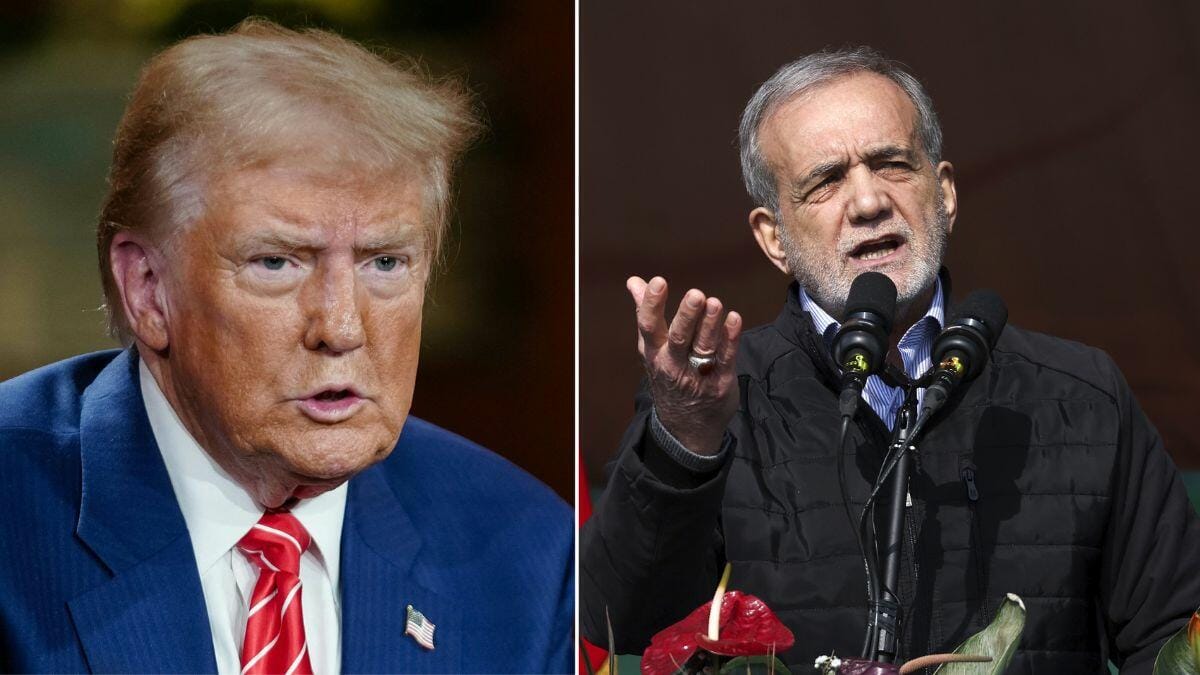
The American side, represented by Steve Witkoff and Jared Kushner, continues to push for a deal that would dismantle the very capabilities Pezeshkian vows to keep. President Trump has signaled his personal involvement in the process, telling reporters that he believes Iran truly wants a deal to avoid the catastrophic consequences of failure. He reminded the world of the recent deployment of B-2 bombers against Iranian nuclear sites, suggesting that while he prefers diplomacy, the military path remains a hair-trigger away. "We could have reached an agreement instead of sending the B-2s to hit their nuclear capability," Trump remarked, indicating that the use of force is a tool he is willing to use again if the two week deadline for a detailed response passes without a breakthrough.
As the Iranian delegation prepares to return to Tehran for consultations, the contrast between the diplomatic "constructive spirit" in Geneva and the defiant language in Tehran remains stark. The regime is attempting to walk a fine line between securing sanctions relief and maintaining its status as a regional power. However, with the US military buildup nearly complete and the White House’s patience nearing its end, Pezeshkian’s vow of "never surrendering" may soon face its ultimate test.