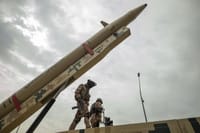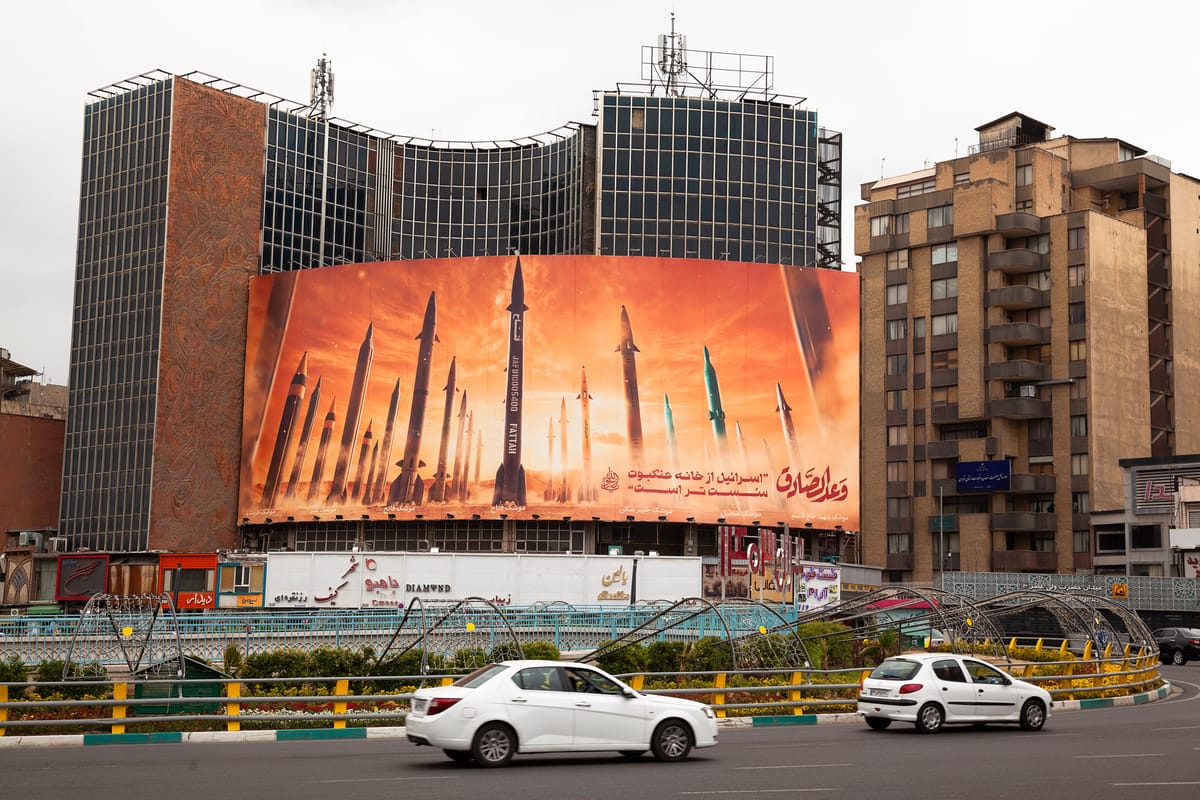
Yuval Steinitz, the Chairman of Rafael Advanced Defense Systems and a former senior cabinet minister, has issued a stark warning regarding the evolving capabilities and desperate strategies of the Iranian regime. Speaking at a security high-tech conference, Steinitz cautioned that the world should be prepared for Iran to extend its reach far beyond the borders of the Middle East. He suggested that if a full-scale war breaks out, Tehran might not limit its aggression to Israel or American regional bases but could instead target major European cities to inflict pain on Western allies. While acknowledging that surprise is an inherent part of military history, Steinitz emphasized that Israel’s technological superiority and its deep coordination with the United States provide a formidable shield against even the most sophisticated hypersonic threats.
The Threat to European Capitals
During the interview, Steinitz addressed the possibility of Iran launching missiles at European soil as a way to expand a local war into a global one. He noted that the Iranian leadership has no illusions about defeating the United States or repeating their failures against Israel, but they remain capable of causing significant damage. "I would not be surprised if they try to strike with missiles beyond the Middle East, they will try to hit European countries, Berlin, Budapest, Vienna," Steinitz remarked. He explained that Iran’s rhetoric suggests an intent to make any future war a worldwide event, using their ballistic arsenal to pressure the international community.
Reflecting on the 12 Day War that occurred last summer, Steinitz described it as the most technological war in human history. He revealed that during the "Am Lavi" operation, Iran originally planned to saturate Israel with a barrage of 1,500 to 2,000 missiles. However, because Israel conducted an active "hunt" on Iranian soil, the regime only managed to launch 550 projectiles. While 50 of those missiles unfortunately struck their targets, Steinitz credited the victory to the science and technology of Israel’s defense industries, which worked in tandem with a fantastic performance by the Air Force.
Revolutionizing Atmospheric Defense
Looking toward future threats, Steinitz identified nuclear weapons as the primary concern, even though Israel has successfully neutralized 90 percent of Iran's nuclear capability. The second most serious threat remains the ballistic missile program, particularly the development of hypersonic missiles and warheads with maneuvering penetration capabilities. To counter these, Rafael is developing two world-class revolutionary technologies. The first is a dedicated hypersonic interceptor designed to maneuver within the atmosphere at incredible speeds to neutralize incoming hypersonic threats.
The second major development is the Rafael laser system, which Steinitz described as a historic global breakthrough. He noted that while no defense is 100 percent foolproof, the goal is to build a system where a surprise attack might cause a blow but never a total disaster or collapse. "This time there is an additional element that was not there in June: we have our big brother, the United States," he added, highlighting the unprecedented level of joint readiness. As the regime in Tehran continues to refine its tactics, Israel's defense giants are racing to ensure that the next era of warfare is defined by laser precision and atmospheric dominance.