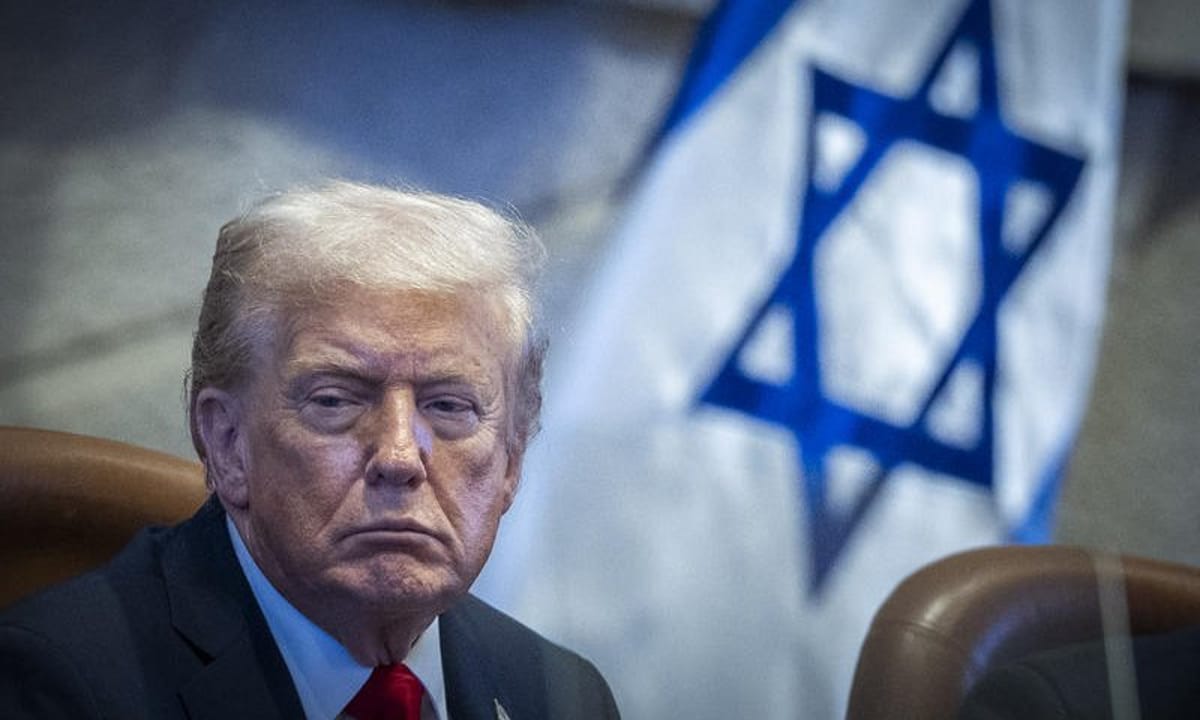
President Donald Trump delivered his initial public reaction to the extensive overnight ballistic missile barrages fired toward regional alliance sectors, utilizing a highly conciliatory tone that has caused deep concern in Israel. Speaking during an unscheduled press availability broadcast by Fox News, the American leader elected to avoid threats of immediate military retaliation, choosing instead to issue a direct appeal for diplomatic re-engagement. The unexpected approach has triggered intense analysis across international defense capitals regarding the willingness of the White House to enforce its stated security red lines.
The American President addressed the foreign leadership directly through the media broadcast, stating that the regime had executed enough launches and that the current sequence of hostility should be considered finished. Trump explicitly stated that the relevant parties must now abandon active combat maneuvers and return to the formal discussion table to resolve outstanding territorial disputes. The statement was delivered while air defense systems were still actively engaging incoming long range targets in the eastern Mediterranean theater.
According to separate reports compiled by political correspondents close to the executive branch, President Trump has continued to insist during private consultations that his diplomatic teams are extraordinarily close to finalizing a comprehensive peace treaty. Sources familiar with the internal deliberations indicate that the administration believes the current kinetic escalation can be leveraged to force a final compromise on nuclear enrichment and regional proxy networks. This perspective has created significant friction with allied defense planners who favor an immediate, heavy military counter offensive to restore deterrence.
The restrained nature of the White House commentary has generated noticeable unease within the domestic political apparatus, where defense experts expressed surprise at the absence of strong, protective rhetoric from the superpower commander. Strategic analysts noted that inviting an adversary back to diplomatic discussions while their ballistic infrastructure is actively deploying warheads could be interpreted as a position of political vulnerability. The State Department, managed by Secretary of State Marco Rubio, has not issued any supplementary clarifications regarding potential changes to current deployment statuses.
International observers emphasize that this low key diplomatic posture represents a calculated gamble by the current administration to avoid a multi front war that could engulf global energy markets. By positioning the United States as a mediator ready to conclude a sweeping grand bargain, the White House is attempting to freeze the immediate cycle of retaliation, though it remains highly uncertain whether regional defense cabinets will comply with the request to refrain from military counter measures.