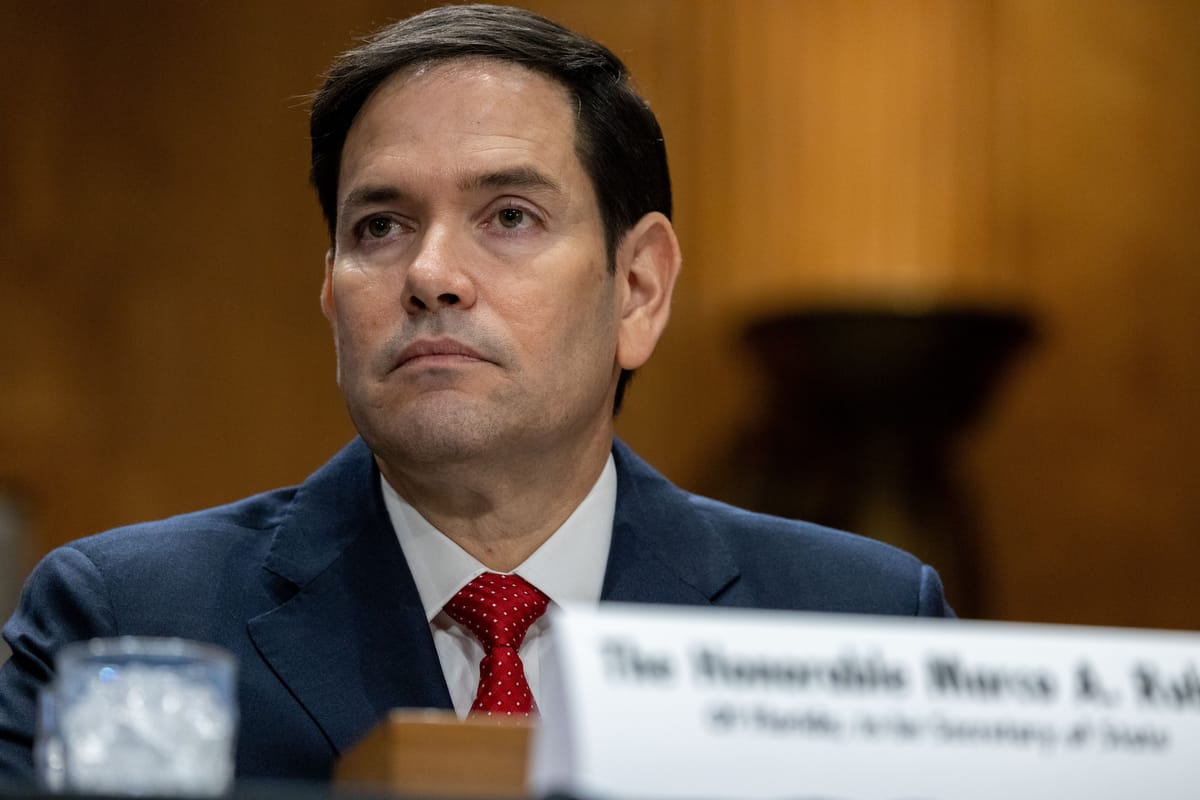
Secretary of State Marco Rubio said Tuesday that he has no plans at this time to run for president, pushing back on speculation about a 2028 bid while stopping short of ruling one out.
Speaking to Colombian broadcaster RCN during a swing through Latin America, Rubio said he does not know what the future holds but has no plans at present. He said he is not a candidate for anything right now and is fully focused on his work, noting that he holds two jobs. Alongside the State Department, Rubio serves as President Donald Trump's interim national security adviser.
He has said much the same privately. A person familiar with the matter told NBC News that Rubio recently told at least one person he does not intend to run in 2028, while stressing that he is enjoying his current role and remains open to future possibilities.
The comments come as Trump's inner circle quietly positions for an open Republican race. Vice President JD Vance is the presumed front-runner, and a person close to him said he plans to weigh a campaign after the November midterms. Rubio has previously said he would not run if Vance does, and people close to both men have described a relationship in which any decision would be discussed between them first.
Rubio has done little visible groundwork. He skipped the Republican midterm convention in Dallas this week, traveling instead to Colombia, Ecuador and Peru, and sources close to him told the Washington Post that he has no campaign apparatus waiting and has cut back on speaking appearances to avoid 2028 questions.
Trump has declined to choose between the two. He has repeatedly praised both, once suggested they run on the same ticket, and told NBC News he would be inclined to endorse a successor but did not want to engage the question now. He described one of them as slightly more diplomatic than the other, without saying which.
For readers in Jerusalem, Rubio's calculation matters less than his continuity. As both secretary of state and national security adviser, he is the central figure in Washington's handling of the war with Iran, and a secretary who is not running for anything is a secretary whose decisions are harder to read as campaign positioning. Whether that holds through a conflict his own colleagues have privately warned could outlast this administration is a separate question.