Open-source intelligence observers are reporting a notable spike in US Air Force transport and logistics aircraft activity along the Europe-to-Middle East air corridor overnight, with some analysts drawing direct comparisons to the documented pre-strike buildup that preceded Operation Epic Fury, the US-Israel strike campaign against Iran that began on February 28, 2026.
The claim, circulating on social media and citing FlightRadar24 tracking data, describes "heavy logistics movement" and "forward basing activity" consistent with pre-operational positioning and explicitly not routine. One observer wrote: "The pattern is consistent with pre-strike positioning. Not routine."
What the February precedent looked like
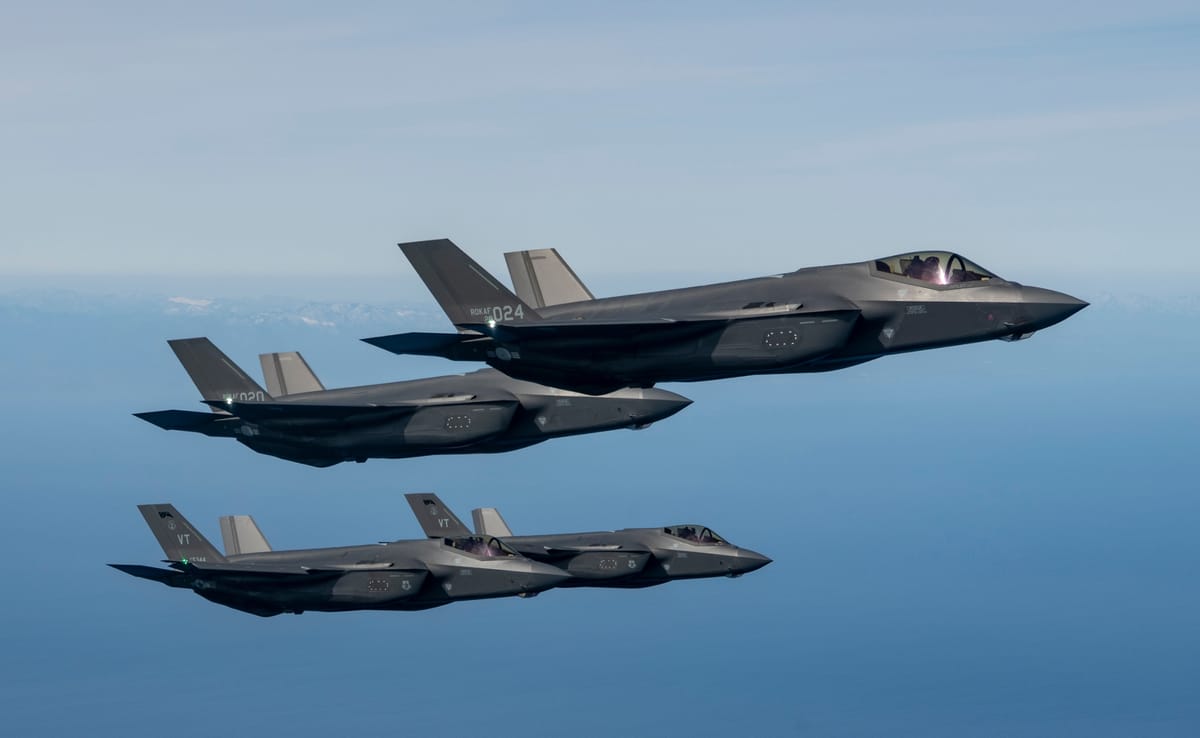
The comparison to February 28 carries weight because that buildup is thoroughly documented. In the 48 to 72 hours before Operation Epic Fury launched, open-source trackers observed an extraordinary surge in USAF activity along precisely this corridor. Flightradar24 itself noted that the top nine most-tracked aircraft on its platform in the days before February 28 were all US military KC-135R Stratotankers. Over 120 aircraft crossed from the US and Europe toward the Middle East within a 48-hour window, including 48 F-16s, 12 F-22 Raptors, three squadrons of F-35As, more than 40 tankers, and at least six E-3G Sentry AWACS aircraft.
"I'm just going to say that they don't forward deploy F-22s to leave them hanging around for ages. For Midnight Hammer there was a four-day gap between the F-22s leaving the US and the operation."
OSINT analyst Oliver Alexander (@OAlexanderDK), February 17, 2026 — days before the February 28 strikes
The War Zone (The Drive) reported that the force mix assembling in February was "exactly the movements we've been expecting in advance of a sustained operation." US Air Force transport aircraft flowing from Ramstein Air Base in Germany to Al Udeid in Qatar and Saudi bases were specifically flagged as "classic staging" by trackers at the time.
Why the current moment raises the same flags
The timing of the reported new spike aligns with a sharp escalation in diplomatic and military signalling. Trump on Monday announced, and then cancelled, a planned strike on Iran scheduled for Tuesday, citing requests from the Gulf states to allow more time for talks. A senior US official told Axios the same day that if Iran does not shift its nuclear position, the US will continue negotiations "through bombs." Trump is expected to convene his national security team in the Situation Room to discuss military options.
US officials have also warned that Trump's peace announcement may itself be a deception operation, a possibility that makes any surge in logistical aircraft movement particularly significant to watch.
What would confirm an imminent strike
Based on the February precedent, defence analysts identified two key indicators that transport and tanker movement is translating into kinetic action: the forward deployment of B-2 Spirit stealth bombers, none of which have been publicly observed moving as of this report, and the evacuation of non-essential US personnel from regional bases. Neither has been confirmed at time of publication. The War Zone noted in February that "until long-range strike aircraft begin moving, there is no clear outward indicator that kinetic action is imminent."
US European Command has previously declined to comment on specific flight movements, telling outlets only that it "routinely hosts transient US military aircraft in accordance with access, basing, and overflight agreements."