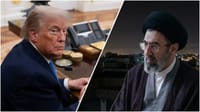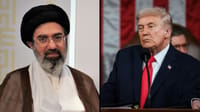
A highly sensitive backchannel communication dispatched by Washington to Tehran has exposed the intense behind the scenes maneuvering aimed at salvaging the fragile nuclear talks, even as heavy kinetic engagements threaten to derail regional diplomacy. United States officials secretly informed the Iranian leadership that Israel does not intend to launch a broader military escalation along its northern border, following an intense cycle of violence that resulted in the deaths of four Israeli servicemen. According to international intelligence networks, this secret diplomatic bridge represents a direct effort by the Trump administration to pacify the clerical regime after a massive wave of retaliatory air strikes temporarily paralyzed the diplomatic roadmap in central Europe.
The immediate crisis erupted following a severe operational incident in the southern Lebanese village of Nabatiyeh, where a hostile projectile achieved a direct hit on a main battle tank operating under the command of the Givati Brigade. The heavy engagement claimed the lives of four soldiers, including the commander of the 52nd Armored Battalion, Lieutenant Colonel Dor Gedalia Ben Simchon. In immediate response to what defense officials characterized as systematic breaches of the temporary truce, the air force launched a sweeping punitive operation, neutralizing over eighty distinct Hezbollah targets, leveling tactical command centers, and eliminating dozens of terrorist operatives inside their bunkers.
Despite the severe nature of the border losses, American mediators sought to contain the fallout by framing the massive air campaign as a finalized response rather than the start of an expanded war. A senior official familiar with the mediation process revealed that the White House explicitly told Iranian intermediaries that Hezbollah violated the ceasefire, Israel responded but agreed to leave things as they are, adding that this message was passed to the Iranians and now the responsibility is in the hands of Hezbollah, who need to stop. Internal defense assessments confirm that the prime minister is not planning further offensive maneuvers, and domestic civilian defense instructions for northern communities remain entirely unchanged.
However, the political leadership in Jerusalem has balanced this temporary restraint with unyielding public rhetoric designed to protect national defense requirements. The prime minister released a stern directive confirming that his instruction is clear, stating that Israel will not tolerate attacks on soldiers or territory, and it will exact a very heavy price from Hezbollah for these attacks. The head of state further reinforced Israel's long term geopolitical positioning by confirming that defense forces will remain deployed within the southern Lebanese security belt for as long as necessary to protect northern border towns, specifically emphasizing the need to dismantle long standing subterranean terror infrastructure built near the historic Beaufort fortress.
This localized friction has produced immediate consequences for the broader geopolitical track, forcing an abrupt pause in the highly anticipated diplomatic summit in Switzerland. High level delegations, including US Vice President J.D. Vance and senior Iranian ministers, canceled their scheduled arrivals after Tehran declared that the Lebanese theater represents a critical axis for the continuation or absolute termination of the nuclear talks. Iranian diplomats have placed an explicit condition on returning to the negotiating table, demanding solid, enforceable guarantees that all hostilities in southern Lebanon will cease permanently in strict accordance with the signed memorandum.
The diplomatic standoff highlights a growing divergence between Washington's executive assertions and the realities on the ground. In a newly published interview, the American president expressed absolute confidence in his ability to dictate regional military movements, claiming that Israel loves him and will do what he says, while asserting that his personal intervention prevented an even larger deployment into Lebanon. Yet, with American F-16 fighter jets conducting continuous aerial refueling patrols over Middle Eastern airspace to maintain a high state of vigilance, the security architecture remains deeply volatile as mediators scramble to bridge the gap between Jerusalem's defensive red lines and Tehran's diplomatic demands.