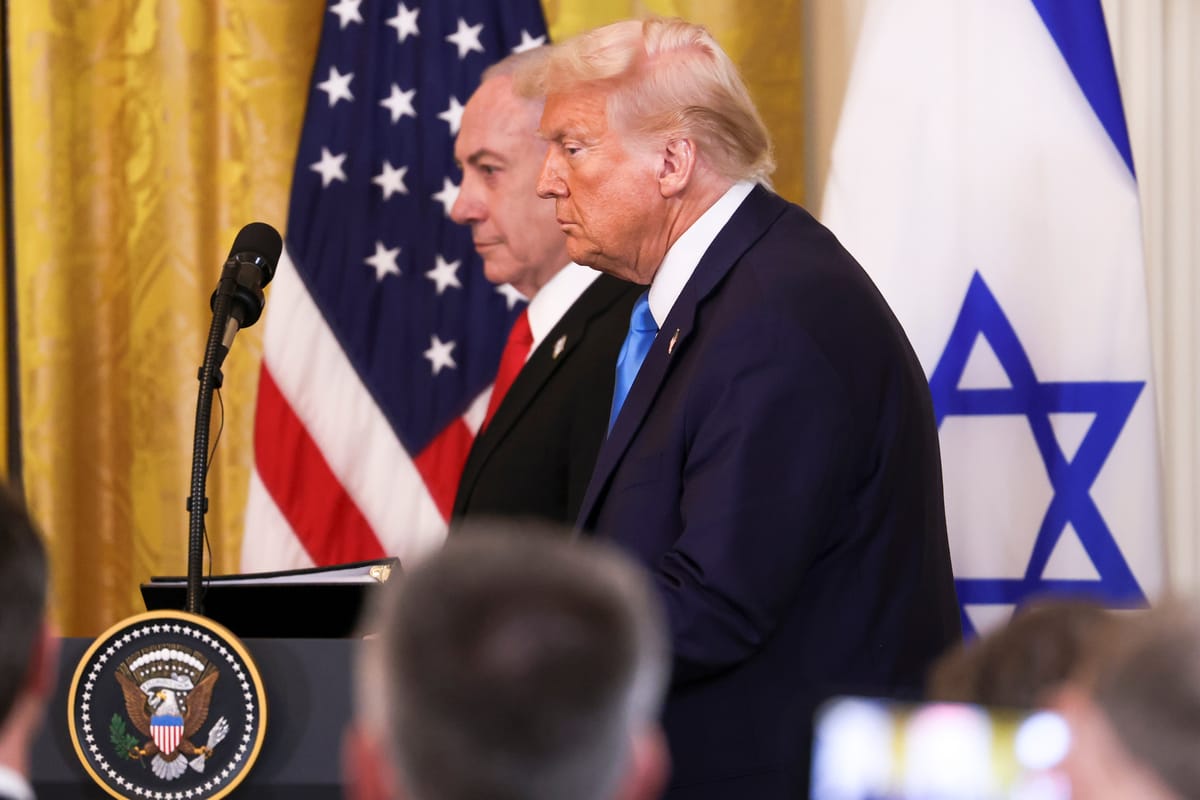
An intricate counter offensive orchestrated by the prime minister's office is currently underway within the United States political ecosystem, seeking to systematically dismantle the emerging diplomatic framework finalized between Washington and Tehran. A senior Israeli intelligence official disclosed to international networks that Jerusalem is actively utilizing conservative media personalities and sympathetic federal lawmakers to pressure the White House, driven by a deep skepticism regarding the geopolitical intentions of the Iranian state. The administration believes that a final, binding treaty will ultimately fail to materialize, operating under the assumption that the clerical regime has zero intention of enforcing verifiable caps on its atomic modernization tracking program.
This clandestine influence campaign began immediately after the American president signed the initial memorandum of understanding, initiating a highly sensitive sixty day implementation window. To sway executive decision making, the prime minister began feeding strategic talking points to prominent right wing commentators in the United States, including influential talk radio host Mark Levin, who subsequently characterized the multilateral text as nonsensical and described the proposed international reconstruction fund for Iran as a slush fund. Simultaneously, state diplomats have attempted to rally traditional defense hawks on Capitol Hill, though this legislative strategy has faced immediate hurdles as key figures, including Republican Senator Lindsey Graham, have publicly defected to support the White House peace initiative.
The geopolitical friction has extended far beyond legislative lobbying, with Jerusalem explicitly informing the American executive branch that Israel does not consider itself bound by any clause requiring an immediate and permanent cessation of the war in Lebanon. This unyielding stance creates a direct strategic impasse with the American president, who has repeatedly asserted that a permanent Lebanese stabilization package is inextricably linked to the broader regional diplomatic settlement. A senior official confirmed that Israel is currently engaged in stubborn negotiations with American diplomats regarding the long term deployment of defense forces, confirming that the state has no intention of retreating from its current operational gains.
To reinforce this defiance, the military high command released a detailed operational map outlining the current disposition of forces along the northern front, verifying that combat teams are currently deployed up to ten kilometers deep inside Lebanese territory. This public display serves as a direct signal that the security establishment retains absolute operational freedom and will reject any dictated withdrawal timelines regardless of international consensus.
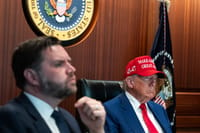
This defiance has provoked an unprecedented public retaliation from the White House, with Vice President J.D. Vance launching a blistering critique against members of the security cabinet who have targeted the administration. Speaking to international journalists, Vance stated that what he is saying, and it really bothers him, is that people within the cabinet have come out against the agreement, and in some cases even attacked the president very personally. Vance delivered a double message to the coalition, stating that Donald J. Trump is currently the only head of state in the world who shows empathy for the State of Israel, and he happens to lead the world's superpower. The vice president added that if he were a member of the cabinet, he probably would not attack his only remaining strong ally.
Vance further emphasized the structural dependency of the allied state, noting that over the past three months, two thirds of the defensive systems protecting the homeland were manufactured by American workers and funded by American taxpayer money. He concluded with a strict warning, stating that anyone who thinks their biggest problem is the president needs to wake up and smell the reality of the situation, confirming that the White House will continue communicating with regional partners on its own terms while pushing for a comprehensive, multi front ceasefire.