End of the Ayatollah
US and Israeli Officials Publicly Back Protestors as Iranian Chaos Spreads: "Courageous"
The United States and Israel have stepped up public support for protesters in Iran as demonstrations continue to spread across Tehran and other major cities, sending an unusually direct message to Iran’s leadership amid a deepening economic and political crisis.

The United States and Israel have stepped up public support for protesters in Iran as demonstrations continue to spread across Tehran and other major cities, sending an unusually direct message to Iran’s leadership amid a deepening economic and political crisis.
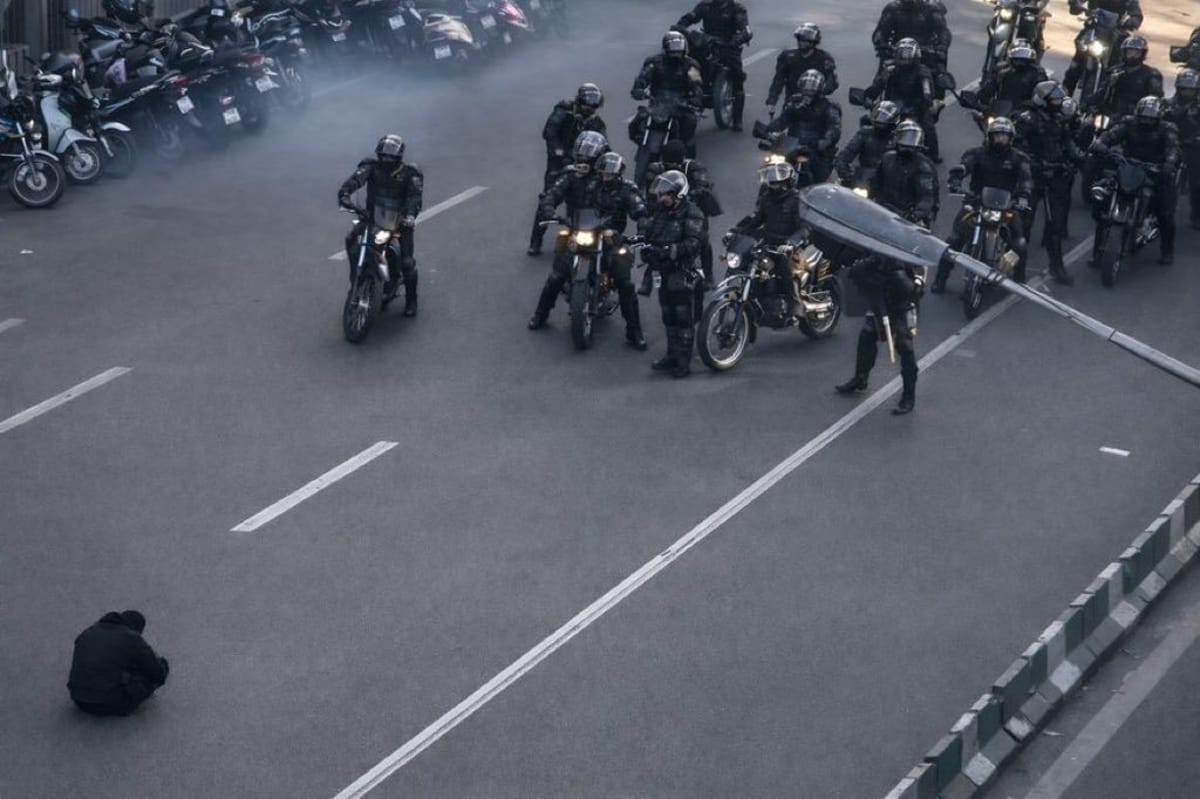
Late Monday, the US State Department released video footage showing students at the University of Tehran chanting pro-freedom slogans at night while surrounded by Iranian security forces on motorcycles. The footage was shared through the department’s Persian-language outreach and framed as evidence of growing resistance among Iran’s younger generation.
“Students at the University of Tehran are showing extraordinary courage,” the State Department said, adding that the chants reflected a generation refusing to remain silent despite intimidation and pressure from security forces. In the video, a student speaker urges calm and solidarity, acknowledging the risks involved while encouraging others to stand firm. Protesters can be heard chanting that they will not accept humiliation, even under threat.

The footage marks a rare moment in which Washington has actively amplified real-time protest activity inside Iran rather than issuing only diplomatic statements. Iranian authorities have not directly responded to the video, though state-linked outlets have previously dismissed student protests as foreign-instigated unrest.
The message from Washington was reinforced by comments from the US ambassador to the United Nations, who voiced explicit support for demonstrators. In a social media post late Monday, he said Iranians “want freedom” and accused the Islamic Republic of bringing its people economic collapse and war. “We stand with Iranians in the streets of Tehran and across the country,” he wrote.
The strong language reflects growing confidence among US officials that the protests are not isolated economic complaints but part of a broader challenge to Iran’s political system. Demonstrations initially sparked by the collapse of the rial have expanded into strikes by bazaar merchants, student protests, and chants openly targeting Supreme Leader Ali Khamenei.
Israel has also taken an increasingly public stance. On Monday, Israel’s minister of innovation, science and technology posted a selfie wearing a “Make Iran Great Again” cap, tagging exiled Iranian crown prince Reza Pahlavi with the caption “Soon.” The post drew swift attention inside Iran and across the region.
While Israeli officials have long expressed support for Iranian opposition movements, the gesture marked one of the clearest public endorsements by a sitting cabinet member of Pahlavi’s push for regime change. In previous remarks, the minister said Israel believes Iranians trust and support the exiled prince as a potential alternative to clerical rule.
The coordinated messaging from Washington and Jerusalem comes as Iran’s government struggles to contain unrest. President Masoud Pezeshkian has ordered dialogue with protest representatives, while security officials and the Revolutionary Guard have blamed “enemy psychological warfare” for exploiting economic hardship. State media have warned that continued protests could threaten national stability.
Despite those warnings, demonstrations have continued, spreading from Tehran’s Grand Bazaar to university campuses and provincial cities. Reports from inside Iran describe tear gas use, arrests, and heavy security deployments, even as protesters grow more openly defiant.
By amplifying protest footage, endorsing demonstrators, and openly aligning with opposition figures, both the United States and Israel are signaling that Iran’s internal unrest is no longer being treated as a purely domestic issue. Instead, it is increasingly framed as a defining moment in the confrontation between the Islamic Republic and its critics, both at home and abroad.
Whether that external support emboldens protesters or hardens Tehran’s response remains uncertain. What is clear is that the protests in Iran have entered a new phase, and Western governments are no longer whispering where they stand.