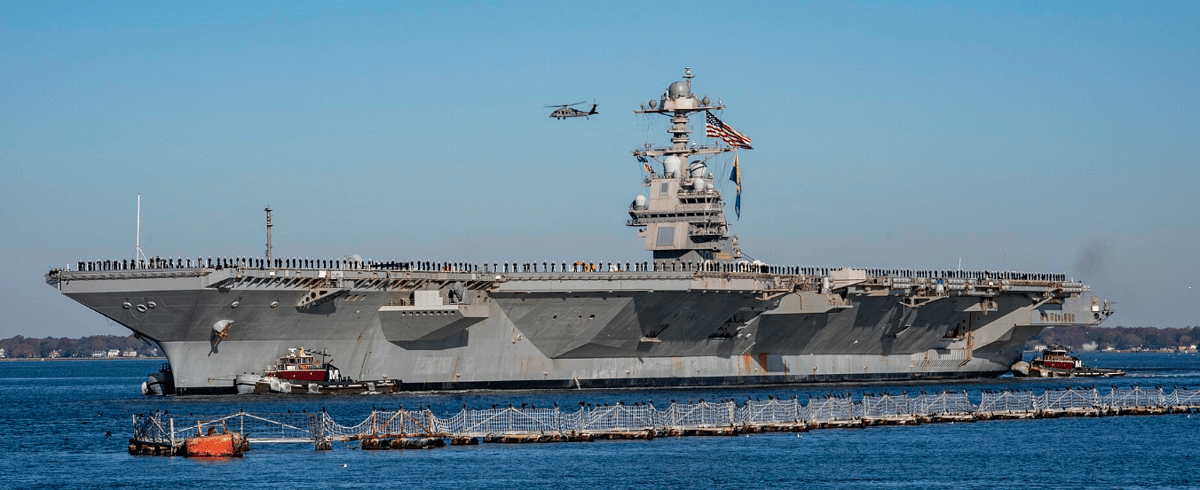
As the USS Gerald R. Ford, the U.S. Navy's newest and largest aircraft carrier, sails into the Mediterranean en route to the Middle East amid escalating tensions with Iran, reports highlight growing concerns over crew morale due to the mission's repeated extensions.
The carrier, which departed Norfolk, Virginia, on June 24, 2025, for what was initially planned as a six-month deployment, has now been at sea for over eight months, approximately 241 days as of February 20, 2026.
If the deployment extends past mid-April, it could surpass the post-Vietnam War record of 294 days at sea, according to U.S. Naval Institute News.
Chief of Naval Operations Adm. Daryl Caudle has publicly expressed reservations about further prolonging the mission, emphasizing the "human element" of such extensions.
"People want to have some type of certainty that they’re going to do a seven-month deployment. When it goes past that, that disrupts lives—it disrupts things like funerals that were planned, marriages that were planned, babies that were planned," Caudle told reporters earlier this month.
He added that he would "push back" against orders that could exacerbate crew strain and delay essential maintenance.
Sailors aboard the Ford have faced additional challenges, including persistent issues with the ship's sewage system, which has led to blocked toilets and breakdowns.
According to internal emails obtained by NPR, hull technicians (HTs) have been working up to 19 hours a day to manage the problems, with one noting that the system is "being mistreated and destroyed by Sailors on a daily basis."
These malfunctions, stemming from design flaws identified in a 2020 Government Accountability Office report, have compounded exhaustion among the 4,600-person crew.
The Ford's redeployment from the Caribbean—where it supported the U.S. operation to capture former Venezuelan leader Nicolás Maduro in January—to the Middle East comes as President Donald Trump weighs military options against Iran.
The carrier will join the USS Abraham Lincoln in the region, bolstering U.S. naval presence amid stalled nuclear talks and Tehran's warnings of unrestricted retaliation.
While no organized protests have been reported, sources indicate significant morale challenges and individual expressions of frustration.
Veterans and commentators, including a former Navy servicemember on social media, have attested to the toll of such extensions, noting impacts on retention and well-being.
The Navy has not commented on specific crew sentiments but acknowledges the broader strains of prolonged deployments.