
Imagine the following scenario.
A nuclear agreement is signed with Iran. Tehran receives money, legitimacy, diplomatic breathing space and a renewed sense that the regime has survived the most dangerous moment it has faced yet.
Then Iran does what Iran has always done best: it converts survival into leverage.
It uses the credit it receives from the agreement to rebuild regional deterrence. It gives Hezbollah a stronger umbrella. It uses quiet in Gaza as a bargaining chip. It turns Lebanon, Gaza, the Gulf and the Strait of Hormuz into one connected strategic theater.
Then comes the next stage.
Israel acts in Lebanon against Hezbollah. Iran responds not by attacking Israel directly, but by threatening the Gulf, pressuring shipping routes, or creating instability near the Strait of Hormuz.
Suddenly, the question in Washington is no longer simply whether Israel has the right to defend itself. The question becomes whether Israel’s actions might endanger the Iran deal, oil prices, regional calm, and America’s new diplomatic architecture. At that point, what does Washington choose?
Does it throw away the deal - or restrain Israel?
That is the danger.
A bad agreement would not simply give Iran time. It could give Iran a new mechanism of influence over American policy.
Tehran could learn to threaten American interests indirectly whenever Israel acts against Iranian proxies.
In that scenario, Iran does not need to become stronger than Israel. It only needs to become more useful to Washington’s regional agenda than Israel’s freedom of action.
Iran has already tried to create a regional equation in which Israeli action in Lebanon affects the entire Gulf. It has already tried to connect Gaza, Hezbollah, the Houthis, Iraq, Syria and the Strait of Hormuz into one strategic map. And more than once, Washington has restrained Israel in order to avoid broader escalation.
For Israel, the nightmare is not only that Iran might one day possess a nuclear weapon. The nightmare is that before that day arrives, Iran will obtain twenty years of survival, money, diplomacy and regional leverage, while Israel is gradually boxed in by the very ally it depends on.
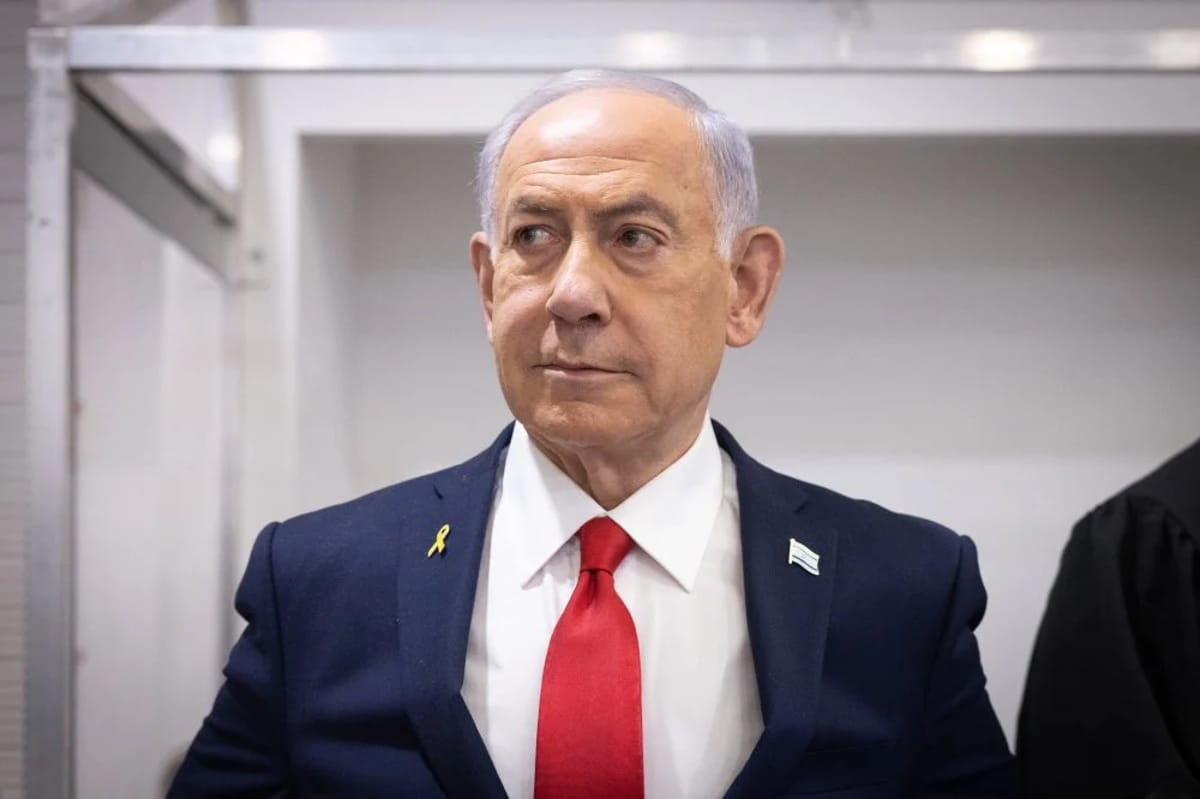
This is why such an agreement could be politically devastating for Benjamin Netanyahu.
Netanyahu built much of his career on the argument that he understood Iran better than anyone else. He rejected the previous nuclear framework, warned the world against Iranian deception, and presented himself as the one Israeli leader capable of stopping the bomb.
If a new agreement is signed, and if Iran remains intact, funded and strategically patient, Netanyahu may not fall in a dramatic act of national rejection. He may fall more quietly - as the leader who delayed the Iranian project for a time, but did not defeat it.
And here lies the deeper Israeli failure. Israeli political culture has become too shallow to seriously discuss the philosophy of compromise. It is trapped between slogans of total victory and excuses for strategic paralysis. It rarely asks what price Israel pays when it neither defeats its enemies nor reaches a durable political settlement.
There is no victory in Lebanon. There is no victory in Gaza. There is no victory over Iran. And if the United States now moves toward an agreement that preserves the Iranian regime while limiting Israel’s ability to act, Netanyahu’s anxiety is easy to understand.
He may be watching the collapse of the central promise of his political life.
Not because Iran defeated Israel in a war.
But because Iran may have learned how to survive long enough, entangle enough fronts, and pressure enough American interests that Israel’s greatest ally begins to see Israeli action not as a necessity — but as a problem.