
Israel is already preparing for the next round against Iran, even as Washington continues to push for de-escalation and a diplomatic arrangement with Tehran.
IDF Chief of Staff Lt. Gen. Eyal Zamir made clear on Tuesday that Israel does not view the recent strike on Iran as the end of the campaign, but rather as a preliminary stage ahead of a potentially much heavier blow.
“The Iranian attempt to dictate equations and change reality will fail,” Zamir said during a visit to a military exercise in northern Israel. “The strike we carried out in Iran was preparation for a much more significant and severe blow. We are prepared to return and deliver another hard and deep strike against Iran.”
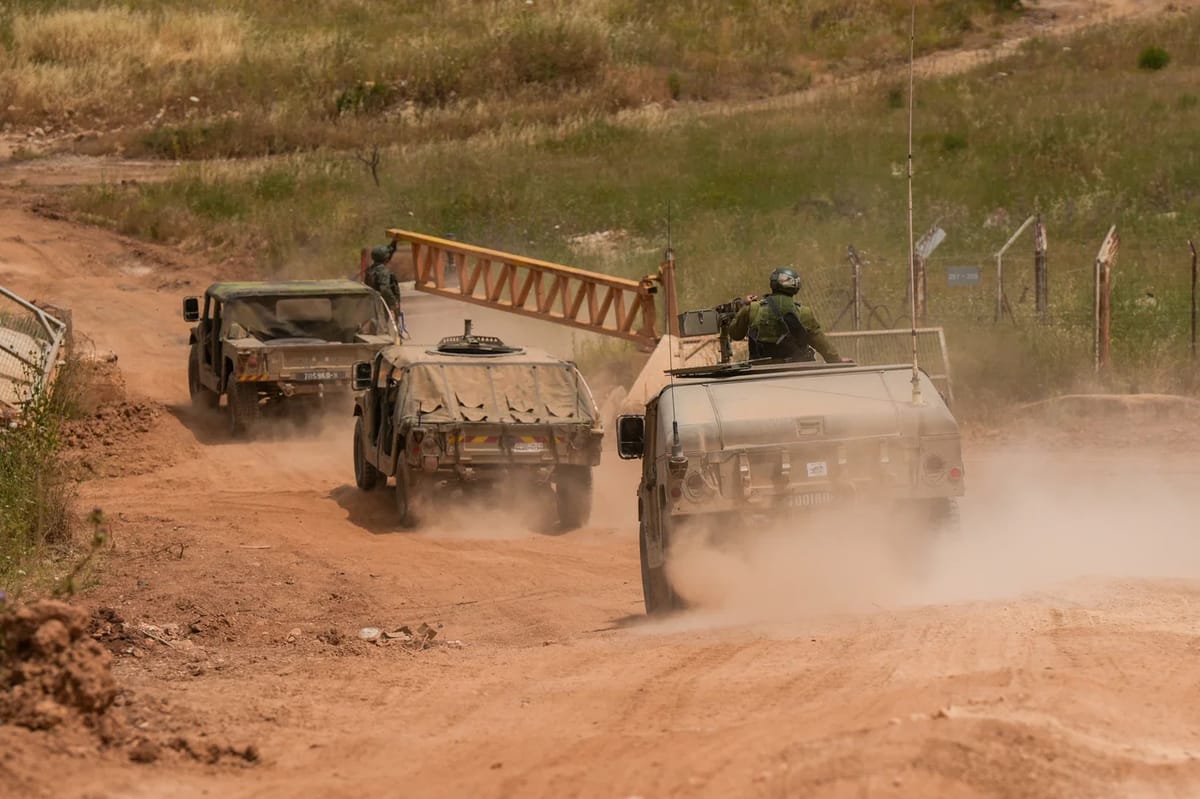
Zamir added that the IDF remains on immediate alert for a return to fighting in Iran, while continuing to strike Hezbollah and defend northern communities.
The message from Israel is clear: Tehran will not be allowed to create a new equation in which every Israeli operation in Lebanon triggers direct Iranian fire. From Israel’s perspective, allowing that equation to stand would tie Jerusalem’s hands in Lebanon and give Iran a veto over Israel’s northern operations.
That is why Israel is now trying to separate the two arenas: Iran and Lebanon. In Lebanon, the Israeli objective is to weaken Hezbollah’s ability to act as an Iranian trigger against Israel. Strategically, Israel wants the Lebanese government — not Hezbollah — to become the address for future arrangements on the northern border.
In recent days, the IDF has continued operations in southern Lebanon, including strikes in and around Tyre. The evacuation of parts of the city, including areas that had previously been seen as relatively protected, has increased pressure inside Lebanon and placed Hezbollah under growing domestic strain.
That pressure is central to Israel’s strategy. The more Lebanese civilians, political leaders, and communities feel the cost of Hezbollah’s decisions, the more difficult it becomes for the organization to operate as a purely Iranian proxy without internal consequences.
At the same time, Israel believes Iran is trying to recover militarily and politically from recent blows. Israeli security officials are watching closely for signs that Tehran is rebuilding its strategic systems, restoring command structures, or preparing another round of escalation.
The United States, meanwhile, is trying to contain the crisis. President Donald Trump has said he expects a deal with Iran, including arrangements over enriched uranium. But in Israel, there is deep skepticism regarding Iranian promises and little confidence that Tehran will voluntarily abandon its strategic ambitions.
For Israel, the coming weeks may therefore be decisive. The goal is not only to respond to immediate threats, but to reshape the regional equation: weaken Hezbollah in Lebanon, prevent Iran from rebuilding its military posture, and make clear that attacks on Israel will not create strategic immunity for Tehran or its proxies.
Zamir’s remarks suggest that Israel sees the current moment not as the end of the confrontation, but as a pause before the next phase.
The game, in other words, is far from over.