
U.S. Secretary of Defense Pete Hegseth confirmed that President Donald Trump is actively seeking a "negotiated settlement" with Iran. Speaking at an event in Maine, Hegseth emphasized that while the U.S. remains prepared for military action, the administration’s ultimate goal is a deal.
"President Trump has been clear," Hegseth stated. "I think it would be a wise choice for them to take him up on that deal. The world saw America's capabilities... peace through strength deterrence in action."
Hegseth’s comments come on the heels of the "June War," a targeted U.S. operation where bombers struck three Iranian nuclear sites. The Secretary touted the precision of the strikes, noting, "We were out of Iran before Iran even knew we were there."
The Hard Line: Disarmament vs. Deterrence
While the White House pushes for a deal, the path to an agreement remains fraught with obstacles. Israeli officials are maintaining a hard-line stance, insisting that any deal must go beyond the nuclear issue to include the complete disarmament or monitored reduction of Iran’s conventional ballistic missile arsenal.
Iran, however, views its missile program as its primary "first line of defense" against potential joint U.S.-Israeli strikes. Aziz Ghazanfari, a high-ranking official in the Islamic Revolutionary Guard Corps (IRGC), warned that U.S. assets in the region remain in the crosshairs should negotiations fail.
Behind the Scenes: Technical Options on the Table
Despite the public rhetoric, analysts suggest that quiet, technical negotiations are underway. Hassan Beheshti-Pour, a veteran observer of Iran’s nuclear dossier, indicates that several "freeze-for-freeze" mechanisms are being discussed:
- Voluntary Suspension: Iran may temporarily suspend enrichment without a full dismantlement of its infrastructure.
- Fuel Banks: The creation of a multinational nuclear fuel bank (possibly in Russia or Kazakhstan) to guarantee Iran's energy supply while curbing proliferation.
- Uranium Dilution: Mohammad Eslami, head of Iran's Atomic Energy Organization, signaled this week that Tehran is ready to dilute its 60% enriched uranium, but only if Washington agrees to lift all crippling economic sanctions.
The Pressure Cooker: Internal Unrest and Sanctions
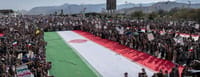
The sudden willingness of Tehran to "play ball" is largely attributed to the desperate situation inside the country. Last month’s bloody riots and protests, sparked by a collapsing economy under the weight of U.S. sanctions, have put the Iranian leadership in a corner.
While the White House has recently toyed with the rhetoric of regime change, the current buildup of a second Carrier Group in the Middle East suggests that the U.S. is prepared to use both the "carrot" of sanctions relief and the "stick" of military force to secure a final agreement.