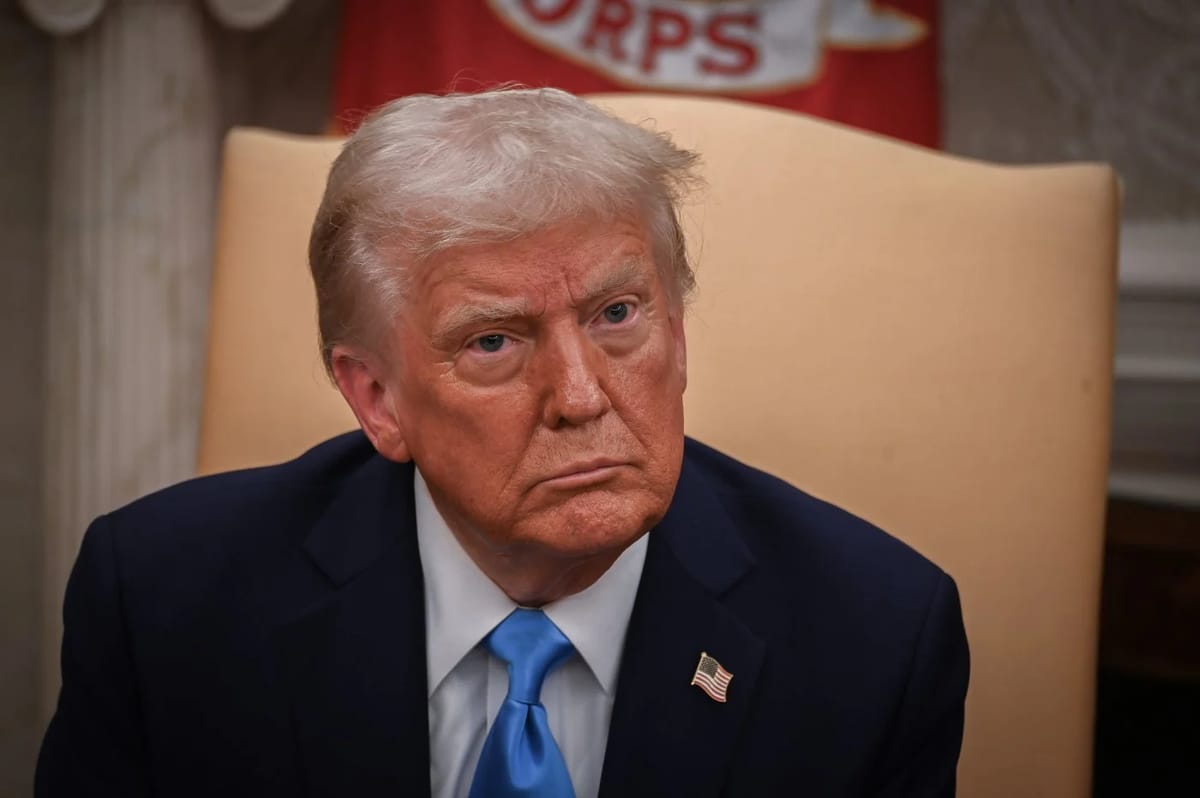
U.S. President Donald Trump announced late Sunday that a deal to end the war between the United States and Iran has been finalized, ordering the reopening of the Strait of Hormuz and the removal of the American naval blockade, while sharply criticizing Prime Minister Benjamin Netanyahu and warning that Israel "wouldn't survive two hours" against a nuclear-armed Iran.
"The Deal with the Islamic Republic of Iran is now complete. Congratulations to all!" Trump wrote on his Truth Social platform. He said he was authorizing "the toll-free opening of the Strait of Hormuz" alongside "the immediate removal of the United States Naval blockade," before declaring: "Ships of the World, start your engines. Let the oil flow!" In a follow-up post, Trump cast the agreement as a historic breakthrough.
"This Great Deal will bring Peace and Security to the whole Region," he wrote. "Many presidents have tried to make Peace with Iran, and all have failed before me." He said the strait would reopen upon the deal's signing on Friday, allowing oil to flow from both ends of the waterway "for the Region, and the World."
The agreement is set to be signed Friday, June 19, in Switzerland.
According to Iran's Supreme National Security Council, military operations on all fronts, including in Lebanon, will cease "immediately and permanently," and the naval blockade on Iran will be lifted in full.
Tehran credited Pakistan and Qatar for their mediation. On Iranian state television, the announcement was framed as a victory, with broadcasters claiming Iran had "forced the American, Zionist enemy to end the war on all fronts."
Iran's lead negotiator, parliament speaker Mohammad Bagher Ghalibaf, and Foreign Minister Abbas Araghchi are expected to travel to Geneva to sign the deal opposite U.S. Vice President JD Vance, what would be the highest-level meeting between the two countries in 47 years, since Washington and Tehran severed diplomatic ties following the 1979 Islamic Revolution and the seizure of the U.S. embassy in Tehran.
Speaking to Fox News, Vance called the agreement "a very big win for the American people," while cautioning that "we have a lot of work to do."
According to The New York Times, Iran called off a planned retaliatory strike on Israel, a response to the Israeli attack in Beirut, after Trump intervened and urged Tehran, through mediators, to show restraint. Iranian officials reportedly debated whether to retaliate to restore deterrence, with some arguing that an attack would play into Israel's hands and help scuttle the emerging deal. Iranian media said Tehran agreed to hold its fire after Trump offered an Israeli withdrawal from southern Lebanon and the immediate lifting of the blockade.
The leaders of Britain, France, Germany, and Italy welcomed the announcement in a joint statement, saying they were prepared to lift relevant sanctions in response to "clear and verifiable" Iranian steps on its nuclear program. German Chancellor Friedrich Merz congratulated Trump and the Iranian side on the "diplomatic breakthrough." U.N. Secretary-General António Guterres also welcomed the deal, calling an immediate end to the conflict and the reopening of Hormuz "critical" and urging both sides to seize the "new momentum."
'A very difficult guy'
The announcement was overshadowed by an extraordinary public rift between Trump and Netanyahu. In an interview with The New York Times, Trump called the prime minister "a very difficult guy" and said he "should be very thankful" for the agreement. "Because if Iran had a nuclear weapon, Israel wouldn't be around for two hours," Trump said, asserting that his administration had saved Israel from nuclear destruction.
Israel was not a party to the negotiations, and the deal's terms have alarmed officials in Jerusalem. Trump said that if Iran fails to reach a final nuclear accord, he would resume military strikes on Tehran or turn the United States into "the guardian of the Middle East" in exchange for 20% of the region's revenues.
He compared the framework to the 2015 nuclear deal and said talks were still underway over whether Iran would suspend uranium enrichment for 20 years, hinting he might accept 15, while insisting Tehran would be capped at low-level enrichment that could "never" serve a military purpose.
Trump claimed the deal would keep Hormuz "permanently toll free," though reporting on the draft memorandum suggested the suspension of tolls runs for an initial 60 days.
Trump said he was in no rush to remove nuclear material from Iran, calling the issue "harmless" for now and something that could wait "a month or two." He also dismissed calls from some critics for regime change in Tehran, saying he had "never cared about regime change" and describing Iran's current leadership as "the most rational group" the U.S. has dealt with there.
Beirut strike and Iranian threats
Trump's frustration had boiled over earlier Sunday after Israel struck a Hezbollah command center in Beirut's Dahieh district, in response to Hezbollah drones launched toward Israeli territory. Lebanese state media reported three people killed and 15 wounded in the strike; no casualties were reported from the drone launches.
"This morning's attack on Beirut should not have happened, particularly on a special day when we are so close to a Peace Deal with Iran," Trump wrote, calling the strike "very small and meaningless." Speaking to Fox News, he said he confronted Netanyahu directly, reportedly asking, "What the f--- are you doing?" — and told him to halt further strikes. Trump later told Axios the episode delayed the signing "by a few hours."
Despite the friction, Trump insisted Netanyahu backed the deal. "Bibi's OK with it," he said. "Why is it good for Bibi? Because Iran can't have a nuclear weapon under any circumstances."
Israeli officials have voiced deep concern, and people familiar with his thinking say Netanyahu opposes the agreement and had pushed to return to fighting. Allies and critics alike have faulted him over what they describe as a weak deal and over Washington's limits on Israeli operations in Lebanon. Before Sunday's strikes, Finance Minister Bezalel Smotrich had urged Netanyahu to hit Beirut.
Iranian hardliners, meanwhile, warned Tehran could still retaliate. Ghalibaf threatened that Iran would walk away from the talks, saying the Israeli strike showed "America either does not want to fulfill its commitments or is unable to." Other Iranian officials cautioned that Lebanon is "a lifeline" for Tehran and that any breach of its red lines "will not pass in silence." Israel raised its alert level and said it was bracing for possible Iranian fire. "Israel will not tolerate attacks on its territory," Netanyahu said.
If finalized, the deal would end a war that has raged for nearly four months, since the United States and Israel struck Iran on February 28. Trump, who is said to have grown increasingly frustrated with the conflict amid rising fuel prices and divisions among his own supporters, praised Chinese President Xi Jinping and Russian President Vladimir Putin for their help in reaching the agreement. The formal signing is scheduled for Friday in Switzerland.