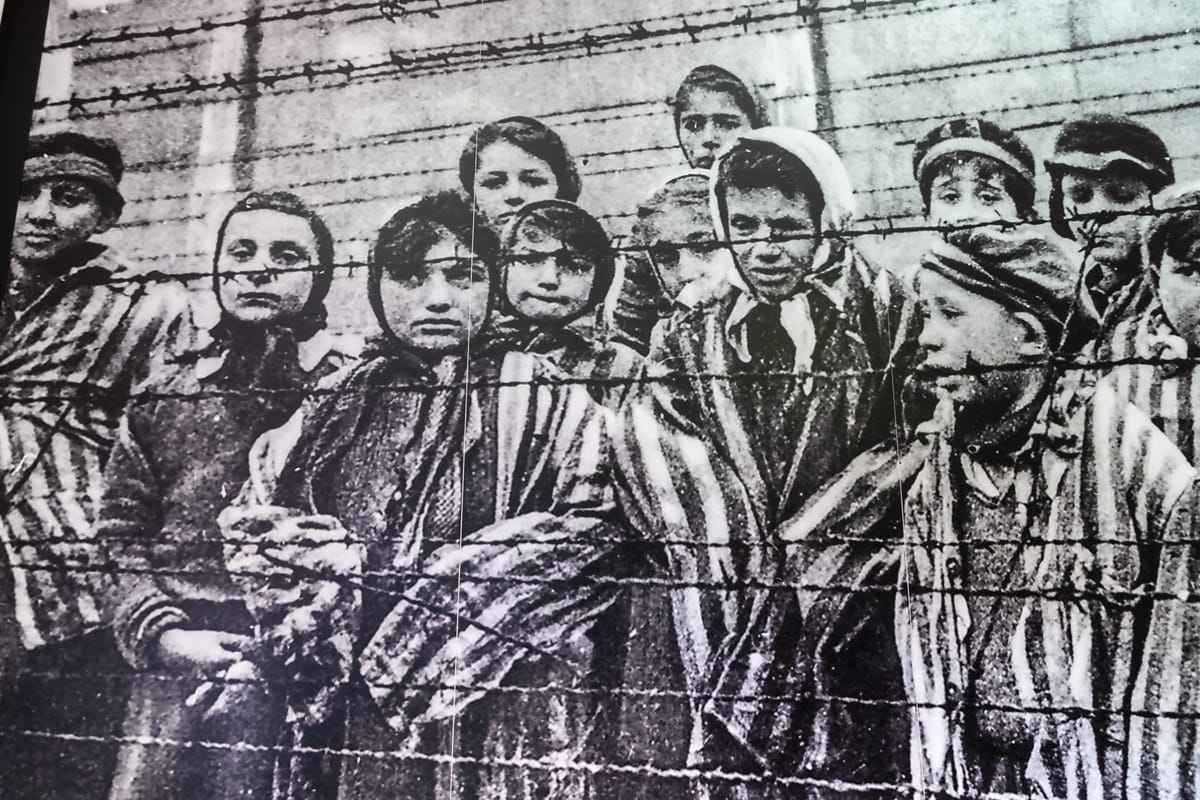
The history of the Holocaust is preserved through endless reels of documentary footage and countless cinematic portrayals. the sheer volume of information can be overwhelming—the "forest" of grief becomes so dense that we lose sight of the simple, luminous truths within it. After years of navigating this memory through ceremonies and two formative journeys to Poland—once as a yeshiva student and later with colleagues from "kol-chi radio" —I have come to a personal realization that i would like to share with you.
Beyond the private legacy of my grandparents, who survived the camps by God's grace to build our family, I find that a single, brief scene is all one truly needs to confront the essence of this memorial day.
The scene is from Steven Spielberg’s oscar winning movie Schindler’s List, based on the true story by Thomas Keneally. It is a moment that shakes the Jewish soul to its core, and it is better watched than verbally described.
In this sequence, more than thousand Jews saved from certain death by the German industrialist and Righteous Among the Nations, Oskar Schindler, present him a gift: a ring. Inscribed upon it are the words in hebrew from the Talmud:
"He who saves a single life, saves the world entire ."