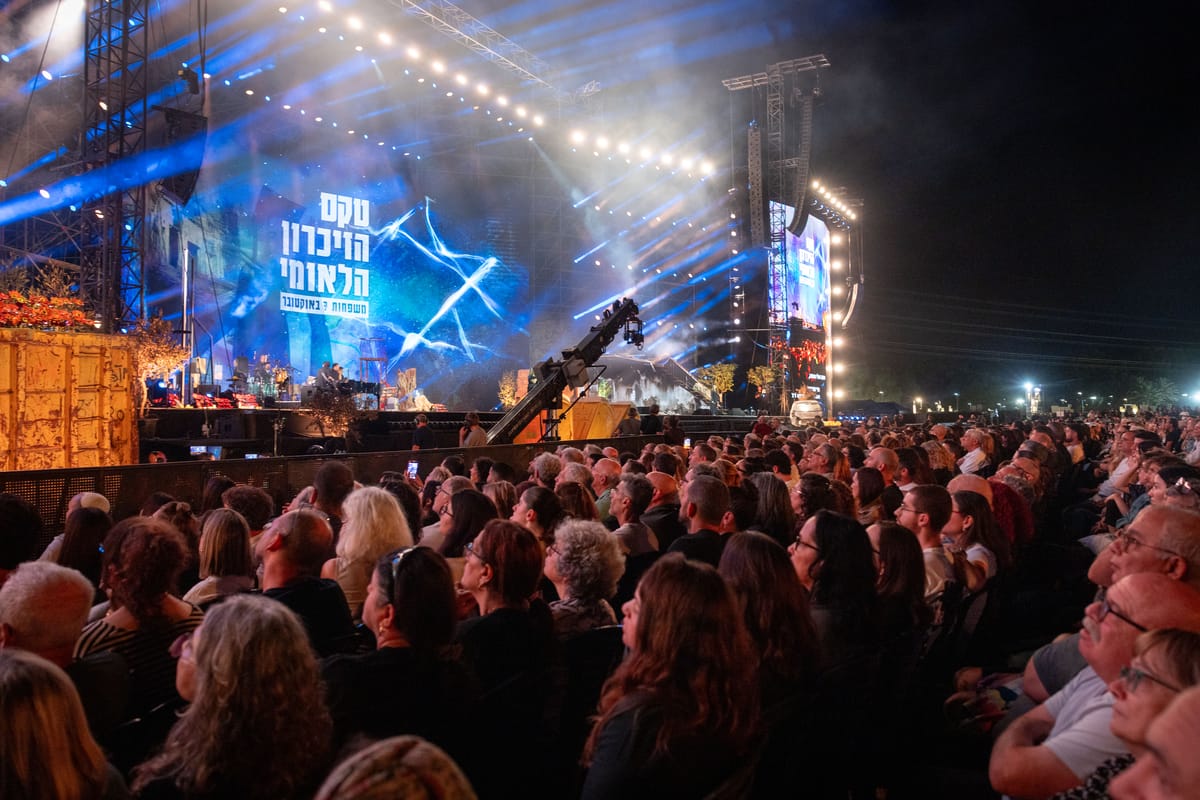
The public argument over when to mark a national memorial day for the Simchas Torah massacre slid quickly, as usual in these parts, into a political brawl. On one side, the secular public and the left insisted on the civil date, October 7, as the only natural day of remembrance, and protested the government's decision to set the state memorial on the 24th of Tishrei, immediately after the chagim. On the other side stood the religious-Zionist position, which sought to anchor the memory in the Hebrew calendar and not to damage the joy of the chag itself.
After all, beneath what looks like a technical dispute over dates lies a much deeper disagreement, a disagreement over the very conception of memory, mourning and nationhood. A conservative perspective, one that looks at Jewish history and the mechanisms of national memory over the years, identifies fascinating parallels here and proposes a new order.
Secular mourning and religious mourning: a reversal of roles
There is a historical irony in the way Israel's memorial days developed. In the past, it was the religious public that nursed a justified grievance over the way Yom HaShoah was set on the 27th of Nissan, a month in which halacha forbids eulogies and public displays of mourning.
The young secular Zionist movement wanted then to shape a "new Jew": it tied the Shoah directly to "heroism" (the ghetto uprisings and fighting networks), and sanctified a national-state memory over the halachic one. By contrast, it was the Chief Rabbinate that established the "General Kaddish Day" on the 10th of Teves, a traditional fast and mourning day dedicated to lamentation, to saying Kaddish and to elevating the souls of the kedoshim whose date of death was unknown.
And now, in the October 7 disaster, the roles have reversed:
- Secular mourning has become pure and distilled: the secular public marks October 7 from a place of deep pain, mourning, trauma and lamentation, without any immediate attempt to dress it in a narrative of "heroism and revival".
- Religious Zionism and the state apparatus seek context: the state and religious mechanism wants to frame the disaster within the Hebrew calendar, adjacent to Simchas Torah, in dialogue with Sukkos and national recovery.
The paradox of Hakafos Shniyos at the Nova site: a collision between holiness, trauma and joy
This tension is not merely theoretical; it was embodied in full force in the struggle over holding "Simchas Torah dancing" and Hakafos Shniyos at the Nova festival site on motzei chag.
For the religious and traditional public, holding Hakafos Shniyos on motzei Simchas Torah on the blood-stained ground of the Otef is not a display of insensitivity, but a root act of spiritual victory and continuity. In Jewish tradition, the deepest response to mourning and destruction is not sinking into despair, but clinging to life and to holiness: "Because you did not serve Hashem your G-d with joy".
Dancing with sifrei Torah in the very place where the lives of hundreds of young people who danced for life were cut down is perceived as a profound declaration of faith, the Torah and the nation live, and the joy that was murdered with cruelty on the morning of the chag returns and is redeemed on motzei chag.
But on the other hand, for the secular public, the festival survivors and the bereaved families, this dancing at the site of the disaster is often experienced as a painful and insensitive blow. For them, the Nova site is not a simcha hall or a site for religious demonstration, but "holy ground" of trauma, grief and fresh memory. When the Torah is danced in the place where their loved ones were slaughtered while the wounds are still bleeding, the joyful public presence feels like a denial of pain and an attempt to leap over the pure mourning straight into the narrative of religious victory.