Get our mobile app
Download on the App StoreGet it on Google Play

OPINION

Gantz out: Hendel gains, Eisenkot may lose

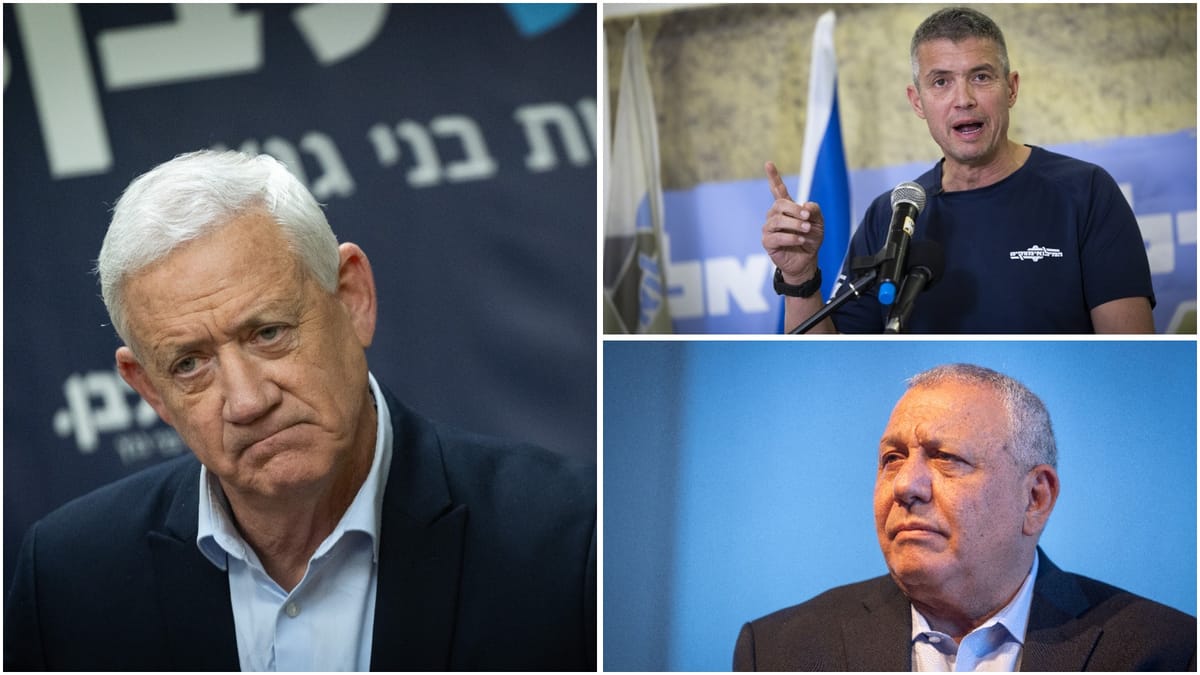
Benny Gantz's withdrawal eight days before the election could shift the bloc map, but not necessarily in the direction Gadi Eisenkot hoped. The man left out of the union may be the big winner, while Ofer Winter gets another chance. 

Gantz Quits: Hendel Stands to Gain, Eisenkot May Regret it

Anyone rushing to hand Gadi Eisenkot the votes freed up by Benny Gantz's withdrawal is probably missing one of the most interesting stories of the current election campaign. It is precisely Yoaz Hendel, the man Eisenkot refused to bring onto his list, who may be the big winner from the withdrawal announced Monday.

But to understand where Gantz's votes are going, you first need to understand why he insisted on running almost until the last moment, despite polls consistently placing him below the threshold.

Gantz genuinely believed he had a public. This was not just an election slogan meant to justify continuing the race. In his internal research, he said, he saw potential for more than five mandates. He was convinced that if he could only persuade voters he would pass the threshold, they would vote for him.

And the truth is, this is not an entirely absurd assessment. Gantz's personal image, contrary to how some of his political rivals tried to paint him, remained positive in the eyes of a significant public. He was not perceived by all those voters as an extreme leftist, but as a statesman-like, moderate and responsible politician willing to sit with people from both sides of the political map.

There is real demand in Israel for a party that crosses blocs. A public that does not want to vote out of blind loyalty to Netanyahu or out of total opposition to him. Except that in every election campaign, the two major camps do almost everything to eliminate that possibility. Anyone who does not commit to one of the blocs immediately becomes suspect in the eyes of both.
Gantz believed that demand would overcome the fear of the threshold. Today it became clear that he too understood the fear is stronger. He did not want to end his political career signed to a loss of votes that could decide the election.

Hendel: From wounded animal to big winner

This is where Yoaz Hendel enters the picture. Just a month and a half ago he looked like a wounded animal in the political arena. Chili Tropper, the man with whom he tried to establish a new political framework, abandoned the partnership and moved to Gadi Eisenkot. But Eisenkot would not agree under any circumstances to take Hendel as well.

Eisenkot had his own reasons. Hendel's many moves between political frameworks did not contribute to his image of stability, and in Eisenkot's circle there was also concern about lack of loyalty and the possibility that Hendel would split off in the future. Hendel, for his part, was left outside the connection and with considerable resentment toward the man who preferred to take Tropper without him.

In the end he found a surprising partner: Prof. Yaron Zelekha. Zelekha already had his own voter base, mainly around the economic agenda, and the connection between the two was initially presented as a technical bloc designed to ensure passage of the threshold.

But in the past month an interesting process has occurred. What was born as a partnership of electoral interests gradually became a genuine political partnership, with joint messages, joint activity and a much more cohesive public identity.

Zelekha, who in previous election campaigns focused almost entirely on economics and the cost of living, now speaks passionately also about drafting chareidim and equality in burden-sharing. Hendel, for his part, has adopted the fight against the cost of living as a central part of his message. The two no longer settle for trying to pass the threshold together, but present themselves as partners for the long term.

And now, after Gilad Erdan's withdrawal about a month and a half ago and Gantz's withdrawal today, they remain the most prominent political address for voters seeking a party that does not automatically belong to one of the blocs.

In my assessment, around 60 percent of Gantz's potential voters may find themselves with Hendel and Zelekha. This is of course a political assessment and not a proven poll figure, but it rests on the similarity between the target audiences and on the fact that Gantz and Hendel sought to offer a similar solution to Israel's political problem.

And this is precisely why Gantz's withdrawal is not necessarily good news for Eisenkot.

At the bloc level, Eisenkot can be satisfied. The risk of losing votes from voters opposed to Netanyahu's continued rule is smaller. But at the personal and political level, Hendel's strengthening may actually complicate things for him.

Hendel is not in Eisenkot's pocket. He is hurt by the way the attempted connection between them ended, and has already made clear he will not automatically commit to a government headed by him. Zelekha is also not among Eisenkot's great admirers. He levels sharp criticism at him, including around his connections with wealthy individuals and the guarantees raised to finance his party.

If Hendel and Zelekha strengthen significantly following Gantz's withdrawal, they may enter the Knesset as an independent force that Eisenkot will have to negotiate with, not as a few more mandates sitting in his pocket.

There is also no small political irony here: the man Eisenkot did not want beside him on the list may be the man who determines after the election his ability to form a government.

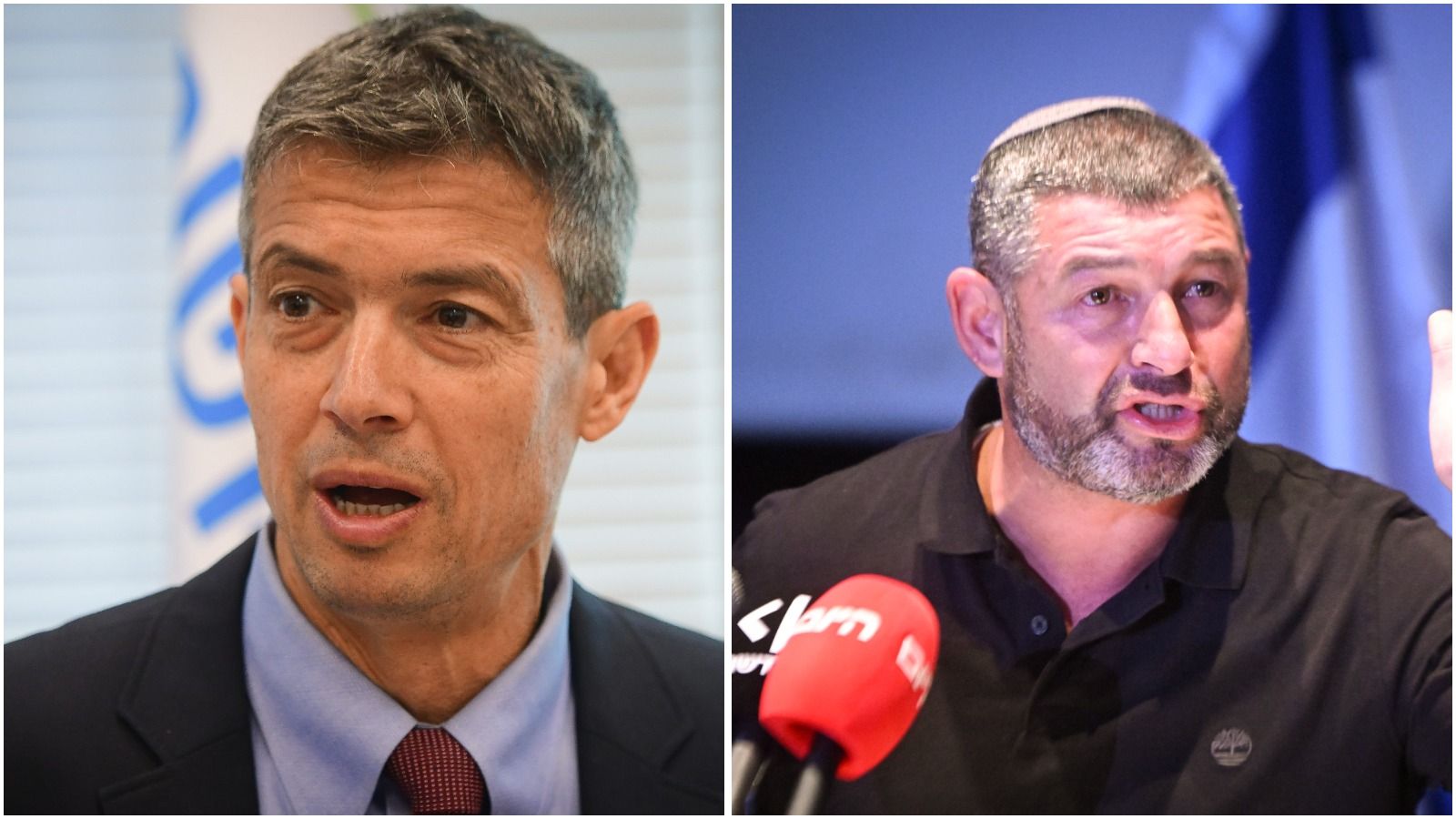
Hendel and Winter
Hendel and Winter (Photo: Avshalom Sassoni/Flash90)

Winter may also gain, but the Likud already smells weakness

Hendel is not the only one who stands to gain from the withdrawal. Ofer Winter may also benefit from it, though on a smaller scale.

Within Gantz's potential voter public are also clear right-wingers, some of them former Ayelet Shaked voters, who do not want to see Binyamin Netanyahu continue in office. Ideologically, they are very far from the left, but they also do not feel at home in the current Likud. Gantz, with his statesman-like image, provided them with a kind of political refuge.

Now, as he clears the field, Winter may try to absorb at least part of that public.

But Winter himself is facing difficult days ahead. In a Channel 11 poll published last night he no longer passed the threshold, after succeeding in entering the Knesset in previous polls. In a Channel 13 poll from Wednesday, by contrast, he still received four mandates.

Today Winter cancelled interviews that were scheduled for him. His office explained that he is not feeling well, but it\s not impossible that the eelction stress is getting to him.

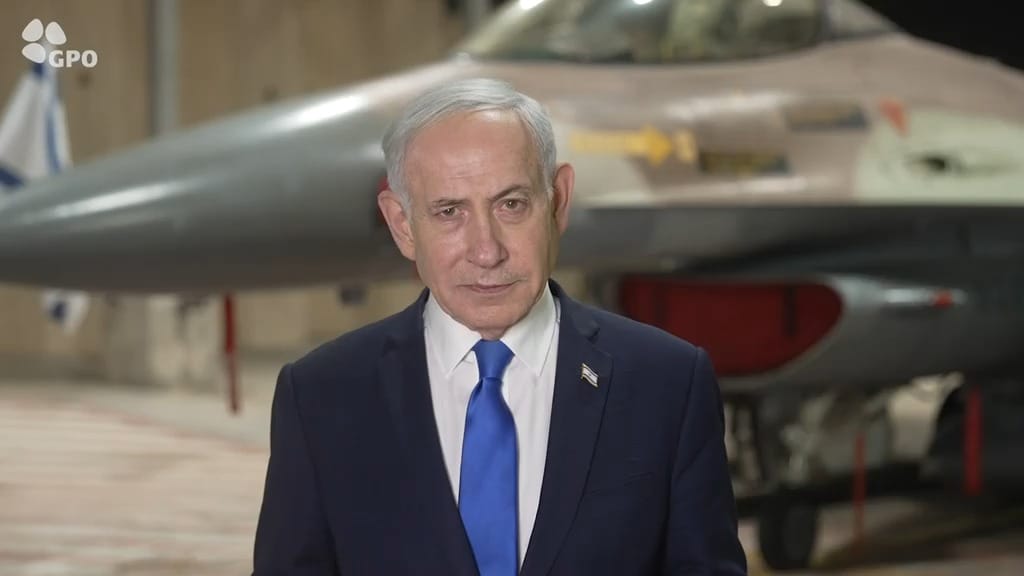
Netanyahu at an Air Force base
Netanyahu at an Air Force base (Photo: Roi Avraham/GPO)

A Likud source I spoke with describes a sense that in the ruling party they are beginning to identify additional pressure points on Winter, and assess that it is possible he too is beginning to internalize that continuing the race could end in a loss of right-wing votes. This does not determine that Winter is heading for withdrawal, but eight days before the election, when every tenth of a percent could decide, the pressures on him are expected only to intensify.

Gantz withdrew, but has Blue and White withdrawn?

Within all the preoccupation with winners and losers, there is one question that has not yet received a clear answer: what will become of the Blue and White list itself?

It is worth paying attention to the wording of Gantz's announcement. He announced that he will not run in the upcoming election, but did not explicitly announce that the entire Blue and White list is withdrawing from the race.

This distinction may be significant. Aliza Bloch, Roi Konkol, Penina Tamano-Shata and the other list members came to this election campaign out of a genuine desire to integrate into the next Knesset. Some of them went through a lengthy political path to reach the list, and now, eight days before the election, they find themselves uncertain about their future.

According to election law, a candidate can submit his resignation from a candidate list even at this stage. But Gantz's personal withdrawal does not by itself provide an answer to the question of what will happen to the entire list and its ballot slip in the polling station.

Will all list members resign? Will any of them seek to continue the race? Are we in for another surprising political move in the remaining days? These are questions that will still need to be answered.

The race has ended, the statesman-like career not necessarily

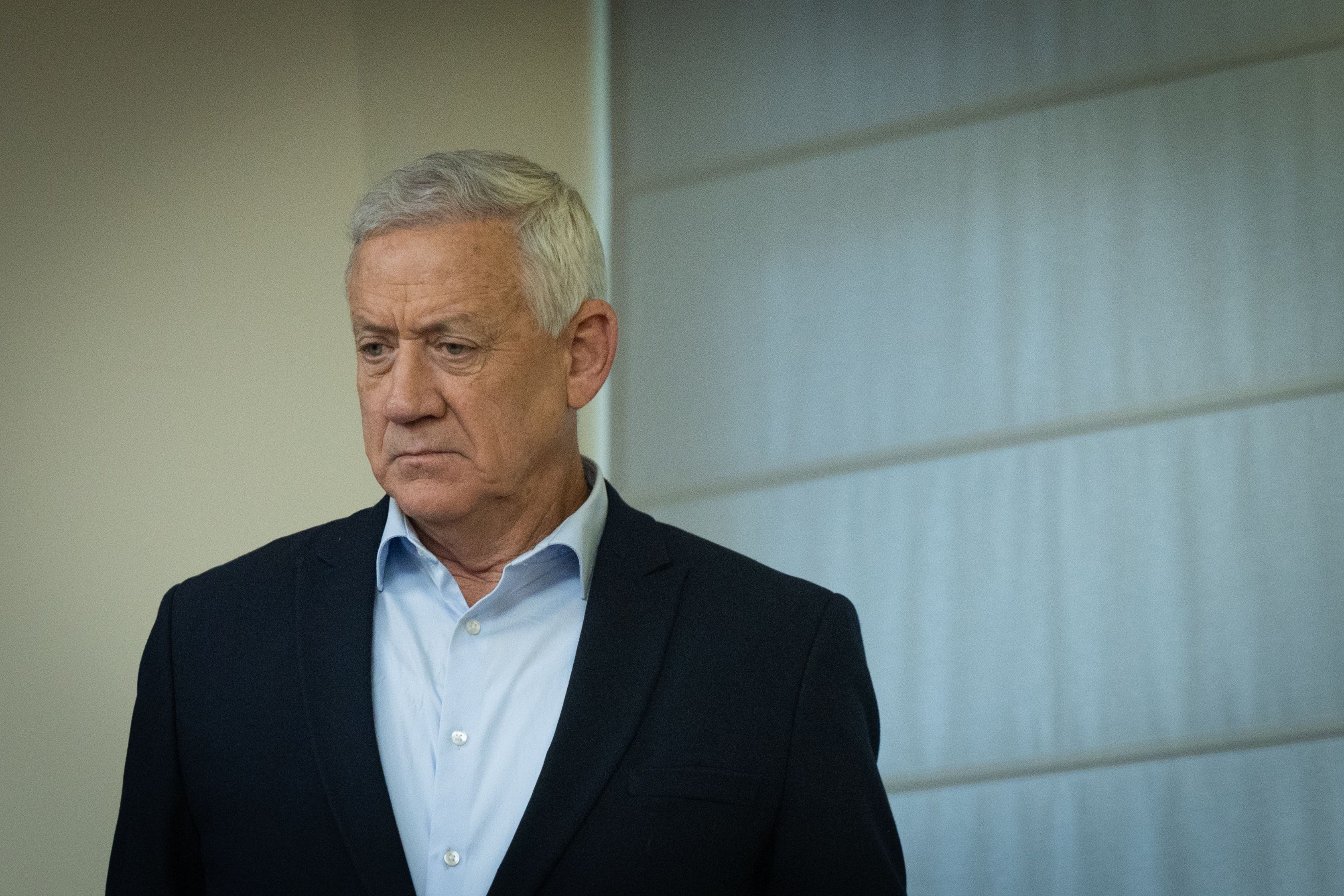
Benny Gantz
Benny Gantz (Photo: Yonatan Sindel/Flash90)

And finally, Benny Gantz himself.

One can disagree with his decisions, one can sharply criticize his entries into Netanyahu governments, and one can also argue that he did not succeed in turning the large public capital he had into stable political power. But it is hard to ignore that Gantz ends the race when even quite a few of his rivals from right and left hold personal respect for him.

He made political mistakes, sometimes serious ones, but he did not corrupt himself in pursuit of the chair. He managed to maintain an image of a statesman-like person, who does not see everyone who thinks differently as an enemy. Precisely in a political system that has turned mutual hatred into a working method, this is a quality that is not self-evident.

There are already those speaking about the possibility that Gantz will aim for the presidency in 2028. This is certainly an interesting possibility, even if it is too early to determine that this is the direction he is heading.

It will be no less interesting to see how Netanyahu behaves toward him now, when Gantz is not running against him. Will the prime minister try to offer him a statesman-like or public role? Will Gantz agree to accept such a role? Or will he prefer to distance himself from the political system until the next opportunity?

Either way, Gantz may be vacating his place in the race to the Knesset today, but he is not necessarily parting from public life.

And meanwhile, while everyone is occupied with the question of who lost from Gantz's withdrawal, it is worth looking precisely at Yoaz Hendel. The man who just a month and a half ago was left outside the large political union may discover in eight days that precisely that rejection was the best thing that happened to him in the election campaign.

Ready for more?

Join our newsletter to receive updates on new articles and exclusive content.

We respect your privacy and will never share your information.

Enjoyed this article?

Yes
No
Follow Us:

Unmissable content


Loading comments...

Also of Interest