Listen to how Donald Trump talks about Volodymyr Zelensky. Listen to how he talks about Xi Jinping, or Keir Starmer, or even adversaries he claims to despise. Now listen to how he talks about Benjamin Netanyahu. The register is different, and it has been different for a long time, and it is worth asking why the leader of the one country in the region that has bled for America's interests for eight decades is the one Trump talks to like a subordinate who needs managing.
This week it was "he knows who's boss." That phrase did not appear out of nowhere. It sits at the end of a long documented pattern. Trump has reportedly told Netanyahu directly that he had essentially been steamrolled into compliance during a call over Lebanon strikes, with Netanyahu's own response summarized as simple acquiescence.
Around the same period, Trump was quoted telling Netanyahu he would be in prison if not for Trump's protection, framing years of American backing as a personal favor Netanyahu now owes interest on. A new book on the administration reportedly captured Trump going further still, telling Netanyahu during a UN General Assembly call that even the Jewish staffers in the room were tired of him, a line calculated to needle Netanyahu specifically as an Israeli leader rather than merely as an ally who'd made a bad call.
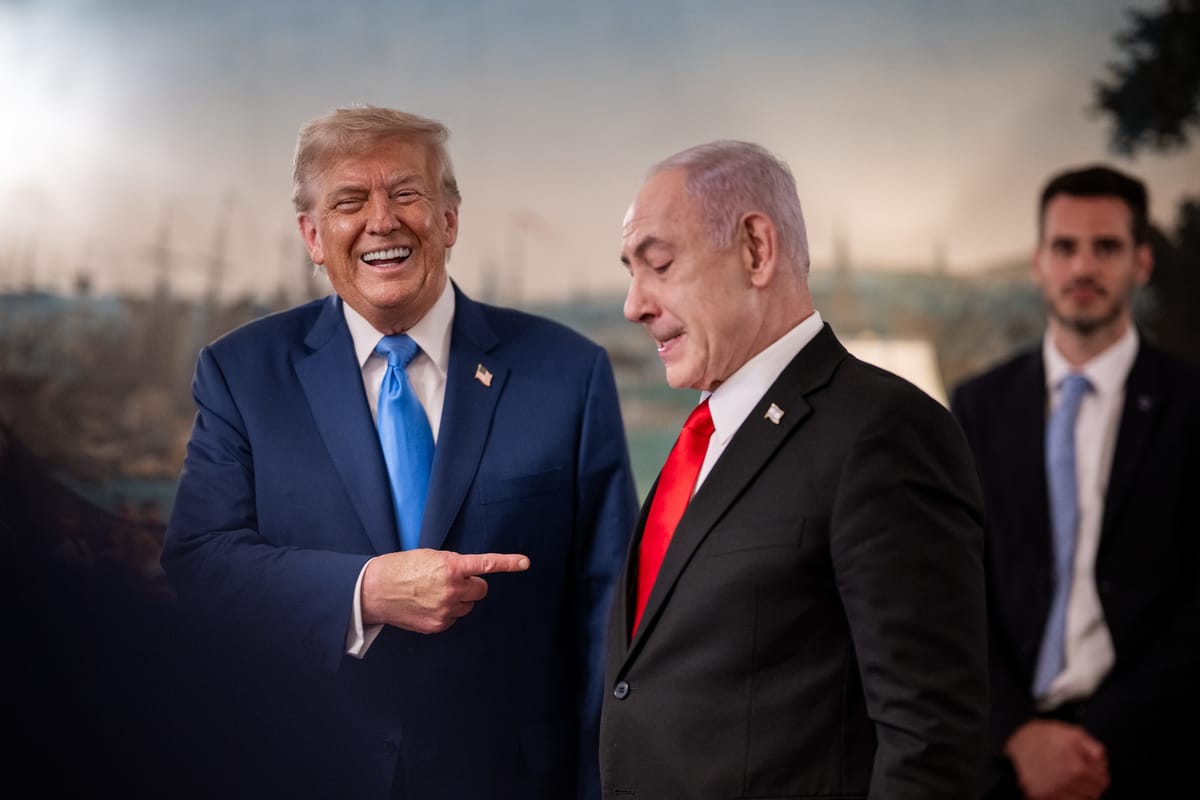
None of this is how Trump talks about other heads of state, even ones he has genuine disputes with. He picks fights with adversaries. With Netanyahu, he does something different: he manages him, publicly, like a client account that occasionally embarrasses the parent company. At the G7 in Evian, Trump reportedly described the US-Israel relationship in explicitly hierarchical terms, calling America the large partner and Israel the small one, and told Netanyahu directly he did not need to level a building every time a single fighter walked into it. JD Vance said it more bluntly still on a podcast, describing Israel flatly as the junior partner. That is not banter between equals. That is a boss addressing a subordinate whose judgment he no longer fully trusts, in front of an audience.
Here is the brutal part. Some of that mistrust is not manufactured. Netanyahu has, by multiple accounts, denied conversations that Israeli officials later privately confirmed happened as reported. He has been made to apologize to the Qatari Emir on camera, reading from something resembling a script while Trump held the phone, an episode so nakedly humiliating that even Trump's most skeptical critics called it close to unprecedented. A prime minister who needs that kind of stage management from a foreign president has given that president plenty of material to work with.
But there is a difference between a president who is frustrated with a specific decision and a president who has decided that frustration is now the default tone of the relationship. Barack Obama pushed Netanyahu to apologize to Erdoğan once, in 2013, and did it privately. Joe Biden reportedly called Netanyahu ugly names behind closed doors while continuing, in public, to treat him as the leader of a sovereign ally. Trump has collapsed that distinction. The private contempt and the public contempt are now the same thing, delivered in the same register he might use on a business partner who missed a deadline, not a nation that just fought and buried its own citizens defending itself against a regime sworn to erase it.
That is the part that should actually worry supporters of Israel, more than any single crude phrase. A "who's boss" dynamic between Washington and Jerusalem is not just an insult to one man's dignity. It is a preview of what happens the next time Israel's security needs and Washington's diplomatic timetable point in different directions. If the default posture is boss and subordinate, guess whose judgment yields.
Netanyahu may have earned some of this dynamic through his own conduct, and Israelis are entitled to be furious with him about that on their own terms. But the world should not mistake Trump's condescension for strength, or for genuine alliance management. It is the language of a patron who has stopped viewing Israel as a partner with its own legitimate war to fight, and started viewing it as an account he has to babysit until the next election cycle makes the optics inconvenient.