Get our mobile app
Download on the App StoreGet it on Google Play

The AI Security Challenge

AI Transforms Scammers Into Professionals

Osher Cohen, CEO of YO SECURE, reveals how artificial intelligence has enabled a new wave of sophisticated fraud, including silent number porting and one-click identity theft. "Your ChatGPT is not a diary in a drawer," he cautions.

Cybersecurity Expert: AI Has Transformed Amateur Scammers Into Professionals

Dozens of people fall victim to sophisticated scams every single day, warns Osher Cohen, CEO of YO Secure, a cybersecurity firm. In a detailed interview, Cohen reveals how artificial intelligence has fundamentally transformed the landscape of cybercrime in 2025 and beyond.

"The year 2026 presents enormous challenges when it comes to artificial intelligence," Cohen explains. "This technology has opened massive doors for hackers and impersonators."

The traditional warning signs that once helped people identify fraud have become obsolete, according to Cohen. Where phishing messages used to contain obvious spelling errors and suspicious links that were easy to spot, AI has changed everything. "Today, the content has become extremely accurate, the links have become extremely accurate. You can fake anything, you can fake videos, you can do things that were previously impossible," he says. And everyone is vulnerable, even those who don't directly use AI tools themselves.

Osher Cohen talks cyberscecurity

"Dozens of people fall victim every day"

Cohen emphasizes that 2026 has unleashed countless new fraud opportunities for hackers and impersonators. "If until recently we could identify phishing text messages by spelling errors or recognize fraudulent links, in the past year the links have become extremely precise. You can fake everything."

The safest approach to dealing with this phenomenon, he advises, is to pause and think carefully. "Think for five seconds before you click, before you fill anything out, before you provide your details. Because once you've done that, they take over your phone and then you need to restore everything."

Beyond concerns about receiving messages, AI has created the ability to fake phone calls with ease. "When someone tells me 'Hello, we're calling from such-and-such company,' I ask pointed questions: What type of phone do I have? What are the last four digits? If there's no answer, it's a scam."

Silent number porting: Identity theft at the click of a button

One of the most alarming methods Cohen reveals doesn't even require sophisticated hacking into a phone device. "People are managing to port other people's numbers from one carrier to another," he discloses. "And once someone has your phone number, they have the ability to easily connect to all government and institutional bodies."

The consequences can be devastating. "They enter it, receive a code, and connect, to banks, tax authorities, VAT systems, WhatsApp, payment apps, and so on. And that's where it becomes very sensitive. When this happens, it significantly harms a person because it's literally stealing their identity."

One of the largest fraud schemes involves vehicle theft through identity takeover. "Recently, people have been reporting that car ownership was transferred to others and their vehicles were stolen." One solution, Cohen notes, is to access the government portal at gov.il, enter your personal area, and select the option to "block ownership transfer by mail." This means that only through the personal area on the government website, after answering more specific security questions, will it be possible to transfer vehicle ownership.

"Your ChatGPT is not a diary in a drawer"

Beyond external threats, Cohen highlights a danger many users aren't aware of, the exposure of sensitive information to AI tools. "I personally don't upload sensitive things to artificial intelligence," he stresses. "People think it's a diary in a drawer and they can talk to it all day. They forget that it's a cloud located somewhere in the world, where all the information is stored, and at any given moment entities with authority can retrieve it."

Cohen poses a pointed question: "I ask people: 'Would you want the questions you ask ChatGPT to ever leak?' And people immediately say 'No, of course not!' So that's why you don't upload bank documents, you don't upload medical documents, and you don't ask questions that could harm you reputationally or personally. These tools are very good, but when it explodes, you can't go back."


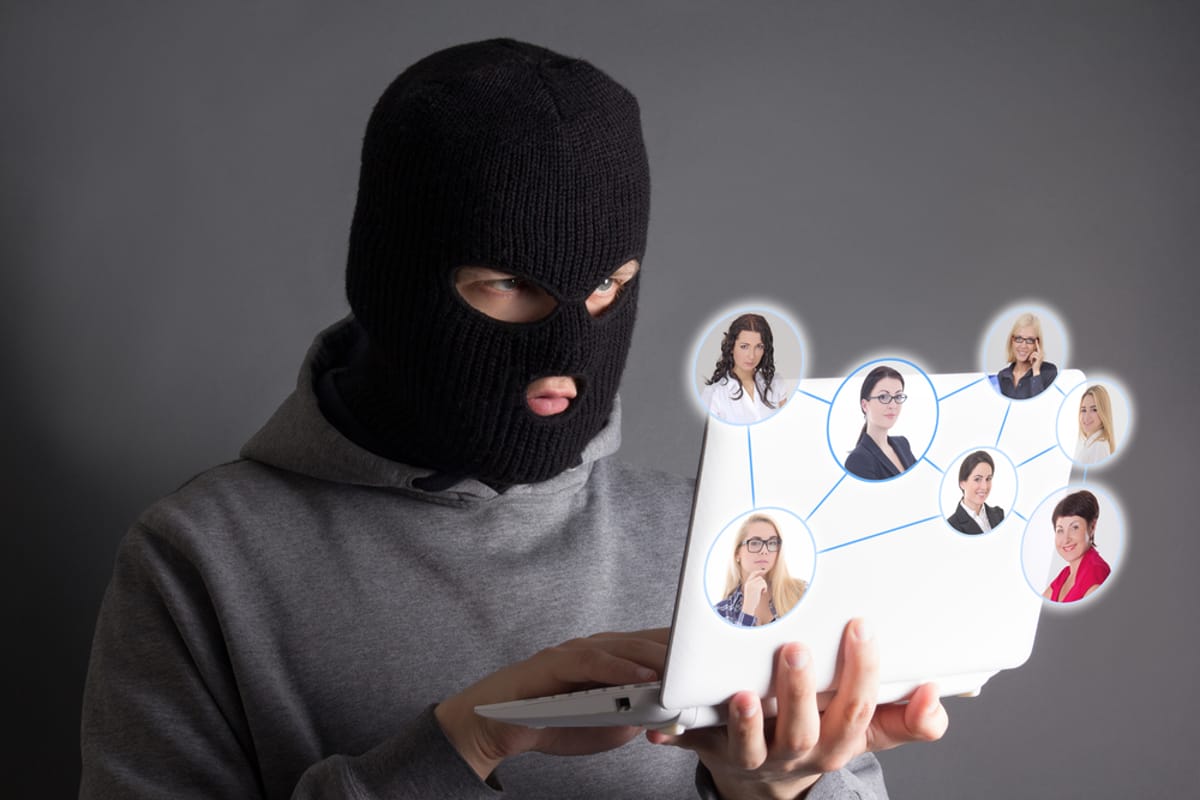
אילוסטרציה
אילוסטרציה (צילום: שאטרסטוק)

Social engineering: The lure of the "blue checkmark" and customs messages

A significant portion of scams are based on creating artificial pressure or quick temptation. "Every day we receive inquiries at our office from people whose Instagram or Facebook was hacked because they thought they were getting a 'blue checkmark,'" Cohen reports. "They receive a message from Meta: 'Hey, you got a blue checkmark, how exciting, click here and enter your email and password.' It's very powerful phishing."

Another method exploits fake messages from Israel Post about a package stuck due to a debt of just 7 shekels, a small amount designed to make people lower their guard and enter credit card details.

Vulnerable populations

When asked about protecting vulnerable populations in the AI era, particularly elderly parents who are less tech-savvy, Cohen advises: "Simply be suspicious, and then your mind will already know how to act independently and ask the relevant questions."

He continues, "If there's a certain link, see that it's written correctly. If it says 'Shofer' instead of 'Shupersal' [a major Israeli supermarket chain], it's a scam. And in general, if you have concerns about a certain link, send it to someone who understands better than you."

Iron rules for prevention

The five-second rule:

  • "Focus on the first five seconds after you receive something. Stop for a moment and think: Did you request this? Do you have a debt? If you do this, you'll never fall for it."
  • Identify the domain name: "The sharpest thing is to look at the link. Bank Leumi is Leumi. If you look at the www and see one different letter, for example, an A instead of an E, you'll already understand it's a scam."
  • Don't open the door: "In the end, for them to do something to you, we need to perform an action. It's like you're opening the door of your house for them to enter. If we don't perform the action, they won't be able to get in."
  • Protect your vehicle: Cohen recommends accessing your personal area on the government portal (gov.il) and activating the option for "blocking ownership transfer by mail" to prevent vehicle theft and ownership transfer through forged documents.

In conclusion, Cohen reminds us that the key to protection is constant vigilance and asking simple questions before any action. "If we stop for a moment and think, we can prevent most scams," he summarizes.

Ready for more?

Join our newsletter to receive updates on new articles and exclusive content.

We respect your privacy and will never share your information.

Enjoyed this article?

Yes (28)
No (1)
Follow Us:

Unmissable content


Loading comments...

Also of Interest