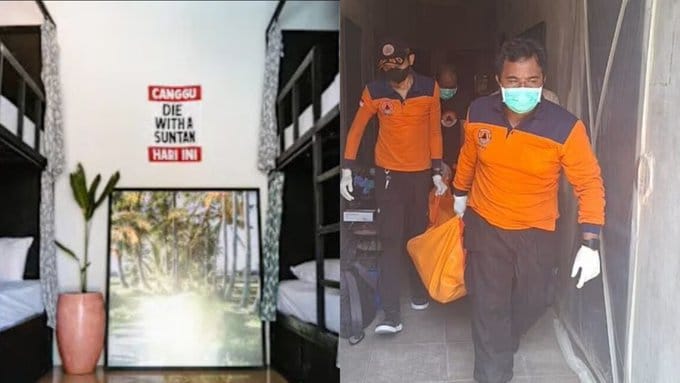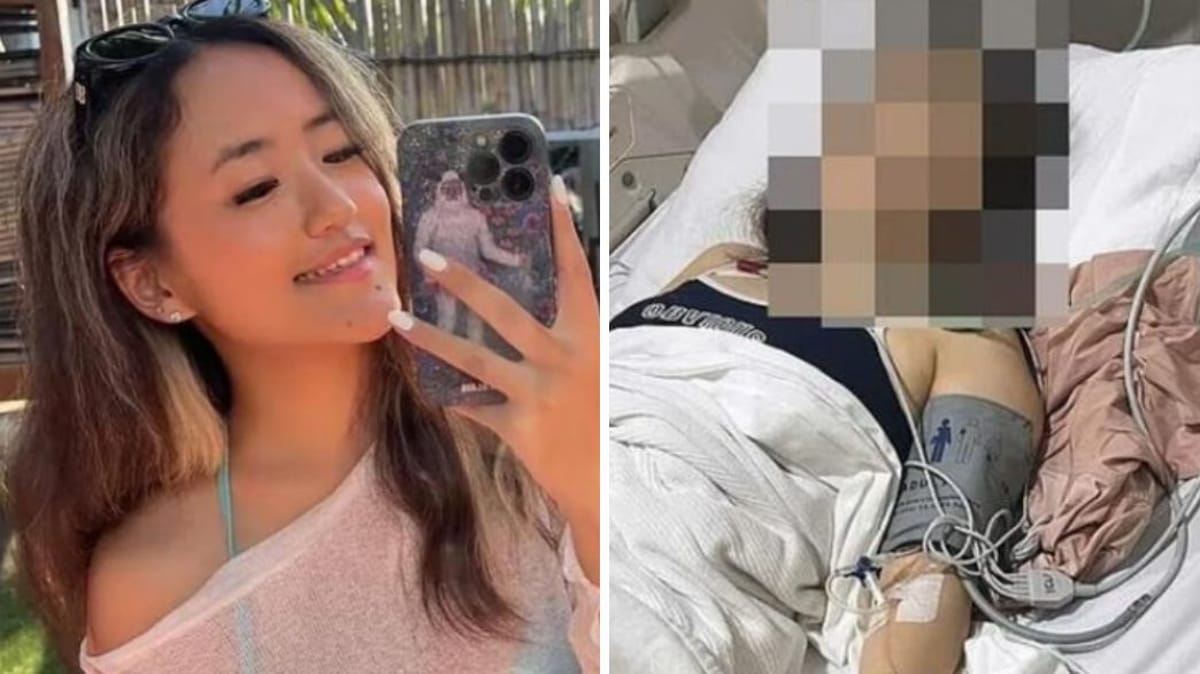
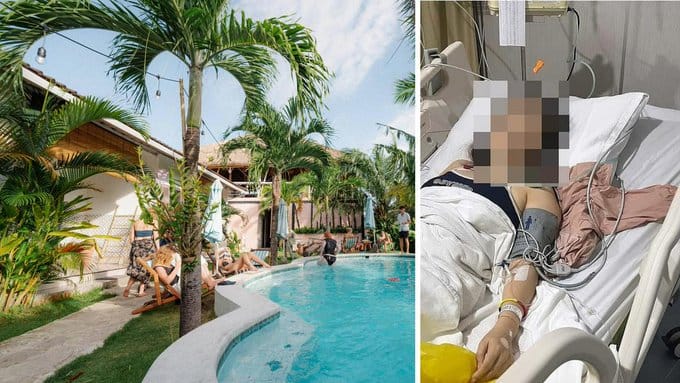
What began as a dream beach holiday in Bali rapidly transformed into a dramatic medical crisis at the Clandestino Hostel in Canggu, where a Chinese tourist died and over twenty other guests collapsed with severe, mysterious illness. The incident, which erupted following a communal dinner on August 31st, is being described as one of the most alarming mass sickness events reported in the area in years.
Despite eyewitness accounts of a suspicious chemical odor, reports of food poisoning, and claims of pesticide exposure, the official police determination released recently stated that no toxins were found, leaving a stark contradiction in evidence and the investigation wide open. Alarmingly, the hostel remains operational, hosting new tourists despite the tragedy.
The Night of Collapse
Among the guests who experienced extreme vomiting, chills, diarrhea, and severe weakness was 25-year-old Chinese tourist Daqing Zhouge, who was staying in Room 5 with her friend, Laila Li. Li also began vomiting and collapsing, alongside tourists from Germany, the Philippines, Saudi Arabia, and other nations, who succumbed one after another in restrooms and hallways as their conditions rapidly deteriorated.
Laila Li recounted sending an emergency email to the hostel staff but received no response. Her condition worsened to the point where she was convinced she would not survive the night and recorded a farewell video. Around midnight, the duty clerk, Maria Gurs, checked on Zhouge and became alarmed by her state. The clerk and a security guard carried the tourist to a taxi and transported her to a nearby clinic.
According to police, the clinic provided only basic first aid due to budget constraints and prescribed routine medication before Zhouge was returned to the hostel at 1:30 AM. The next morning, when she missed check-out, staff found her lying lifeless on the bed, partially dressed and surrounded by vomit. Medical personnel pronounced her dead at the scene, citing severe gastroenteritis and hypovolemic shock, a life-threatening condition caused by significant fluid loss.
Meanwhile, her friend Laila Li was urgently evacuated to a hospital, where she spent five days in intensive care suffering from severe dehydration, pneumonia, and symptoms that her doctor attributed to a combination of food poisoning and chemical poisoning, possibly from pesticides. She only learned of her friend's death after being discharged.
Contradictory Evidence and the Pesticide Question
As survivors shared their experiences, a complicating narrative emerged. Several guests claimed that a room next to Room 5 had been sealed off following a pesticide treatment for bed bugs earlier that day, and many reported an unusual chemical smell throughout the area. Laila Li stated her blood tests showed exposure to pesticides, and other tourists reported that their symptoms worsened whenever they returned to the room block.
Experts emphasized the difficulty of immediate symptom diagnosis but noted that pesticide poisoning, though rare, remains a possibility, especially given similar past incidents, such as two tourists who died in Sri Lanka after staying in a room treated for bed bugs, and a German family who died in Turkey in November in a suspected pesticide-related case. A public health expert, Dr. Dicky Budiman, stressed: "Both directions must be fully investigated: mass food poisoning or pesticide exposure, and perhaps a combination of the two."
However, the victims' accounts clash directly with the official police report released just days ago. The report states that laboratory tests conducted on Zhouge's vomit found no pesticides, methanol, cyanide, arsenic, drugs, or other dangerous substances. An autopsy pointed to gastric bleeding, enlarged blood vessels, and signs of severe gastrointestinal irritation, findings the police claim are consistent with severe food poisoning, not poisoning from external agents.
Hostel Continues Operations Amidst Outrage
Despite the death, numerous hospitalizations, and an ongoing investigation, the Clandestino Hostel continues to operate as usual. Reporters who visited the premises confirmed the bar was open, food was being served, and the pool was busy with new tourists unaware of the recent tragedy. Only the room where Zhouge died was covered with black plastic sheeting.
Survivors report that the hostel has failed to contact them, offer apologies, or provide any form of compensation. Laila Li stated her medical costs exceeded $6,000, and she is undergoing psychological therapy for sleep issues. An Indonesian attorney, Ni Luh Ari Retna Sukhasari, criticized the slow pace of the investigation and argued that the severity of the event should have mandated the temporary closure of the hostel for safety reasons, a step that was never taken. As of November 22nd, the source of the mass illness remains a mystery, leaving victims and foreign embassies demanding answers.