
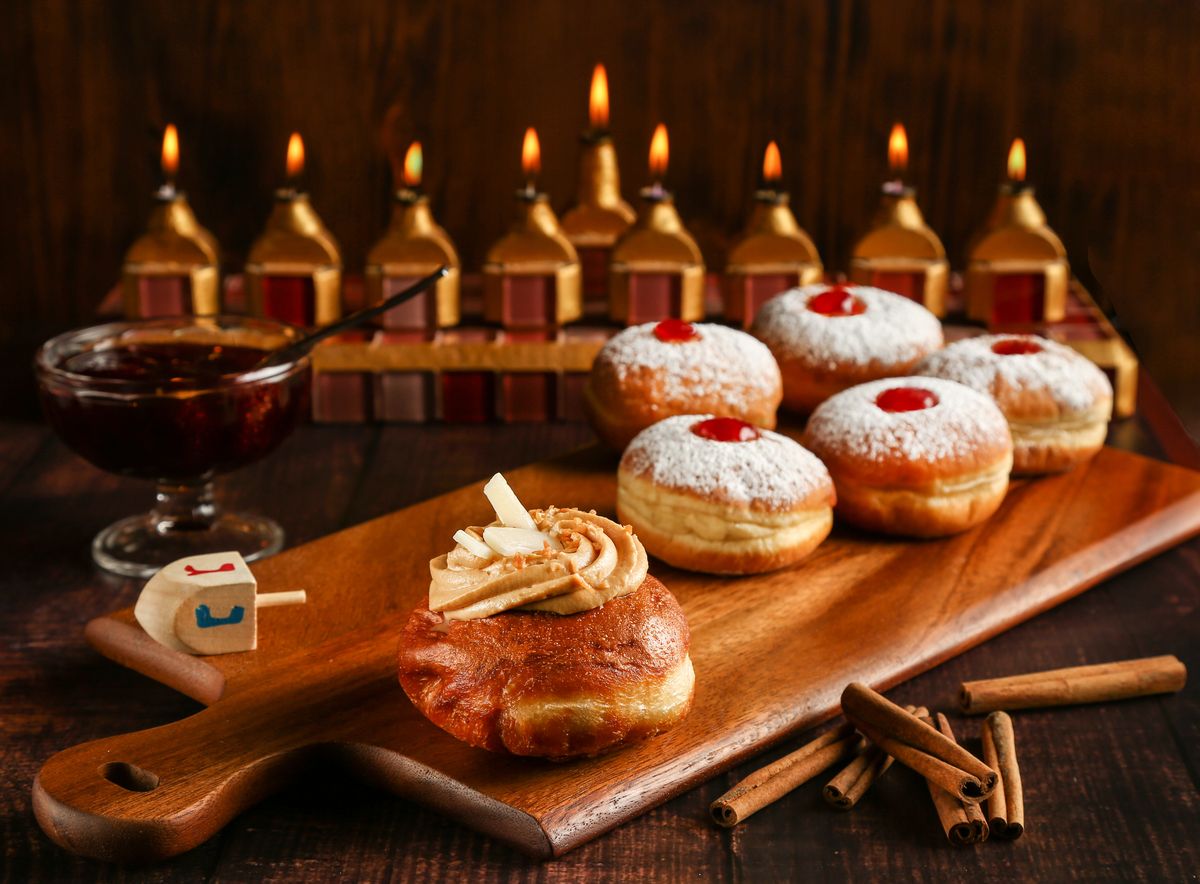

The custom of eating dairy foods during Hanukkah has deep roots in a remarkable story of courage and strategy. It comes from the account of Yehudit, daughter of Matityahu and sister to the Maccabee brothers, who fought oppression in her own extraordinary way.
During the time when Greeks ruled over the Jewish people, they imposed many cruel practices designed to break the spiritual strength of the nation. Among these was a devastating decree: on a bride's wedding night, she would be forced to spend time with the Greek general before joining her husband. This practice aimed to defile the sanctity and dignity of Jewish families.
When Yehudit's wedding night arrived, she took a bold approach. Rather than resist, she told the Greeks she would go willingly to the general's tent, claiming it would be her honor. But Yehudit had a plan. She brought with her a bag of salty cheese and wine. She offered the general the irresistible cheese, which made him increasingly thirsty from all the salt. To quench his thirst, he drank the wine she provided. The wine made him drowsy, and soon he lay down to sleep. Seizing the moment, Yehudit took his own sword and beheaded him.
This single act of courage had profound consequences. When the general's head rolled through the Greek encampment, the shock and chaos broke their grip on the Jewish people. One woman had effectively defeated an entire army through intelligence and bravery. This is why women have a special connection to Hanukkah—they participate fully in lighting the menorah, refrain from work during candle-lighting time, and the tradition of eating dairy foods commemorates Yehudit's heroic deed.
But here's the deeper question: Why do we commemorate the cheese and dairy? The actual miracle happened through the wine, which made the general fall asleep so Yehudit could carry out her plan. Why emphasize the cheese?
The answer reveals a beautiful insight. Any military general knows better than to drink wine during wartime, it's a basic rule of warfare. The general had natural resistance to drinking wine when he should have been alert and vigilant. Yehudit understood this. She couldn't simply offer him wine and expect him to drink it. Instead, she first gave him something he couldn't resist—the delicious, salty cheese. Once he started eating the cheese, the natural consequence was thirst. His resistance to the wine melted away because now he desperately needed something to drink. The cheese made the wine inevitable.
This is why we celebrate the dairy on Hanukkah, because it represents the strategic first step that made everything else possible. Yehudit understood a profound principle: to get someone to do something they would normally resist, you first need to create the conditions where they naturally want to do it.
This same power exists in every home today. The wisdom of creating the right environment, the right atmosphere, the right conditions—this enables family members to become their best selves and do things they might otherwise resist. It's about understanding what will bring people to the right spirit and mindset. This is particularly emphasized during Hanukkah, a holiday that celebrates wisdom and strategic thinking.
Hanukkah was also the time when the rabbis instituted various protective laws and boundaries—additions to what appears explicitly in the Torah. They understood human nature: if you establish boundaries that keep people away from temptation, they won't reach the point where they encounter things they cannot resist. Sometimes holding yourself back from certain preliminary things prevents you from getting to a place of serious struggle.
This is the timeless lesson of the cheese and wine strategy. When you want to make a change in your life, whether starting something new or stopping something harmful, don't focus directly on the "wine," the difficult thing that seems hard to resist or achieve. Instead, focus on the "cheese," the small, manageable first steps that naturally lead you where you need to go. Identify what will create the conditions for success, what will naturally lead to the bigger change you seek.
If you want someone to embrace a difficult change, don't push the hard sell. Find the irresistible first step, the thing they'll naturally say yes to, which then makes the harder step feel natural and necessary. This is the wisdom hidden in the dairy foods of Hanukkah, a reminder that the greatest victories often come not from direct confrontation with our biggest challenges, but from the strategic, thoughtful steps that make those challenges dissolve naturally.