The Middle East has entered what may be its most dangerous 72-hour window in years. Across four simultaneous fronts, Lebanon, Iran, Gaza, and the global energy corridors connecting them all, the pace of escalation has accelerated sharply, even as back-channel diplomacy quietly continues. The question is no longer whether the region is at war. In several meaningful senses, it already is. The question is whether what comes next is a full regional conflagration or a sudden, pressure-forced pause.
Beirut Is Burning Again
Israeli airstrikes have expanded beyond southern Lebanon into Beirut's urban core, with Dahiyeh, the southern suburbs long considered Hezbollah's political and military heartland, taking repeated hits. At least five confirmed strikes in the past 48 hours have killed senior Hezbollah figures and caused civilian casualties, turning parts of the Lebanese capital into an active battlefield.
The targeting pattern is deliberate. Israel is not striking infrastructure at random, it is systematically working through Hezbollah's senior command layer, applying pressure on the organization's ability to coordinate a large-scale response. The message is clear: the Axis of Resistance is being degraded from the top down, simultaneously across multiple theaters.
Iran Pivots to Asymmetric Pressure
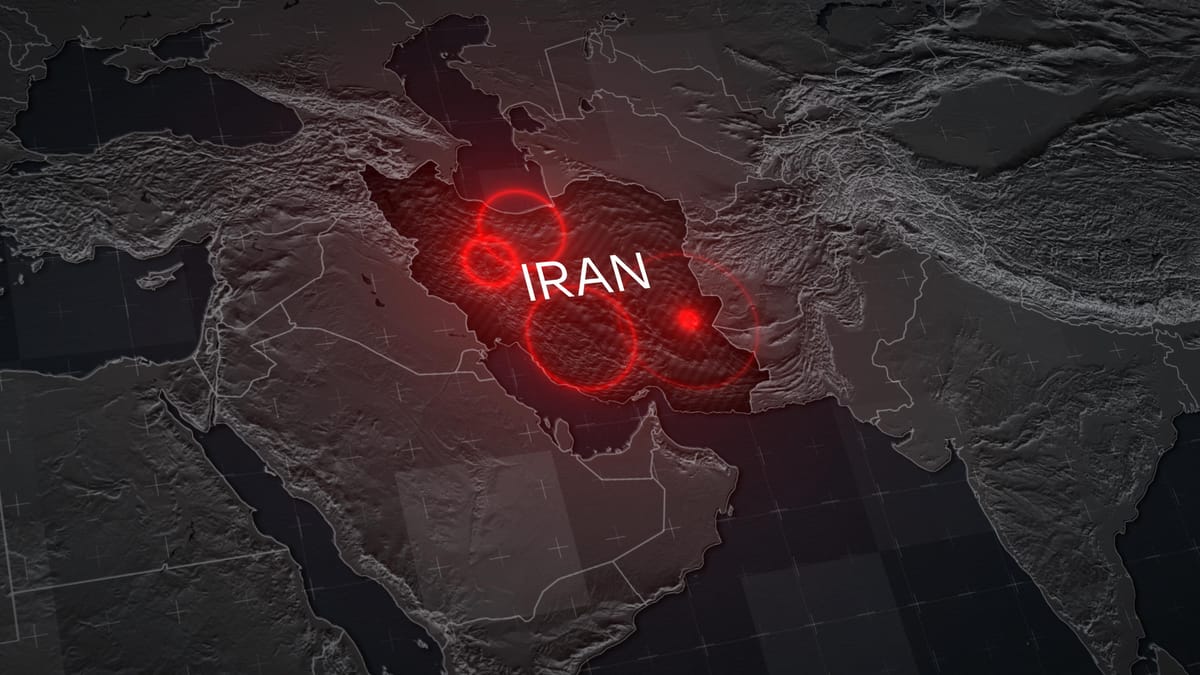
Having absorbed weeks of direct strikes and a humiliating 36-hour American special forces rescue operation conducted deep inside its own territory, Iran appears to be recalibrating. Direct, large-scale retaliation, the kind that risks a full U.S. military response, has given way to a more calculated asymmetric strategy built around global economic pain.
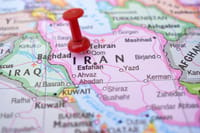
The Strait of Hormuz, through which roughly a fifth of the world's oil passes, is now more than 90% blocked. That alone is an unprecedented act of economic warfare. But Tehran is now signaling something further: Parliament Speaker Mohammad Bagher Ghalibaf has openly hinted at extending disruption to the Bab el-Mandeb Strait, the narrow chokepoint at the southern end of the Red Sea, through which oil, liquefied natural gas, wheat, rice, and fertilizer flow to Europe and Asia. Should that corridor close, the economic consequences would ripple far beyond the region.
Meanwhile, IRGC statements and regime media have grown increasingly pointed, warning that "the appointed day is approaching" and that the region could turn into "hell." Whether this is psychological warfare or genuine preparation for a coordinated strike involving Hezbollah, the Houthis, and remaining missile assets, or both, is the central intelligence question of the moment.
America Is Heating Up
The United States has crossed a threshold that, just weeks ago, would have seemed politically unthinkable. The double rescue operation, a pilot extracted in broad daylight after seven hours over Iranian airspace, followed by the nighttime recovery of a seriously wounded Air Force colonel after more than 24 hours of evasion deep in Iranian mountain terrain, confirmed what U.S. officials had until recently been careful not to say explicitly: American forces are conducting overt ground and air operations inside Iran.
The operational details that have emerged are remarkable. Approximately 100 personnel were involved. Four MH-6 Little Bird helicopters from the Army's elite 160th SOAR were deployed alongside two C-130 variants on an improvised dirt airstrip inside Iranian territory. When both Hercules aircraft's nose wheels became stuck in the ground, three AFSOC Dash-8 aircraft had to be dispatched for the evacuation. The aircraft and helicopters left behind, destroyed by U.S. bombs to prevent capture, represent confirmed losses of $270–386 million. The Iranians shot down two MQ-9 Reaper drones. Revolutionary Guard vehicles attempting to reach the site were destroyed by U.S. missiles.
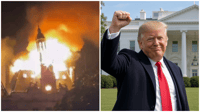
President Trump has personally overseen both operations and has made no attempt to downplay the scale of what occurred. If anything, he has amplified it, using the rescues to project an image of overwhelming American military dominance and willingness to operate where others would not.
The Diplomatic Paradox
Here is the detail that makes this moment uniquely volatile and uniquely unpredictable: even as American bombs destroyed Iranian vehicles and Iranian air defenses shot down American drones, negotiations were continuing.
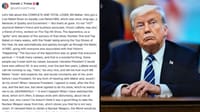
Trump confirmed on Fox News that Iranian negotiators, including Foreign Minister Araghchi and Parliament Speaker Ghalibaf, have been granted temporary diplomatic immunity. He also revealed that the U.S. had previously facilitated arms transfers to Iranian protesters, routed through Kurdish militias. And he issued what amounts to an ultimatum: "If Iran doesn't make a deal quickly, we will bomb them and take their oil."
This is not normal wartime diplomacy. It is a high-wire act, simultaneous combat and negotiation, with both sides apparently calculating that the other might blink before the situation becomes irreversible.
Two Paths Forward
Analysts tracking the situation see the next 48–72 hours breaking toward one of two outcomes, with little middle ground between them.
The first is rapid escalation: a coordinated Axis response involving Hezbollah, the Houthis, and Iranian missile assets; a potential second chokepoint closure at Bab el-Mandeb; and direct U.S. and Israeli strikes on Iranian oil infrastructure, a move that would send energy markets into historic territory.
The second is a sudden negotiated pause, driven by the convergence of extreme pressures on both sides. Trump's military successes have given Washington genuine leverage. The immunity window granted to Iranian negotiators suggests Tehran has not fully closed the door. And both sides have demonstrated, in the past 72 hours, that they understand how quickly this can get worse.
Monday's Oval Office press conference, Trump alongside military leaders at 1:00 PM ET, will be the first public accounting of where things stand. What is said, and what is pointedly left unsaid, will signal which path the region is on.
For now, one thing is certain: the next 72 hours will not look like the last 72. The only question is in which direction.