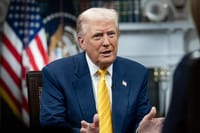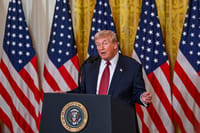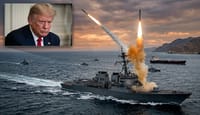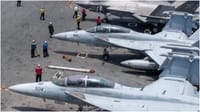
Let us be precise about what has happened here, because the chaos has a way of making the obvious hard to see. The United States went to war against Iran. In doing so, it handed the Islamic Republic something its mullahs had only dreamed of: effective control over the Strait of Hormuz, the narrow corridor through which a fifth of the world's oil and gas passes every single day. And now, the most self-proclaimed deal-making president in American history is on his knees, deadline after deadline, extension after extension, trying to buy back what his own recklessness gave away for free.
The audacity of the spin is breathtaking. Trump thundered that Iran would face devastation if it didn't open the strait. Then he gave a 10-day deadline. Then he extended it. Then extended it again. Then again. Brent crude screamed past $100 a barrel. Wall Street had "vicious swings." And somewhere in Tehran, someone was laughing.
What followed reads like a diplomatic fever dream. Trump took to Truth Social to announce that the U.S. would work with Iran to physically dig up and remove buried nuclear material - "Nuclear Dust," he called it, with characteristic grandeur. No Iranian official confirmed this arrangement. Pakistan, playing mediator, said nothing about uranium. The plan appeared to have been invented, typed, and published within the span of a single sleepless morning.
Then came the joint venture. Trump floated the notion of a shared U.S.-Iran operation to "secure" the Strait of Hormuz, a waterway Iran currently controls and the U.S. desperately needs reopened. Think about what that means. America's military, the most powerful in human history, would partner with the theocratic revolutionary state it just bombed, to jointly manage the shipping lane it failed to keep open. If a Democratic president had proposed this, the Republican Party would have dissolved from sheer apoplexy.
The reported nuclear framework is no better. Twelve years of halted enrichment, not elimination, not dismantlement, in exchange for sanctions relief, frozen assets unfrozen, and a U.S. military posture humbled across the Middle East. Iran keeps its centrifuge knowledge. It keeps its infrastructure. It keeps, above all, the lesson it has just learned: that closing the Strait of Hormuz is a more powerful deterrent than any bomb. As one Democratic congressman put it, Washington has handed Tehran a new strategic weapon far more potent than anything enriched uranium could provide.
And Iran knows it. Iranian officials denied that talks were even happening while Trump was publicly announcing their progress. The foreign minister departed Islamabad before American envoys arrived. When Trump claimed Iran "wants to make a deal," Tehran called it a sign that he had backed down "following Iran's firm warning." The Islamic Republic is running diplomatic circles around an administration that governs by social media post and golf resort press conference.
None of this needed to happen. The Strait of Hormuz was open. Sanctions were biting. Iran's economy was strained. Whatever strategic logic drove the decision to strike was either never articulated clearly or has since evaporated entirely. What remains is a war with no clear victory condition, a global energy market held hostage, and a president who once promised to be the toughest dealmaker on earth now issuing deadlines he has no intention of enforcing.
The art of the deal, it turns out, looks a great deal like the chaos of the amateur, dressed up in capital letters, published at 3am, and defended by spokespeople who carefully clarify that "nothing is final until announced by the President." Which is to say: nothing is real until it isn't.
The world's most important waterway is closed. Oil is above $100. Deadlines come and go like weather. And the president is proposing joint ventures with the country he went to war with.
Which begs a few questions:
Why is so Trump so desperate to end this war?
Has he actually lost his mind completely?
Or has he just lost any control he purported to hold over Iran?