Get our mobile app
Download on the App StoreGet it on Google Play

History's lesson • Analysis

Parties that promised big — and crashed

A look back at the costliest wipeouts in Israeli election history, from Techiya in 1992 to Otzma Yehudit in 2019, and the hundreds of thousands of votes lost along the way.

Israel’s Graveyard of Wasted Votes, From Techiya to Otzma Yehudit

The pattern repeats itself every election: new parties on the right and in the chareidi world promise a fresh start and an end to "the corrupt old guard," but their place in the next Knesset is anything but guaranteed.

Israeli electoral history is littered with parties that vowed to be "the surprise of the election" and bring in six to eight seats at minimum. Despite the euphoria and the momentum they claimed to feel on the ground, the results were brutal — and costly for the entire bloc. Here is that history, in the hope that the lesson will be learned.

1992 elections: the right's bonfire

The 1992 elections to the 13th Knesset saw one of the largest vote hemorrhages in the history of the national camp. The threshold was raised that year from 1% to 1.5%, and the right-wing bloc lost tens of thousands of votes to multiple lists that failed to cross it. The lost votes handed Yitzhak Rabin's left-wing bloc the margin it needed to form the government that led to the Oslo Accords.

The parties that crashed:

Techiya: Founded in the late 1970s in protest against the Camp David Accords and the evacuation of the Yamit region, the party brought together prominent ideological right-wing figures, Geula Cohen, Yuval Ne'eman, Elyakim Haetzni and Chanan Porat, and was an influential force in Likud-led governments. Heading into 1992, it was seen as the uncompromising voice of the national camp in the face of the Madrid Conference.

Ready for more?

The party presented itself as the only ideological anchor that could prevent Netanyahu and Shamir from withdrawing from territory. Polls predicted a stable Knesset presence, but the result at the ballot box was a crash: just 31,957 votes (1.2%), and the party did not cross the 1.5% threshold.

Torah VeHa'aretz (Rabbi Moshe Levinger): Founded by Rabbi Moshe Levinger, one of the leaders of Gush Emunim and a key figure in renewing Jewish settlement in Chevron, the party argued that Techiya was not sufficiently Torah-based or hardline in its positions.

The list presented a Torah-current platform calling for full sovereignty over all of Eretz Yisrael, massive settlement expansion, and uncompromising war on terror without bowing to international pressure, particularly after the Madrid Conference.

The campaign headquarters was based mainly on field activity in Yehudah and Shomron, in hesder yeshivos and yeshivos of the ideological stream. The idea was to gather the votes of "chardal" (chareidi-leumi) voters looking for strong spiritual leadership.

When the moment of truth came, the Torah-nationalist public preferred to stick with established parties — the National Religious Party under Zevulun Hammer or Moledet under Rechavam Ze'evi. The party received just 3,708 votes (0.14%).

Geulat Yisrael (Rabbi Eliezer Mizrachi): Rabbi Eliezer Mizrachi, a former MK for Chabad and Agudas Yisrael, became famous when he refused to support the "stinking maneuver" in 1990, thereby preventing the formation of a left-wing government under Shimon Peres. Heading into 1992, he founded an independent chareidi-nationalist list.

His campaign was based on his image as "the savior of the right" from 1990 and on a unique chareidi-nationalist message: absolute loyalty to the integrity of the Land based on halachic rulings and the Lubavitcher Rebbe's directives, alongside concern for the needs of the chareidi and religious public. Mizrachi promised to be "the balancing factor" that would prevent any future political compromise.

In practice, the party won 12,851 votes (0.5%), an impressive number for a one-man list, but far from the threshold of around 39,000 votes. Most Chabad chassidim and the chareidi public ultimately preferred to vote for the official chareidi parties (United Torah Judaism or Shas) or for right-wing parties like Tzomet and Moledet.
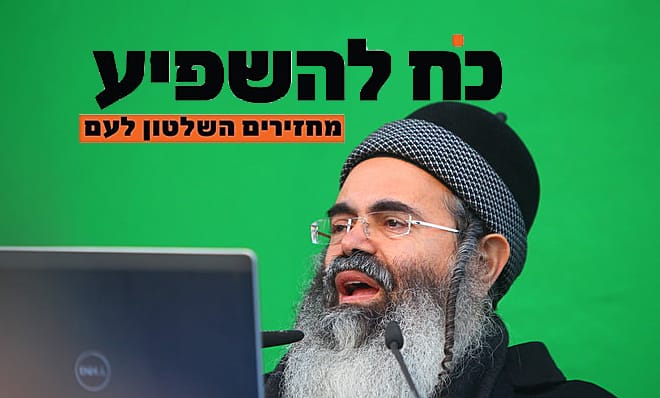
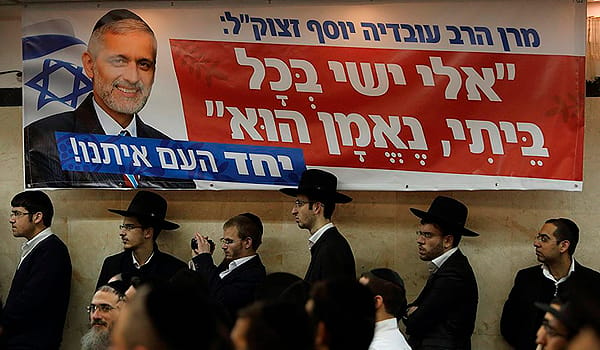
Campaign poster for Rabbi Amnon Yitzchak's party
Campaign poster for Rabbi Amnon Yitzchak's party (Photo: Meir Alfasi, Kikar HaShabbat)

2013 elections: an inflation of parties

In the elections to the 19th Knesset held in 2013, the threshold stood at 2% (equivalent to 75,854 votes). In this election cycle, numerous right-wing, religious and chareidi parties ran, promising to bring a new message or represent unique constituencies, but when the moment of truth came they remained outside the Knesset and together burned more than 150,000 votes.

The parties that crashed:

Koach LeHashpia (Rabbi Amnon Yitzchak): Rabbi Amnon Yitzchak, known as a famous kiruv figure, founded a party meant to challenge the Shas leadership. The platform focused on lowering food prices, caring for the weaker sectors and fighting corruption. His slogan about "chicken for a shekel" is still remembered.

Rabbi Amnon Yitzchak's rallies drew thousands of participants, and the campaign created a major storm in the chareidi and Sephardi street, including sharp confrontations with Shas. His circle spoke of a high number of seats, but in practice the ballot-box result was just 28,049 votes (0.74%) in total. Public pressure and the mobilization of Shas rabbis stemmed the flow of votes, and the party suffered a resounding failure.

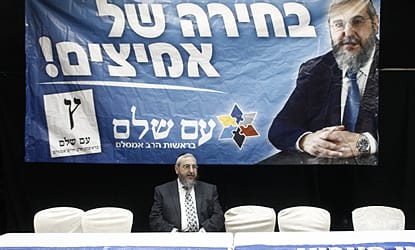
Amsalem's party
Amsalem's party (Photo: Flash90)

Am Shalem (Rabbi Chaim Amsalem): Rabbi Chaim Amsalem, who was elected to the Knesset on the Shas ticket, was expelled from its ranks after presenting independent positions. He founded the Am Shalem party, which offered moderate chareidism, encouragement of entering the workforce, military or civilian service, and lenient conversion.

The party won considerable sympathy in the general media and among traditional and secular circles who saw it as a bridge between sectors. Polls showed a real chance of six seats. But in practice the ballot-box result was 45,691 votes (1.20%).

It thus became clear that the classic chareidi public remained loyal to Shas following the directive of Rav Ovadia Yosef zt"l, and the secular and traditional public preferred to vote for other centrist parties such as Yesh Atid.

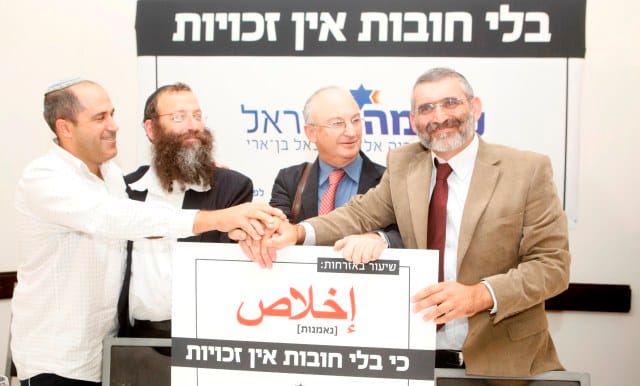
Otzma LeYisrael (Aryeh Eldad and Michael Ben Ari): A union between MK Professor Aryeh Eldad (formerly of HaTikva) and MK Michael Ben Ari (formerly of the National Union). The party offered a nationalist, hawkish and uncompromising right.

The election campaign was characterized by sharp slogans ("No obligations without rights") and a strong field presence. Some exit polls on election night even predicted two seats for the party. But the ballot-box result was painful: just 66,744 votes (1.76%). The threshold stood at 2%, and the party was short by only about 9,000 votes. Its failure led to the burning of over 66,000 right-wing votes.

Otzma LeYisrael
Otzma LeYisrael (Photo: Flash90)

2015 elections: Yachad to the bottom of the threshold

Yachad (Eli Yishai): After the passing of Rav Ovadia Yosef and the return of Aryeh Deri to the Shas leadership, former chairman Eli Yishai broke away and founded the Yachad party, with the spiritual leader being the rosh yeshiva of Kisei Rachamim, Rav Meir Mazuz zt"l.

To ensure crossing the threshold, Yishai joined forces with MK Yoni Chetboun, who had left Bayit Yehudi after refusing to vote for the draft law. In addition, he signed a joint-run agreement with Otzma Yehudit figures, with Baruch Marzel placed in the fourth spot (realistic according to polls) on the list.

The union between Sephardi chareidim, the chardal public and the far right was seen as a significant electoral force. Polls throughout the entire campaign showed the party crossing the threshold (which stood at 3.25%) and receiving four to five seats.

In practice, the party received 125,158 votes (2.97%). The party was short by only about 11,000 votes. In total, 125,158 right-wing and chareidi votes went down the drain, the largest number of wasted votes for a single party in the history of Israeli elections up to that point.

Election rally for the Yachad party
Election rally for the Yachad party (Photo: Yaakov Naumi/Flash90)

April 2019 elections: the 1,400 missing votes that led to chaos

The April 2019 elections to the 21st Knesset will be remembered as one of the most lethal election cycles for the national and religious camp. The threshold stood at 3.25% (equivalent to 140,052 votes). In this election cycle, an unprecedented number of right-wing, liberal-right, religious and chareidi parties ran, promising to be the great news, but crashed at the polls and together burned about 366,000 votes.

The parties that crashed:

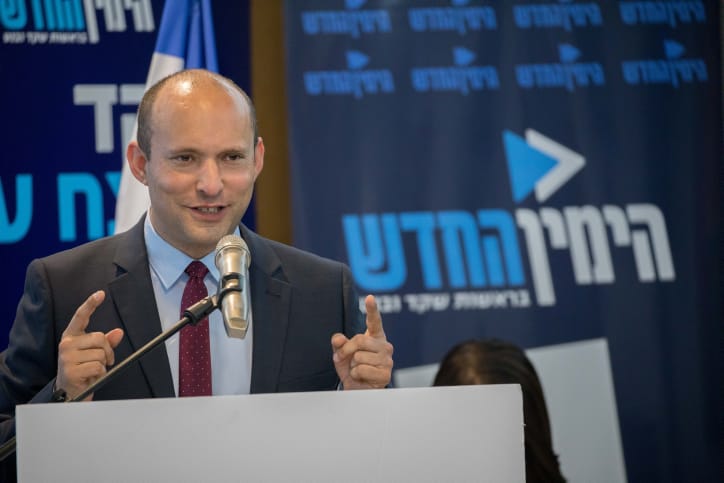
HaYamin HeHadash (Naftali Bennett and Ayelet Shaked): Bennett and Shaked left Bayit Yehudi and founded a party that promised an equal connection between religious and secular, a firm political-security line and economic liberalism, with the goal of breaking through the glass ceiling of religious Zionism.

The two ran a resource-heavy campaign under the slogan "Shaked will win on justice, Bennett will win on security." In polls the party moved steadily between six and eight seats. The ballot-box result was harsh and painful: 138,598 votes (3.22%). The party was short by only about 1,400 votes to cross the threshold.

This dramatic fall was the main catalyst for Netanyahu not having 61 recommenders, which led to the dissolution of the Knesset and the start of the repeat-elections cycle.

Photo: Yonatan Sindel/Flash90

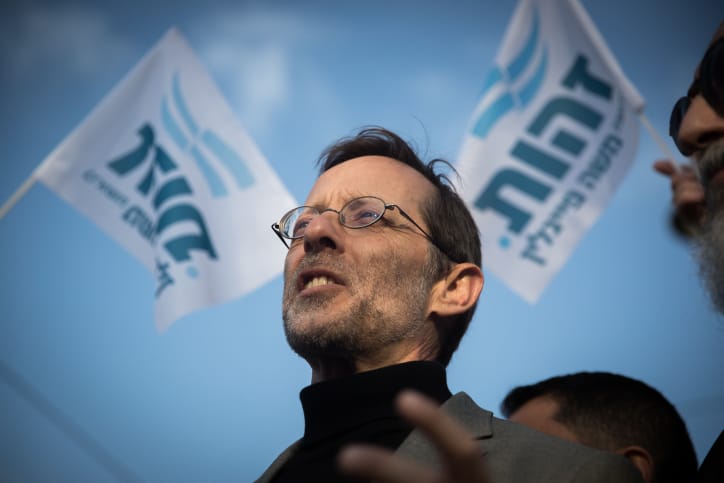
Zehut (Moshe Feiglin): An unprecedented combination of hardline Jewish-identity right (Har HaBayit, cancellation of the Oslo Accords) with extreme libertarianism, free market and full legalization of cannabis.

The campaign became a massive social and media phenomenon, especially among young people. In polls in the weeks before the election, it was predicted to win between five and eight seats, and Feiglin presented himself as the balancing factor of the political system.

But despite the euphoria, the ballot-box result was a lethal crash: 118,031 votes (2.74%). When the moment of truth came, voters returned to the veteran parties and the party remained deep below the threshold.

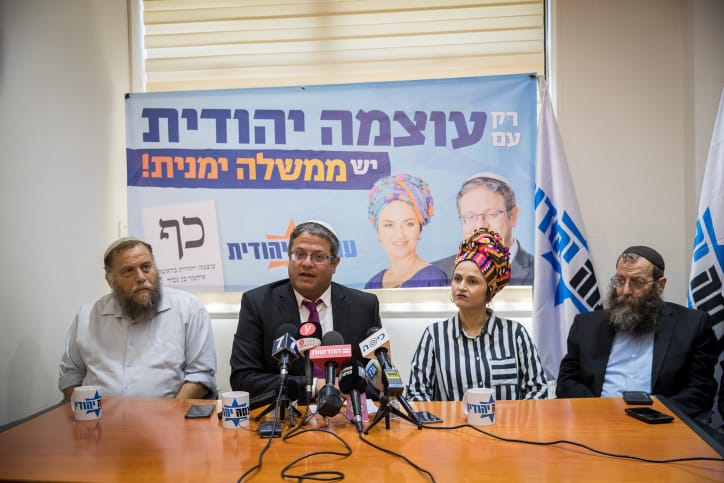
Otzma Yehudit in the second round of elections (September 2019)
Otzma Yehudit in the second round of elections (September 2019) (Photo: Yonatan Sindel/Flash90)

September 2019 elections: a partial lesson learned

In the second-round elections (September 2019, the 22nd Knesset), held just five months after the right's crash in April, the right-wing and religious parties learned only a partial lesson. The threshold stood at 3.25% (about 144,000 votes).

Despite the formation of Yamina (a union of Bayit Yehudi, the National Union and Bennett and Shaked's HaYamin HeHadash), the national and chareidi camp continued to burn precious votes due to independent runs outside the bloc.

Otzma Yehudit (Itamar Ben Gvir): After being pushed out of the Yamina union, Ben Gvir ran a determined campaign and argued that the establishment right-wing parties had abandoned true values. He promised that he had broad support on the ground that would bring him above the threshold.

Netanyahu and Likud ran a sharp "drinking" campaign against him and warned of burning votes again, while Ben Gvir claimed that Netanyahu was trying to pressure him to withdraw unjustly.

In practice, the ballot-box result was painful: 83,609 votes (1.88%). Ben Gvir remained very far from the threshold. These votes, equivalent to about 2.5 seats, went down the drain and prevented the right-chareidi bloc from reaching 61 seats (the bloc stopped at just 55 seats).

Ready for more?

Join our newsletter to receive updates on new articles and exclusive content.

We respect your privacy and will never share your information.

Enjoyed this article?

Yes
No
Follow Us:

Unmissable content


Loading comments...

Also of Interest