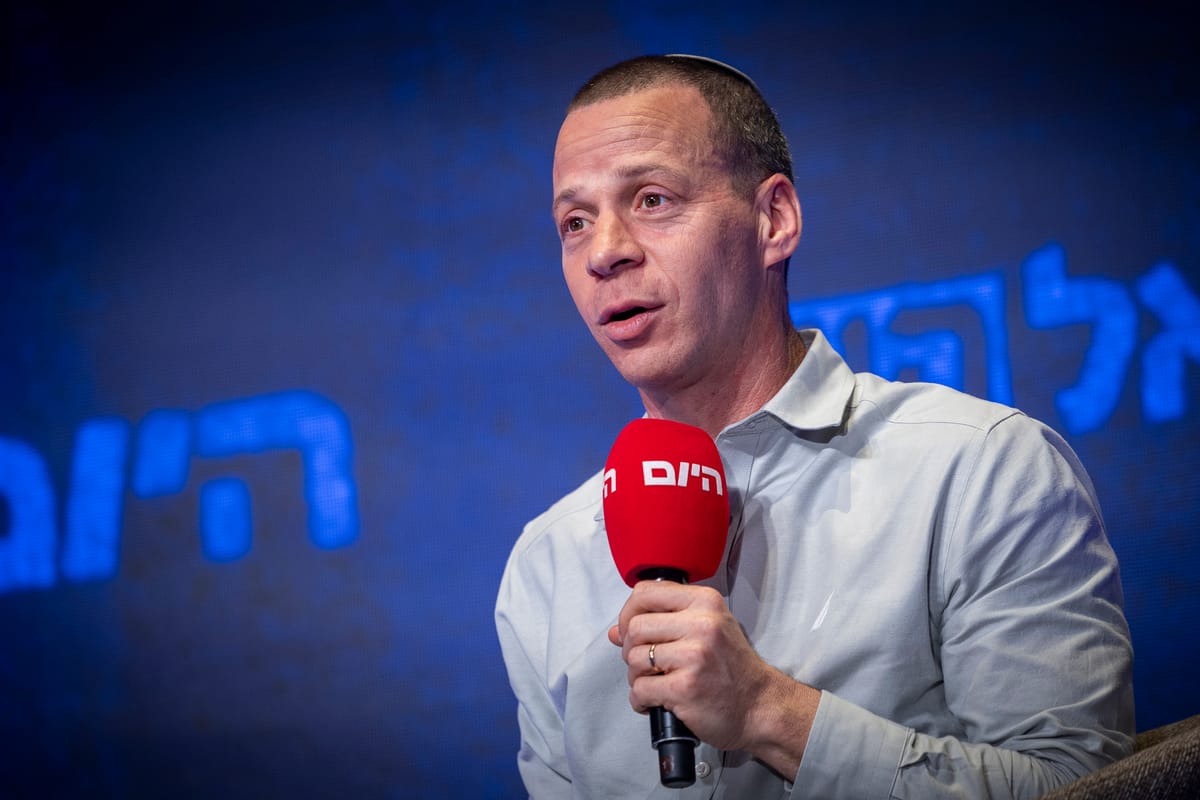
In an opinion column published Thursday evening, political analyst Amit Segal examines the options facing Israel's political system following the election results, presenting a scenario in which the Change Bloc cooperates with the chareidi parties alongside the possibility of a unity government between Gadi Eisenkot and Benjamin Netanyahu.
"At the start of the week we were practising our Arabic," Segal quoted a senior adviser in the Change Bloc, "by the end, our Yiddish." The remark refers, according to the column, to initial contacts being conducted through intermediaries with Degel HaTorah, the Lithuanian faction in United Torah Judaism.
According to Segal, the Change Bloc is examining the possibility of reaching understandings with the chareidi parties, with the draft law at the centre of the move. He notes that the leader of Degel HaTorah, Rav Lando, has already declared in the past that "there is no longer a bloc," and presents the possibility that the party will choose to cooperate with the Change Bloc.
But Segal stresses that this is a move fraught with significant political difficulties, particularly in light of the declarations made by the heads of the Change Bloc during the election campaign.
The chairman of the Yashar party, Gadi Eisenkot, declared that "millions voted for conscription for all," while Naftali Bennett stated that "the covenant of those who serve has defeated the covenant of those who evade." Avigdor Lieberman also pledged not to sit with or rely on the chareidi parties.
According to Segal, Eisenkot will need to ensure that Bennett and Lieberman do not act against him following a possible agreement with the chareidim, and that the chareidi parties are not conducting the contacts merely to improve their position vis-à-vis Netanyahu.