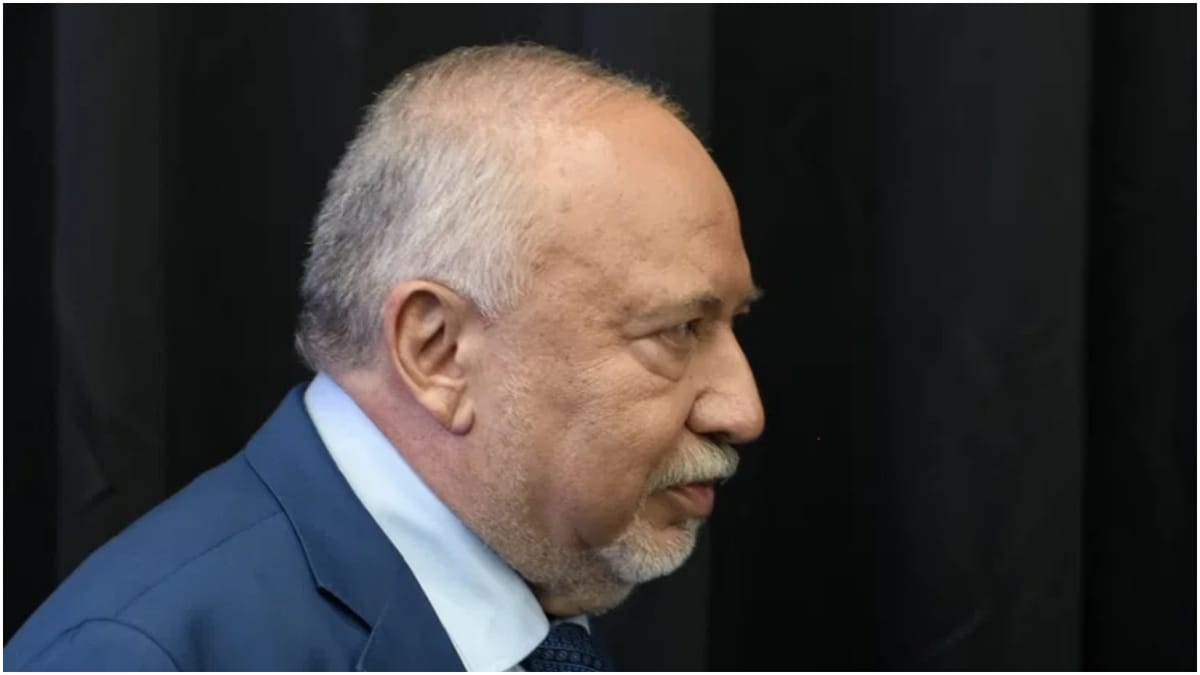
Yisrael Beytenu chairman Avigdor Liberman has formally lifted his years-long boycott of the haredi parties, Channel 12 political correspondent Amit Segal reported Thursday evening.
Before the election, Liberman made three core pledges to his voters: not to sit with the Arabs, not to sit with Netanyahu, and not to sit with the haredim. According to the report, Liberman now argues that given the situation in America, he must keep his promise to replace Netanyahu, and that sitting with or relying on the Arab parties is not viable given the public's rightward shift and the lack of prospects for such a government. That leaves the haredi parties, and Liberman has given his Change Bloc partners the green light to negotiate with them.
The talks would be based on the 2018 exemption law, a bill Liberman himself proposed when he served as defense minister in a coalition with the haredim. The haredi parties rejected it at the time, a decision they are said to regret to this day.
If such a coalition materializes, the Change Bloc together with the haredi parties, Segal reported that a rotation is expected between Gadi Eisenkot and Avigdor Liberman for the premiership.
According to the report, the Change Bloc views United Torah Judaism's decision not to recommend Netanyahu as a sign of seriousness in these talks, which are already underway. As for Shas, Aryeh Deri wants to go with Netanyahu, and Shas moves in lockstep with Likud. The assumption in the Change Bloc is that the decision of the Lithuanian leader, Rosh Yeshiva HaGaon Rav Dov Lando shlita, will bring the other haredi factions along with it.
As for the law itself, Segal added, if it is the same 2018 bill, it is far more lenient toward bnei Torah than the draft law the opposition attacked. The bill imposes financial sanctions on yeshivos only after three years, and includes no personal sanctions on those who do not enlist.
With these developments, two competing governments are now in view: Eisenkot is considering a minority government that could be sworn in as early as next week, while at the same time negotiations are proceeding with United Torah Judaism in the hope of bringing Shas as well into a 61-seat coalition, a dramatic turn after the campaign Liberman and Eisenkot have led in recent years.