When we think of the Holocaust, Auschwitz and Buchenwald come to mind. But deep in occupied Manchuria, the Imperial Japanese Army operated a facility so depraved that it rivals the worst Nazi death camps, yet its architects not only escaped the hangman's noose but were given jobs by the United States.
Welcome to Unit 731, the secret city where human beings were reduced to laboratory rats in the name of "science."
The "Lumber Mill" of Death
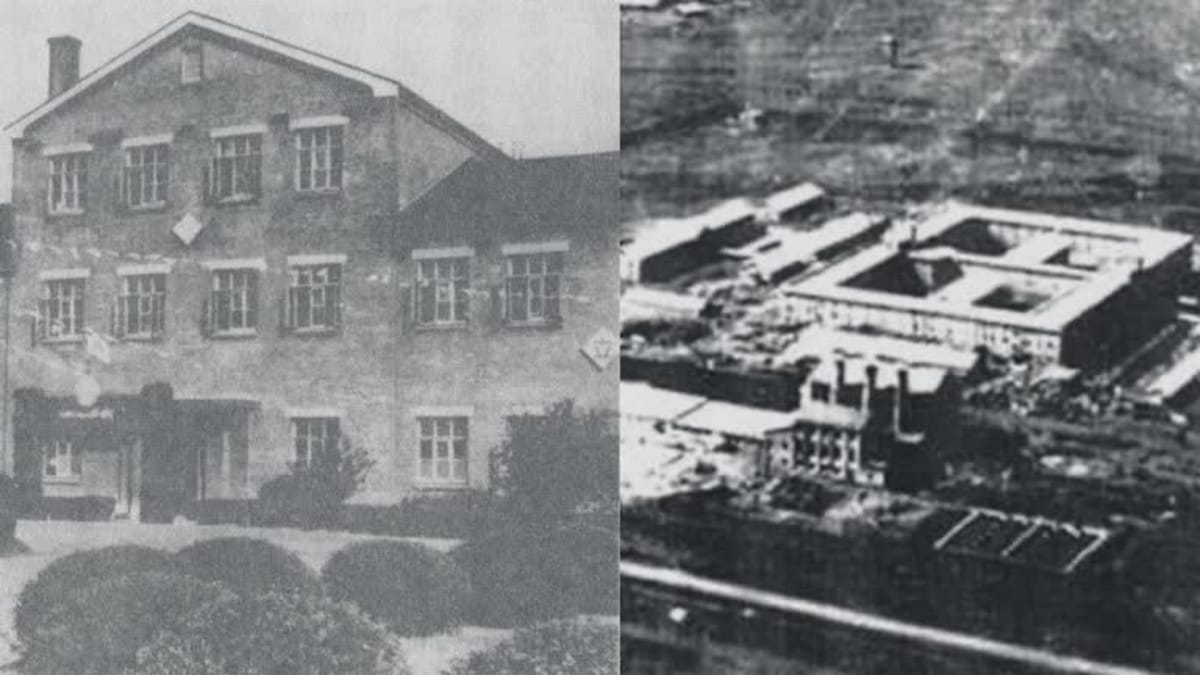
Located in Pingfang, China, the facility was a sprawling complex disguised as a lumber mill. The Japanese staff even had a sick inside joke for their victims: they called them "Maruta" - Japanese for "logs."
These "logs" were Chinese civilians, Russian and Korean prisoners, and even Allied POWs from the US and Britain. To the doctors of Unit 731, they were not people; they were raw material.
A Catalog of Horrors
The experiments conducted at Unit 731 read like the script of a gore film, but they were terrifyingly real. According to historical records and testimony:
- Vivisection Without Anesthesia: Doctors routinely opened up living prisoners to study their organs. Anesthetics were banned because the researchers feared the drugs would distort the "data."
- The Frozen Limbs: In the freezing Manchurian winter, prisoners were tied outdoors until their limbs froze solid. Guards would strike the frozen arms with sticks; if it made a "hollow sound," they were ready. The victims were then dragged back inside to be defrosted, often to study the onset of gangrene or to have the dead flesh ripped off.
- Human Frankenstein Experiments: Surgeons would amputate limbs and reattach them to other parts of the body, sewing legs onto arm sockets just to see if it was possible.
- The Pressure Chambers: Victims were placed in high-pressure vacuum chambers where air was pumped out until their eyes popped from their sockets and their internal organs ruptured.
The Mad Scientist: Dr. Shiro Ishii
The mastermind behind this nightmare was Lieutenant General Shiro Ishii. He was a brilliant but twisted microbiologist, a "swashbuckling womanizer" who frequented Tokyo’s geisha houses, and a man obsessed with biological warfare.
Ishii was also a showman. In a bizarre display to prove the effectiveness of a water filter he invented, he reportedly urinated into the device and drank the purified liquid in front of Emperor Hirohito. But his true passion was weaponizing the plague. Under his command, Unit 731 dropped clay bombs filled with plague-infected fleas over Chinese cities, unleashing epidemics that killed an estimated 400,000 civilians.
The Ultimate Betrayal: The US Cover-Up
When the war ended in 1945, the Soviets were closing in. Ishii ordered the facility destroyed and the remaining "logs" executed. He told his staff to "take the secret to the grave."
But the Americans found them first. In one of the most cynical moves of the Cold War, General Douglas MacArthur and the US government made a secret deal. They granted Ishii and his team total immunity from prosecution.
Why? Because the US wanted their data.
The Americans were desperate for biological warfare advantages against the Soviet Union and decided that the research data, harvested from the torture of thousands, was too valuable to lose. While Nazi doctors were tried at Nuremberg, the butchers of Unit 731 were secretly smuggled to the US or allowed to return to civilian life in Japan.
The Legacy
The injustice is staggering. One prominent Unit 731 doctor, Masaji Kitano, didn't go to prison; he went on to become the president of 'Green Cross', Japan's largest pharmaceutical company.
To this day, the scars of Pingfang remain. As recently as 2003, construction workers in China were hospitalized after digging up buried chemical shells left behind by the unit. While the world vowed "Never Again" after the Holocaust, the ghosts of Unit 731 serve as a chilling reminder that justice is often the first casualty of political convenience.