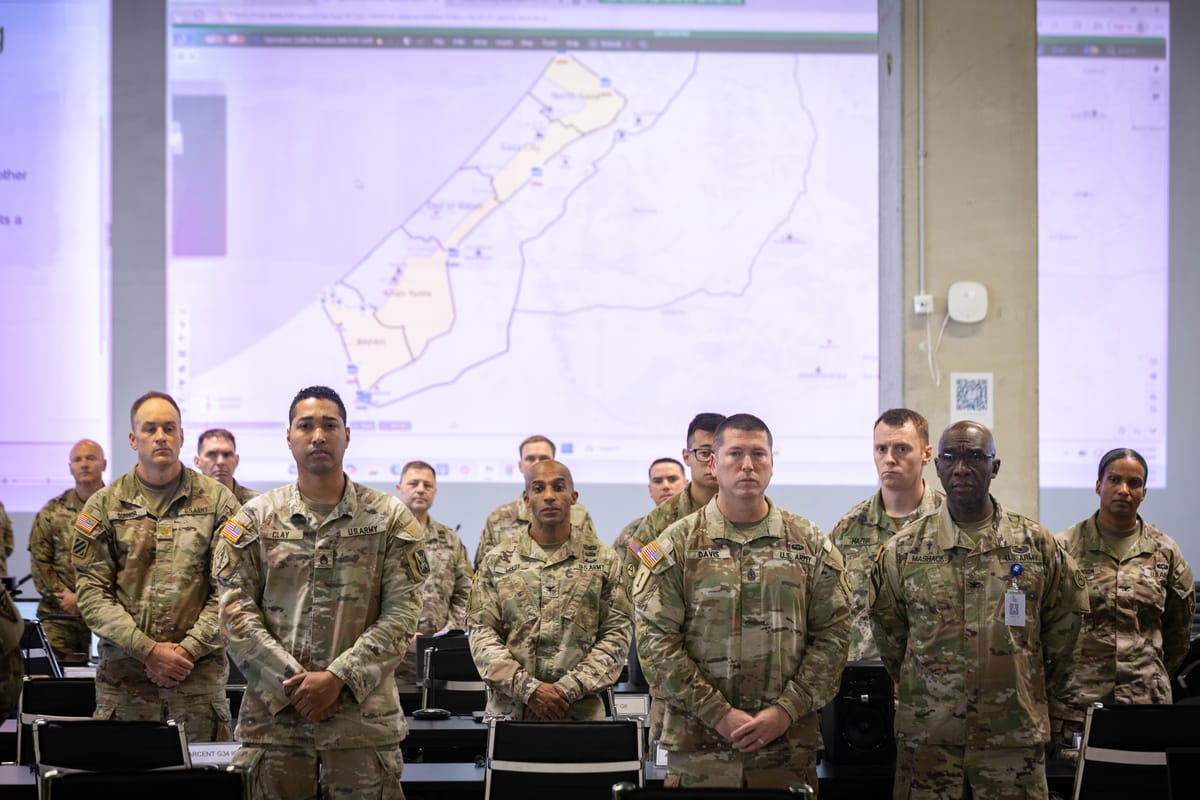
The United States lodged a sharp protest with Israel after discovering that Israeli forces had been conducting covert surveillance of American and allied personnel at the Civil Military Coordination Center (CMCC), a joint base in southern Israel created to manage humanitarian aid flows into Gaza and begin early planning for the territory’s post-war administration.
According to officials familiar with the incident, U.S. commanders were “deeply angered” to learn that Israeli operatives had recorded conversations and monitored movements inside the facility. The finding triggered an immediate internal alert, and staff from multiple countries were instructed to avoid discussing sensitive matters until the extent of the surveillance could be assessed.
Lt. Gen. Patrick Frank, who heads the American presence at the CMCC, reportedly summoned an Israeli counterpart and issued a direct demand that the activity stop at once. U.S. officials described the message as unusually blunt, reflecting what they saw as a breach of trust inside an installation meant to function as a joint platform for humanitarian coordination rather than an intelligence battleground.
Israel has denied that any espionage took place, insisting the meetings were unclassified and that preparing summaries is standard military procedure. Israeli officials rejected the allegation that the recordings were covert or intended to gather intelligence on partners.
The surveillance dispute comes atop existing frustrations surrounding the CMCC’s operations. The center, presented publicly as a major step toward stabilizing Gaza, contains no Palestinian representation of any kind. Internal planning documents avoid references to Palestinian institutions, and humanitarian organizations say the setup sidelines the very population whose future is being discussed.
Despite the CMCC’s stated role in facilitating aid, access for humanitarian convoys remains tightly restricted by Israel, leaving international agencies struggling to deliver consistent supplies. Diplomats say the surveillance episode has underscored broader concerns about transparency, cooperation, and Israel’s willingness to treat the CMCC as a genuine joint effort.
For Washington, the incident represents a significant setback at a sensitive moment in regional diplomacy, straining a partnership central to the Gaza ceasefire framework and complicating efforts to chart a post-conflict path.