Get our mobile app
Download on the App StoreGet it on Google Play

The new math

Tzeva Shachor: we add votes, not split them

New campaign video argues 246,000 chareidi voters are unrepresented today, and seven in ten supporters will stay home if the party doesn't run, scenario shows 19–21 chareidi seats instead of 15

Tzeva Shachor Claims it Won't Split the Vote - It will Add four Mandates
The party's campaign video
The party's campaign video (Photo: Tzeva Shachor)

A new campaign video from Tzeva Shachor (Black Color) is trying to reframe the debate over whether it splits the chareidi vote. Instead of asking how many votes the party will take from Shas and United Torah Judaism, the video presents data on hundreds of thousands of potential chareidi voters who are not currently represented in the polls.

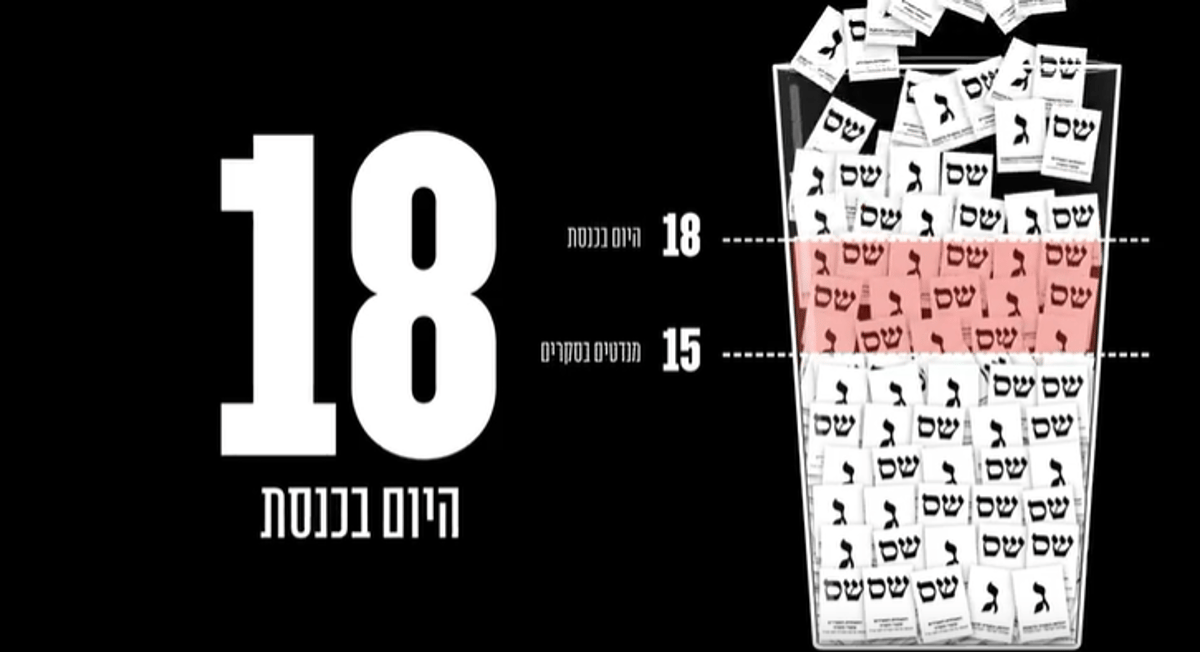
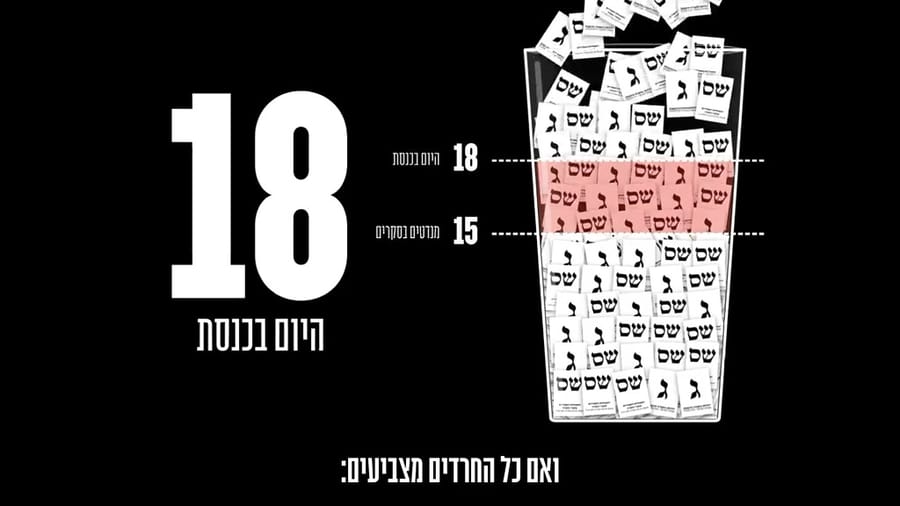
According to the figures presented in the video, there are currently around 730,000 eligible voters in the chareidi public. But despite the sharp rise in potential voters, Shas and UTJ together are polling at only around 15 mandates, fewer than their combined strength in the outgoing Knesset.

The campaign presents a central claim: approximately 246,000 chareidim are not currently reflected in the polling data for Shas and UTJ. Some have moved to other parties, some belong to communities that do not participate in elections, and others simply stayed home.


The striking figure Tzeva Shachor presents is that seven out of ten of its supporters will not vote this year if the party does not run. According to the party, most of its supporters are not choosing between it and Shas or UTJ, their choice is between voting for the new party and staying home.

At the center of the video is a scenario in which Shas and UTJ together receive 15 mandates, and Tzeva Shachor adds four, bringing the total chareidi strength to 19 mandates. In another scenario, the two veteran parties are shown with 16 mandates, alongside Tzeva Shachor with five, for a total of 21 chareidi seats.

To reinforce the argument, the video goes back to the 1980s and the founding of Shas. Back then too, the campaign recalls, there were fears that a new chareidi party would split the existing strength. In practice, the video shows, the establishment of Shas expanded chareidi representation and brought new constituencies into the political arena.

Behind the mandate calculations stands the party's central message: opposition to the draft framework. The campaign argues that the right to be chareidi and learn Torah cannot be limited to quotas or targets, and that a political force is needed whose central purpose will be a full arrangement of the status of yeshiva students.

The video also attacks the possibility of transferring chareidi votes to Otzma Yehudit, and recalls its positions on integrating chareidim into service. In doing so, the campaign seeks to present the chareidi voter with a choice between parties that have a broad agenda and a list that declares that the issue of the yeshiva world stands at the center of its existence.

The debate surrounding Tzeva Shachor is expected to intensify as election day approaches. The veteran parties will continue to warn of a split and loss of votes below the electoral threshold. The new party will try to prove that it is precisely its absence that will leave a large public at home.

Ready for more?

Join our newsletter to receive updates on new articles and exclusive content.

We respect your privacy and will never share your information.

Enjoyed this article?

Yes
No
Follow Us:

Unmissable content


Loading comments...

Also of Interest