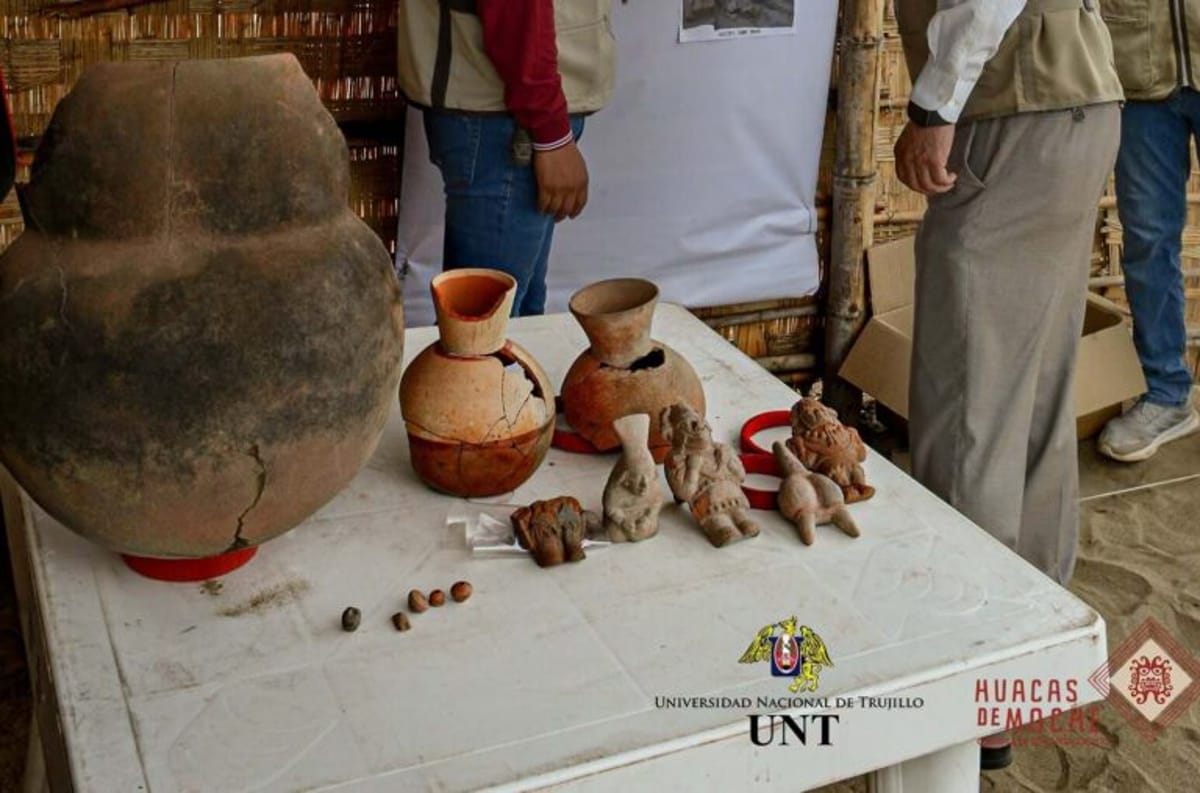
Archaeologists working at the Huacas de Moche archaeological complex in northern Peru have uncovered the approximately 1,500-year-old burial of a young child. Alongside the toddler's remains, researchers found an unusual collection of grave offerings including two whistles, a rattle, and sculpted pottery.
The child is estimated to have been between one and one-and-a-half years old at the time of death. The remains were positioned lying down with the head facing south and feet pointing north. According to archaeologist Germy Mejía López, this burial orientation aligns with customs practiced by the Moche culture, which flourished along Peru's northern coast during the first millennium CE.
The three sound-producing objects, the two whistles and the rattle, have drawn particular attention from researchers. While it may be tempting to interpret them as toys that belonged to the toddler during life, the team emphasizes that no evidence currently supports this. The items could equally have been ritual objects, symbols connected to beliefs about the afterlife, or offerings selected for personal significance to the child's family.
The burial's location has also intrigued investigators. It was discovered in Architectural Complex 61, a residential zone situated in the southern section of the ancient urban center. Unlike the elaborate temples associated with Moche culture, this grave was found in an area where the city's inhabitants conducted their daily lives.
The complex contained small platforms, walls dividing the space into separate rooms, and domestic pottery left behind when the area was abandoned. These findings may provide information about residents' diet, household activities, and how they integrated living spaces with burial and commemoration practices.
The ancient city stretched between two massive adobe structures: Huaca del Sol (Temple of the Sun) and Huaca de la Luna (Temple of the Moon). Between these monumental buildings lay an active urban center that included homes, workshops, streets, plazas, corridors, and water channels.
Carlos Rengifo, director of the archaeological project at the site, explained that child burials discovered at the location are uncommon. He noted that current excavations allow researchers to examine not only the temples and grand ceremonies of Moche culture, but also the lives of people who resided in the city and how they treated their dead.
The research team is now documenting the complex through photographs, drawings, measurements, videos, and aerial imagery. They plan to dig deeper into older layers that may reveal how the residential area changed over time. Once the excavation phase concludes, the site will be covered with clean sand to protect it from heavy rains that could result from El Niño weather patterns.
The precise meaning of the objects buried with the toddler remains a mystery. However, the very decision to place whistles, a rattle, and sculpted pottery alongside the child indicates that the death was marked by a deliberate ceremony and special treatment from the community in which the child lived.