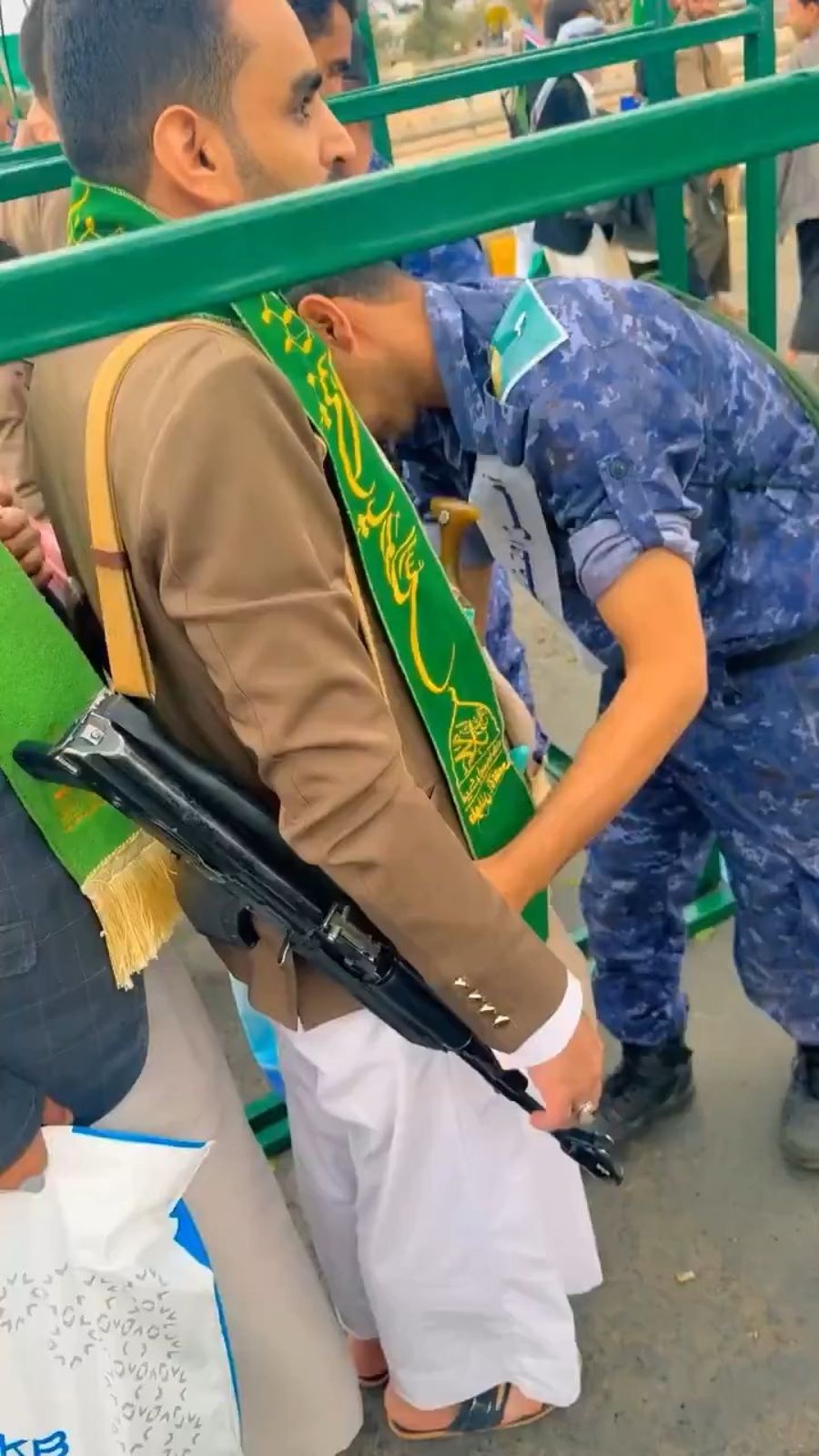
Video circulating on social media shows what appears to be a security checkpoint at an event in a Houthi-controlled area of Yemen. The footage depicts men undergoing physical searches as security personnel check for suicide belts and explosive devices. However, the screening reveals an unusual approach: while guards carefully search for hidden explosives, many attendees continue to openly carry firearms, including assault rifles and traditional daggers. The weapons are not confiscated during the inspection, a detail that has drawn attention from international observers unfamiliar with Yemeni cultural norms.
Yemen
Houthis Screen for Bombs, Allow Rifles
Footage from Yemen shows attendees passing through security that searches for suicide belts while permitting assault rifles and traditional daggers
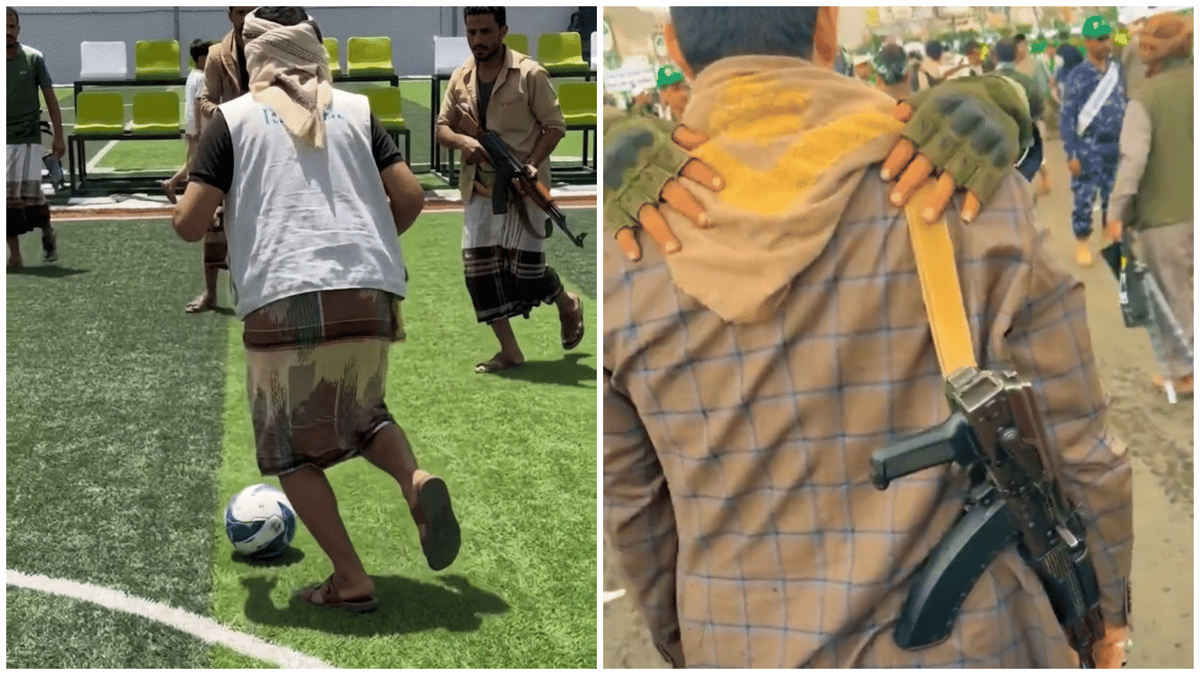
The scene reflects Yemen's deeply rooted gun culture. In many parts of the country, particularly in tribal regions of the north and west, men routinely carry weapons as part of daily life. This practice is tied to tradition, social status, honor, and masculinity. The traditional Yemeni dagger known as the jambiya is especially significant, serving as both a cultural symbol and a standard component of male dress and identity throughout the country.

The documented security procedure focuses on a different threat: not whether someone is armed, but whether they are carrying explosives or a suicide belt. This approach emerges from years of civil war, militia activity, and suicide attacks that have plagued Yemen.
[The Houthis, an Iran-backed militant group that controls significant portions of northern Yemen including the capital Sanaa, have been engaged in conflict since 2014, creating a security environment where explosive devices pose a more immediate concern than conventional weapons already ubiquitous in society.]