
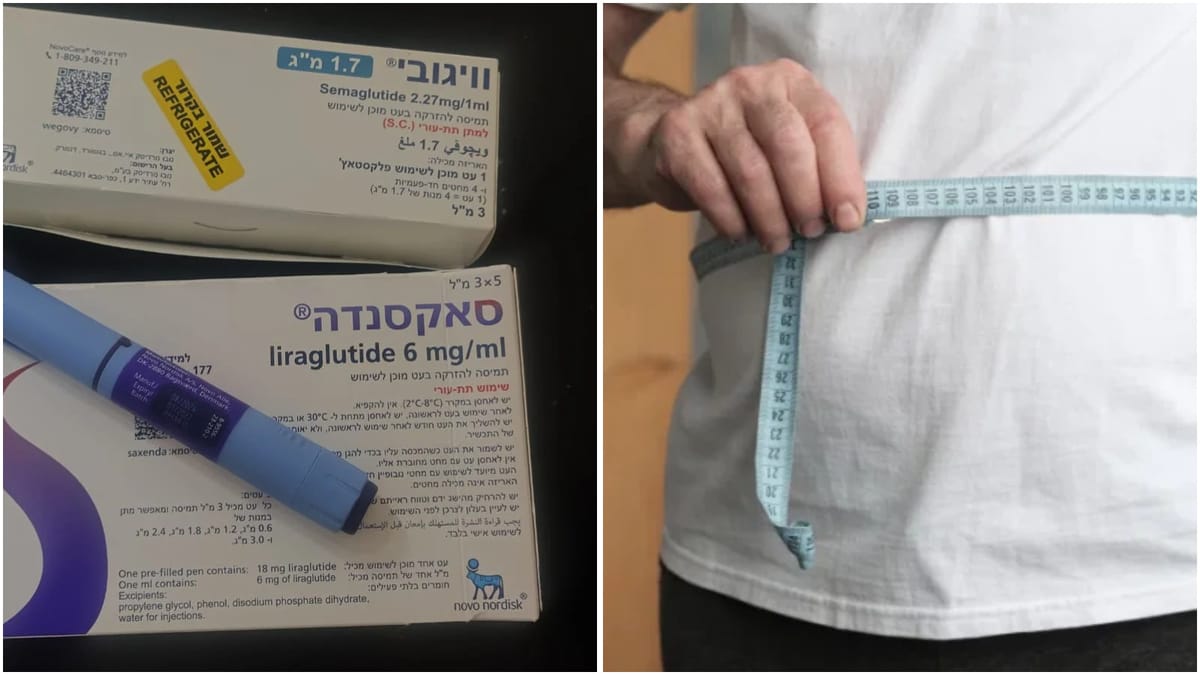
Walk through Tel Aviv these days and you'll hear the same thing in coffee shops, at dinner tables, in office break rooms: someone's on Ozempic. Or Wegovy. Or one of the other weight-loss injections that have somehow become as casual a conversation topic as the weather.
"There are no overweight people left in the world --- everyone's on a diet," a journalist said half-joking to Maor Ziv, a clinical dietitian who's spent the last twenty years studying this stuff. Ziv didn't laugh it off. "You're right," he said. "Almost every third person you meet tells you they've lost weight doing this or that injection."
It's a real phenomenon. The drugs work. People lose weight. But here's the thing nobody wants to talk about: it's not magic, and it might come with a cost you don't see coming.
For decades, we told people: eat less, move more. Willpower. Discipline. But that never really worked for most people, which made sense once scientists figured out that obesity isn't actually a character flaw. It's a biological thing. Your brain has these centers that control hunger and fullness, and they're heavily influenced by genetics, environment, hormones—stuff you can't just willpower your way out of.
So the pharmaceutical industry developed drugs that directly mess with those centers. Trick your brain into feeling full faster. And it works. Weight falls off.
Except there's a catch. And Ziv is careful to explain it.
Of every ten kilograms someone loses on these injections, about 3.5 kilograms is muscle. Not fat. Muscle.
"When you lose weight through diet and habit change, you're mostly losing fat," Ziv said. "With the injections, you have way less control over what your body breaks down. It's breaking down muscle alongside the fat tissue, and that matters more than people realize."
It matters because muscle is what keeps your metabolism running. Lose it and you're making future weight gain harder to fight.
But that's not even the worst part.
Stop taking the injections and something predictable happens: within a year, you regain about two-thirds of what you lost. Your appetite comes roaring back. Your hunger returns to normal. And if you never actually learned how to eat, if you've just been taking a drug that killed your appetite, you have nothing to hold onto.
"You won't suddenly be able to switch to eating healthy," Ziv said, not unkindly. "Your appetite will rise. Your hunger will increase. And without having built the actual habits, without understanding how to compose a meal or cope with cravings, you're just back where you started. Except now with less muscle."
It's a trap. A comfortable one, but a trap.
The drugs are approved as chronic medications. Long-term, maybe lifetime. For someone with serious obesity and diabetes and high blood pressure, maybe that's the right call. The injections can genuinely change those people's lives.
But for someone who just wants to drop ten pounds before a wedding?
"There's no reason whatsoever to use injections," Ziv said flatly. "Do the work. Learn how to eat. Build the habits. Yes, it's harder. But it actually sticks."
The injection revolution has made weight loss feel simple in a way it's never felt before. Just stick yourself once a week and let the drug do the thinking. But simple and easy aren't the same thing as solved. And that's the part everyone's getting wrong.