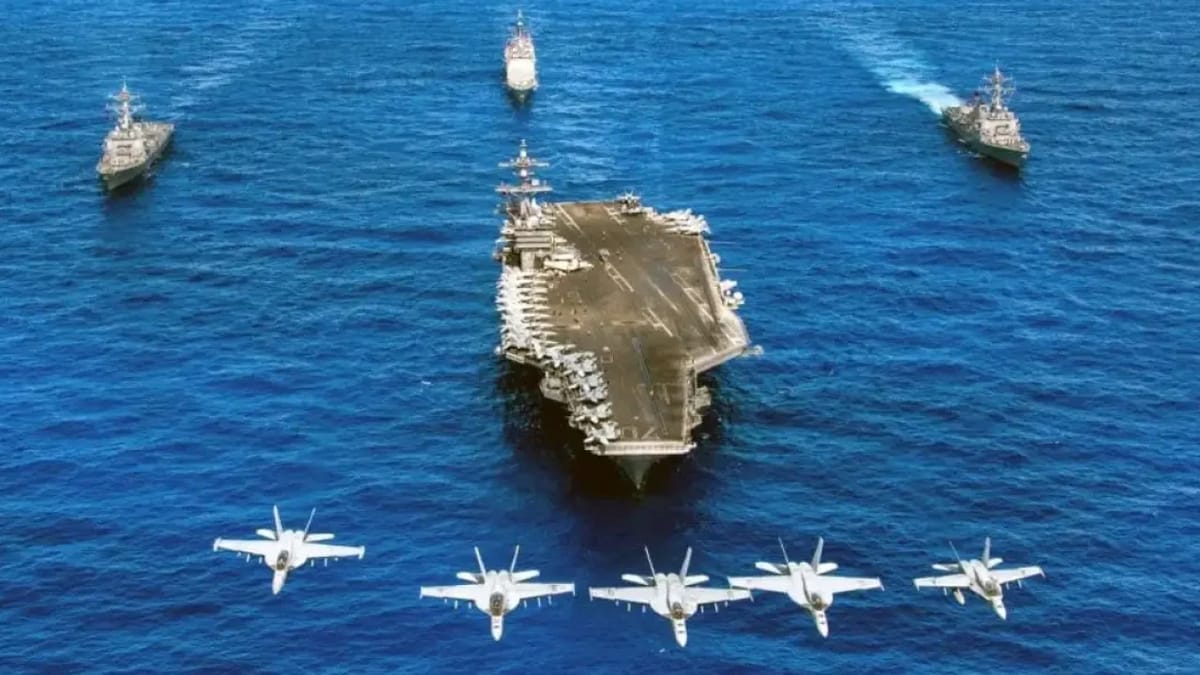
The Iranian regime has made a sudden and dramatic retreat from its planned military provocations in the Strait of Hormuz, signaling that it may have finally reached a point of no return in its standoff with the Trump administration. Despite official electronic notices sent to international mariners earlier this week announcing two days of live-fire exercises, a senior official from the Islamic Revolutionary Guard Corps (IRGC) told reporters on Sunday that no such drills were ever planned. This climbdown follows an unusually specific warning from U.S. Central Command (CENTCOM), which listed exact behaviors that would be met with military force. While the regime attempts to frame the tension as a media misunderstanding, the massive presence of American warships, including the USS Mitscher, appears to have successfully deterred what could have been the opening shots of a wider regional war.
The IRGC Reverses Course
The U-turn became official on Sunday when a high ranking IRGC official briefed the press, claiming that reports of the live-fire drills were "wrong" and based on media speculation. "There was no plan for the Guards to hold military exercises there and there was no official announcement about it," the official stated. However, this claim directly contradicts the official Iranian state media reports and maritime warnings issued by the Islamic Republic earlier in the week, which clearly scheduled the exercises for February 1 and 2.
The retreat coincides with a visible show of force by the U.S. Navy. On Sunday afternoon, CENTCOM released footage of sailors operating on the USS Mitscher in the heart of the region, demonstrating a high state of readiness. This follows the arrival of the USS Abraham Lincoln strike group, which President Trump described as a "massive armada" sent to ensure that Iran does not obstruct the flow of global energy through the narrow chokepoint. Analysts believe the IRGC realized that any "unsafe or unprofessional" move during a live-fire drill would have provided Washington with the necessary justification for a devastating retaliatory strike on Iranian infrastructure.
Khamenei’s Desperate Rhetoric
Despite the tactical retreat at sea, Supreme Leader Ali Khamenei maintained a belligerent tone from Tehran. During a speech marking the anniversary of the Islamic Revolution, Khamenei warned that any American military intervention would no longer be a contained incident. "The Americans should know that if they start a war, this time it will be a regional war," he declared, a statement widely interpreted as a threat to launch missile strikes against Israel and other U.S. allies in the Gulf. Khamenei also described the recent internal uprisings in Iran as a "coup attempt" that had been successfully suppressed, even as international monitors estimate the death toll from the crackdown has climbed toward 36,000.
The contrast between Khamenei’s "regional war" threats and the IRGC’s actual behavior in the Strait suggests a regime that is deeply fearful of a direct confrontation it cannot win. While the Supreme Leader uses rhetoric to satisfy his domestic base and threaten Jerusalem, his military commanders are taking extreme care to avoid the red lines drawn by CENTCOM. For now, the "gates of hell" remain closed, but with the U.S. fleet maintaining its position and Iran continuing to detaining thousands of its own citizens, the situation remains a powder keg that could ignite with a single misstep in the world's most dangerous waterway.