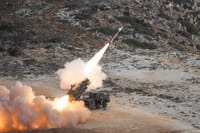
While political unrest destabilizes the interior of Iran, the military balance of power in the region has shifted significantly. Following the 12 day war last June, Iranian military capabilities were hit hard, leaving the regime with a diminished but still dangerous arsenal. Current estimates suggest that Iran’s stockpile of ballistic missiles has dropped from 2,000 to approximately 1,000. While hundreds of launchers remain operational, the Iranian Revolutionary Guard Corps is currently in a defensive posture, even as they issue threats to target Israel and American bases if a U.S. intervention begins.
Israeli security officials are closely monitoring these assets, specifically the long range Shahab 3 and the Khorramshahr missiles, which have ranges of up to 3,000 kilometers. The regime also maintains a variety of cruise missiles and thousands of suicide drones, such as the Shahed 136, which can reach deep into Israeli territory. Despite these numbers, an Israeli official noted that any response from Iran would likely mirror the tactics seen in previous wars, consisting of high volume but predictable missile salvos. In response, Israel has moved to its highest state of readiness, coordinating every potential defensive and offensive move with the United States.
To counter this threat, Israel relies on a sophisticated four layer defense shield. The first line of defense is the Arrow 3 system, designed to intercept ballistic missiles in space, more than 2,000 kilometers away from Israeli borders. If a threat penetrates the upper atmosphere, the Arrow 2 and American THAAD systems take over. For mid range threats, David’s Sling provides coverage up to 300 kilometers, while the Iron Dome serves as the final layer. In a war involving Iranian ballistic missiles, the Iron Dome’s primary role is to handle large pieces of falling debris from high altitude interceptions. As President Trump reviews strike options, the U.S. military has reportedly requested more time to position its own assets to ensure that any potential Iranian retaliation can be neutralized instantly.