The Islamic Republic of Iran has entered its most precarious period in years, with officials in Tehran admitting privately that the regime has transitioned into a "survival mode." Following a week of escalating nationwide protests fueled by a catastrophic economic collapse, at least 17 people have been killed and hundreds more detained. What began as a strike by market merchants frustrated by the crashing local currency has rapidly transformed into a broader political rebellion, with citizens across the country demanding an end to the clerical rule. This domestic instability comes at a moment of extreme external vulnerability, as the Iranian leadership fears that Israel and the United States may utilize the chaos to launch a fresh round of military strikes.
The economic data behind the unrest is staggering. Since the start of the Iranian year in March, inflation has soared above 36%, and the national currency, the rial, has lost half of its value against the dollar. These hardships have been exacerbated by the renewal of international sanctions on Iran’s nuclear program in September, alongside chronic failures in providing basic utilities like water and electricity. In cities like Tehran and Qom, and throughout the Kurdish and Baluchistan provinces, protesters have moved beyond economic grievances, shouting slogans such as "Death to the dictator" and calling for the return of the monarchy.
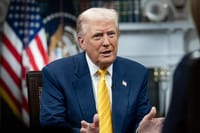
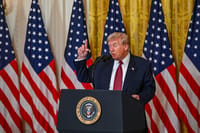
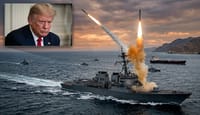
U.S. President Donald Trump has added significant pressure to the situation, warning the Iranian government that the United States is "poised and ready for action" if the regime uses lethal force against its people. Following Trump’s high profile capture of Venezuelan leader Nicolas Maduro just days ago, Iranian officials are taking his threats with renewed seriousness. The Supreme National Security Council reportedly held an emergency midnight session on Friday to discuss how to contain the protests with less visible violence to avoid giving the U.S. a pretext for war. Inside these meetings, advisers have reportedly suggested that President Masoud Pezeshkian shift the public blame for the crisis toward Supreme Leader Ali Khamenei.
In a defiant response to the pressure, the regime has draped posters in Palestine Square featuring images of American and Israeli coffins with the warning "Watch your soldiers" written in Hebrew and English. Khamenei himself insisted that the nation would not "yield to the enemy," even as he acknowledged the public's economic frustration. Meanwhile, police commanders like Ahmad-Reza Radan have focused on a digital crackdown, arresting a large number of "virtual space leaders" who help coordinate the demonstrations. Despite these efforts, the combination of a failing economy and the shadow of a potential war has left the Iranian leadership facing its most significant challenge to date.