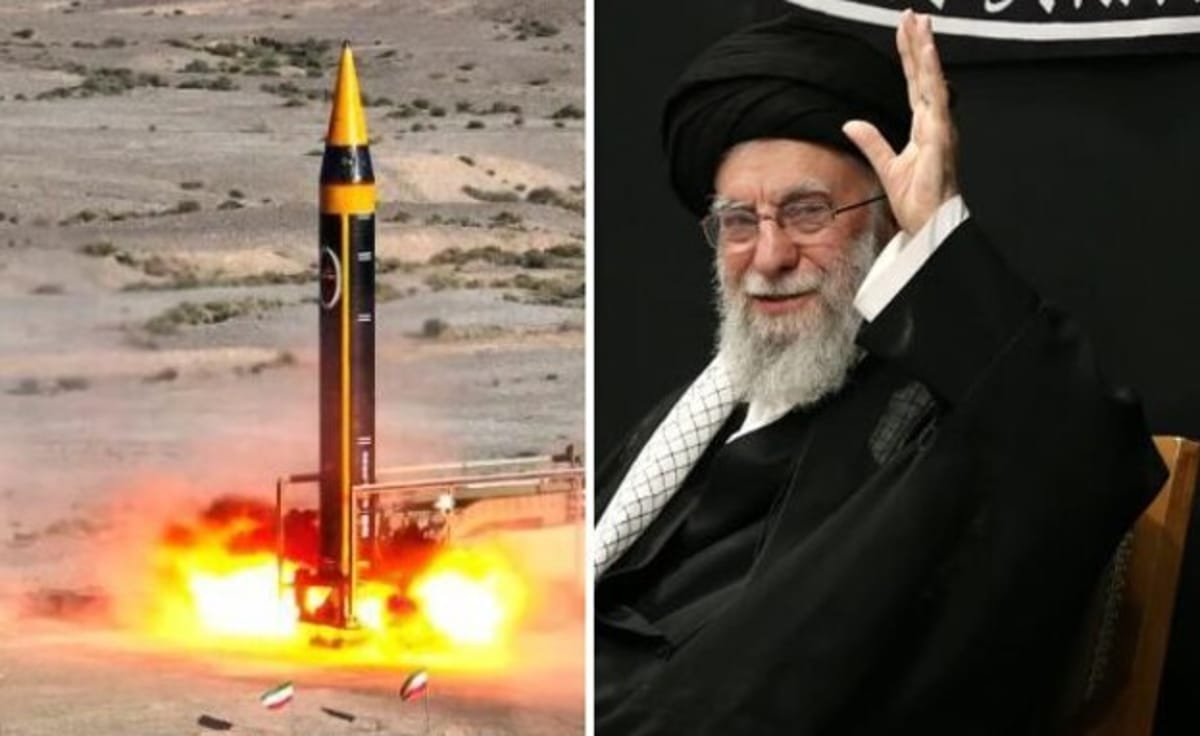
Six months after the massive war between Israel and Iran centered on the nuclear program, Israeli intelligence has identified a rapid acceleration in Tehran’s efforts to rebuild its ballistic missile production lines. According to recent reports in the Wall Street Journal, if Iran successfully returns its damaged manufacturing facilities to full operation, it could soon reach a capacity of producing hundreds of missiles every month. This development has fundamentally altered the security landscape, as Israel considers shifting its offensive strategy to target conventional long range weapons before they are fully restored.
Prime Minister Benjamin Netanyahu addressed these emerging threats during a graduation ceremony for air force pilots on Wednesday. He stated that Israel is closely monitoring Hamas, Hezbollah, and Iran as they rearm and warned that the country will act if necessary. Netanyahu emphasized that while Israel does not seek war, its eyes are wide open to every possible danger. These comments come just days before a scheduled meeting between Netanyahu and President Donald Trump at Mar-a-Lago, where the possibility of a new military strike is expected to be a primary topic of discussion. However, officials in Washington have reportedly expressed frustration in closed door meetings regarding Israel’s readiness to use force, as the U.S. administration attempts to maintain regional stability.
The push for a new strike represents a significant shift in Israeli military doctrine. Experts from the Institute for National Security Studies (INSS) suggest that setting a red line around conventional missile production, rather than just nuclear capabilities, could significantly increase the likelihood of a new war in the coming year. This new approach, shaped by the lessons of the October 2023 terrorist attacks, suggests that Israel will no longer wait for definitive intelligence of an imminent attack before acting against emerging capabilities. For Iran, which lacks an effective air force, these missiles are considered a critical defensive component, especially after their nuclear sites and regional terrorist proxies were heavily damaged over the past two years.
Despite international efforts to stop them, satellite images published by the Associated Press show that Iran is actively rebuilding missile sites that were previously hit. While U.S. Special Forces recently seized a shipment of Chinese military equipment intended for Iran’s missile program and the Treasury Department has sanctioned dozens of entities across Europe and Asia, the production continues. Analysts suggest that while Iran is unlikely to launch a proactive strike due to its current internal weakness, Israel feels a limited window of opportunity exists to prevent the regime from fully restoring its missile and air defense shields.