The United States has officially moved into Phase Two of a comprehensive military buildup in the Middle East, signaling that the window for a diplomatic resolution with Tehran is narrowing. According to real-time maps and military analysts, Washington has completed its initial defensive positioning and is now flowing in the heavy offensive assets required for a large scale war. Recent troop movements show American forces being airlifted to strategic locations on the Iranian periphery, including the borders of Turkmenistan and Armenia, effectively encircling the Islamic Republic. As the Pentagon increases its footprint to over 20 bases equipped with advanced missile defense systems, President Donald Trump has indicated that a second aircraft carrier strike group may soon be dispatched to the region to provide the final "hammer" for any potential military operation.
A Multi-National Fortress
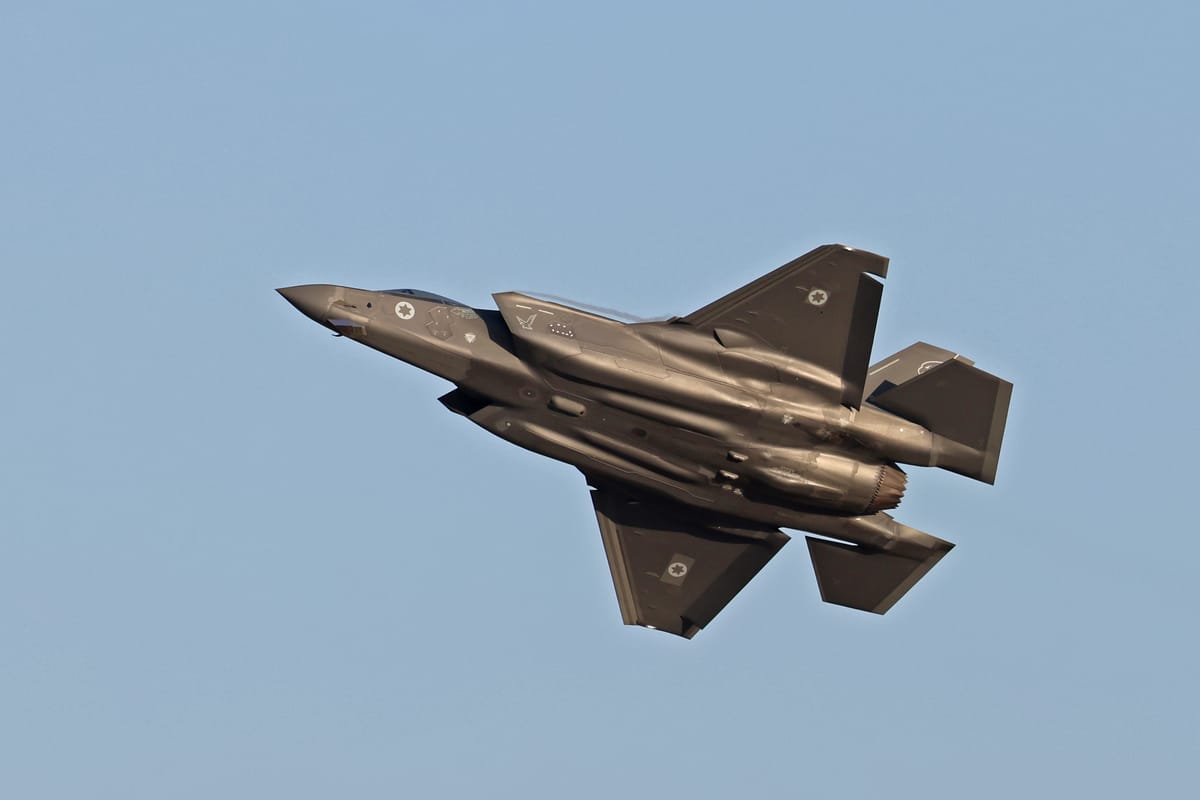
The scale of the current mobilization is vast, involving not only American assets but also significant contributions from key allies. The United Kingdom has recently deployed six F-35 stealth fighters along with two aerial refueling tankers to the region, adding a high-tech edge to the coalition air wing. This surge is supported by a continuous "airlift" of transport planes arriving from both the United States and Europe, delivering munitions, logistical supplies, and specialized equipment to American outposts. To protect these concentrated assets, the Pentagon has deployed a dense net of THAAD and Patriot missile systems across bases in Jordan, Kuwait, Bahrain, Saudi Arabia, and Qatar
.
At Al-Udeid Air Base in Qatar, the largest American installation in the region, the strategy has shifted toward high mobility. Satellite imagery confirmed that Patriot missiles have been unbolted from their static pads and placed on heavy tactical trucks. This decision was made to ensure that the air defense systems can be repositioned within minutes, preventing them from being destroyed by a pre-emptive Iranian missile volley. By making these systems mobile, the US is ensuring its ability to maintain "eyes on the sky" even under the pressure of a heavy bombardment.
The Brink of Action
President Trump, in a recent interview, highlighted the "formidable" nature of the current naval presence, which already includes the USS Abraham Lincoln and its strike group, five warships near the Persian Gulf, and a nuclear submarine. "I am considering sending an additional aircraft carrier to the Middle East along with its strike group, which includes several more destroyers," Trump stated, emphasizing that the current force is already capable of a massive strike but will be "much larger" once the final deployments arrive in the next two to three weeks.
The military infrastructure now surrounding Iran allows for a multi-directional assault. With over ten major bases capable of launching strikes and the ability to fly heavy bombers directly from the United States, as seen during the "Am K'Lavi" operation, the tactical advantage lies heavily with the coalition. While the first phase of the buildup focused on shielding Israel and Arab allies from Iranian retaliation, Phase Two is clearly focused on offensive readiness. As the final pieces of this military puzzle fall into place, the region stands at a point where a massive military action is no longer a theoretical plan but a logistical reality waiting for the order to execute.