Three decades after the world lost the legendary frontman of Nirvana, a detailed forensic report revealed by the Daily Mail is challenging the official ruling of suicide in the death of Kurt Cobain. The report, authored by expert investigators, presents a grim alternative to the established narrative, flatly stating, "This was murder." By re-examining autopsy data and crime scene logistics that critics say were never properly addressed, the new findings suggest that the scene was staged, the famous note was partially forged, and the chemical state of Cobain’s body made it a physical impossibility for him to have ended his own life. While Seattle authorities remain firm in their refusal to reopen the case, the scientific community and private investigators are now presenting evidence that could fundamentally change the history of one of music’s most tragic figures.
The Lethal Dose Argument
The cornerstone of the new report focuses on the toxicology results from Cobain’s autopsy. Investigators point to levels of heroin in his bloodstream so high they should have caused "immediate paralysis." According to the forensic analysis, the tissue damage found in his brain and other organs indicates a death caused by a massive overdose rather than a gunshot wound. The experts argue that Cobain was either already deceased or in the final stages of a fatal overdose at the moment the shot was fired.
Specifically, the report claims that an individual with that concentration of narcotics in their system would have been "physically incapable of lifting a heavy shotgun, aiming it, and pulling the trigger." This suggests that the weapon was fired by a second party to create the illusion of a self-inflicted wound. This theory is supported by the lack of significant gunpowder residue on Cobain’s hands, a typical marker in close-range shotgun fatalities that was notably absent or insufficient in this case.
A Staged Farewell
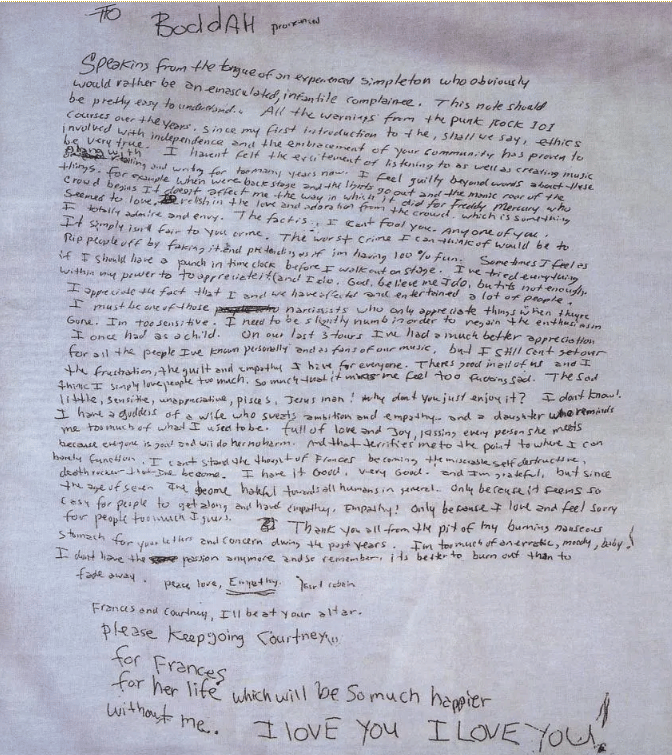
Beyond the medical data, the report highlights massive inconsistencies at the crime scene. Investigators argue that the final position of the shotgun and the angle at which the shell casing was ejected do not align with a self-inflicted shot. Furthermore, the report revives a long-standing suspicion regarding Cobain's final letter. Forensic handwriting experts cited in the document claim that the last few lines of the note, which specifically discuss leaving life behind, appear to have been written by a completely different person.
Despite the pressure from Brent Wilkens' report and the growing public demand for answers, the Seattle Medical Examiner’s Office continues to dismiss the findings as mere "speculation." For the authorities, the case remains closed, but for those who believe the science tells a different story, the fight is far from over. Cobain, who led the grunge revolution and became the voice of a generation, struggled with depression and the weight of fame, yet his death at age 27 remains an event that continues to haunt the cultural landscape. Private investigators conclude that "this story will not end until the scientific evidence is given the stage it deserves," promising to keep pushing for the truth behind the death of the 90s icon.