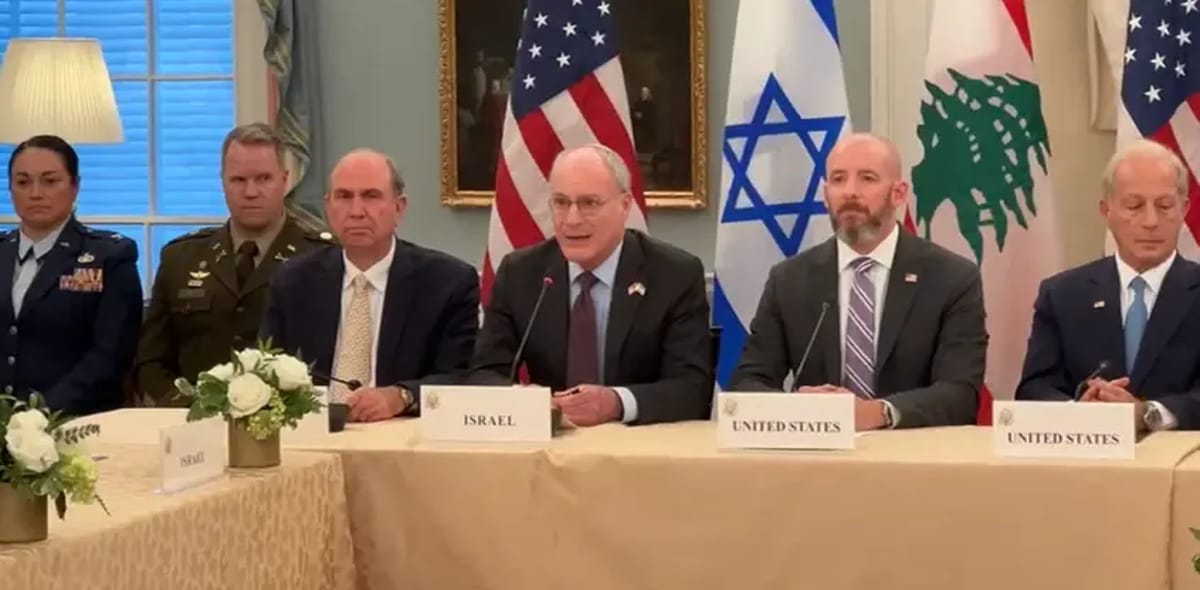
A highly critical diplomatic bottleneck has emerged in the United States capital as the fifth round of bilateral peace negotiations between Israeli and Lebanese delegations commenced under a cloud of intense skepticism. Senior Israeli officials expressed severe anxieties regarding the shifting framework of the international mediation efforts. The unexpected friction threatens to dismantle months of delicate trilateral coordination orchestrated by Western power brokers.
Israeli Ambassador to the United States Yechiel Leiter delivered a blunt assessment at the opening of the diplomatic session, stating that we are in a trainwreck. Leiter explained that 4 rounds ago, everyone boarded the same train with the United States serving as the leading locomotive heading toward full peace and security. The envoy noted that the initial trajectory focused on removing Iranian influence and dismantling Hezbollah, but warned that the train is now in danger of derailing.
The veteran diplomat emphasized that the core premise of the entire diplomatic initiative required the complete exclusion of the Iranian regime from local governance structures. Leiter stated that the basic assumption was that Iran is out, and that the main discussion concerns Lebanon and Hezbollah, not the question of how much Iran can restrain Hezbollah. He insisted that restraining proxies is not Tehran's role, asserting that their actual job is to get out of Lebanon completely.
Jerusalem expressed severe hesitation regarding a new de-confliction concept recently negotiated between American and Iranian representatives. Leiter questioned whether the total dismantling of Hezbollah still constitutes the foundational basis for these ongoing discussions, stating that from the Israeli perspective, it must remain so. He demanded absolute strategic clarity from Western mediators to ensure that regional security targets are not being diluted for geopolitical convenience.
The current diplomatic gridlock stands in sharp contrast to the optimistic benchmarks established 3 weeks ago during the fourth round of talks. At that time, a joint statement announced a conditional ceasefire dependent on the complete cessation of rocket fire and the total evacuation of all Hezbollah personnel from the south Litani sector. The initial plan intended to establish pilot zones where the Lebanese army would maintain exclusive territorial control, free from any non-state actors.
The original framework explicitly rejected any external attempts by foreign entities or non-state actors to hold the future of the region hostage. All participating nations previously signed declarations condemning cross-border aggression and the continuous destabilization caused by proxy networks throughout the Middle East. While major states attempt to untangle these state-level diplomatic ties, local defense groups remain focused on the larger war against ideological factions like Hamas terrorists who reject territorial normalization.