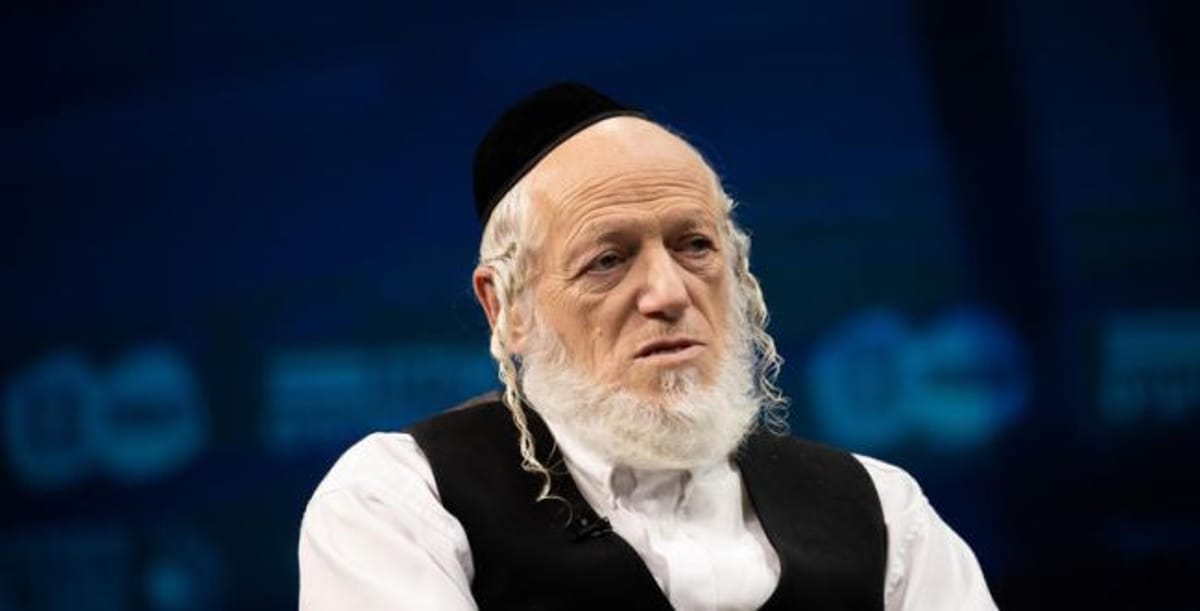
Yehuda Meshi Zahav was once a celebrated figure in Israel, a man who transformed from an anti-Zionist Haredi militant into a national hero, leading ZAKA, an ultra-Orthodox organization dedicated to rescuing, identifying, and tracing Jewish disaster victims worldwide.
But a new four-part documentary series, Meshi Zahav, reveals his chilling double life. Meshi Zahav was created by Sharon Yaish, Yoav Leshem, and Bat Dor Ojalvo. It could have taken the easy route and packaged everything already revealed about the “monster of kindness” into a polished TV product.
It would have generated buzz, resurfaced the affair that ended before justice was served, and might even have been sold to Netflix, because there aren’t many “rise and fall” stories of this magnitude. Instead, the four-part series justifies its existence with a series of new and resounding revelations.
And contrary to what might be expected, these revelations don’t necessarily come from the victims’ testimonies. Alongside Aharon Rabinowitz and Shira Elek, the Haaretz journalists who first exposed the affair, the myth of Yehuda Meshi Zahav is cracked from every possible angle.
A Fabricated Origin Story
Meshi Zahav doesn’t fall into the predictable trap of constructing the story solely chronologically.
The fall of the former ZAKA chairman, who, according to testimonies, systematically sexually assaulted women, men, and children (including at least one 5-year-old), is present from the very first moment, just as the sexual abuses were part of his life even before he crafted his public persona.
And the word “crafted” is deliberate: the series reveals in its first episode that Meshi Zahav, the man who sold an origin story about the 405 bus attack changing his path at every opportunity, likely fabricated it entirely. The same goes for his claim of being a ZAKA founder, despite the organization not truly being established by his hands. That’s what happens when talk show researchers back then relied on sources as credible as Wikipedia.
The series, backed by previously unheard testimonies, shatters the glorified image Meshi Zahav cultivated over decades, raising questions about complicity and silence within the Haredi community he once represented.
Not just because of the stories presented, but also because, three years after his death, the complainants against Meshi Zahav still fear revealing their identities. There’s hardly a villain or sexual predator whose testimonies against them haven’t reached the “openly named” stage. With him, the terror was so immense, so far-reaching, that it persists even after he’s gone.
Meshi Zahav’s early life was marked by extremism. As the operations officer of the Eida Haredit, a radical Haredi group, he led protests against Shabbat desecration, burned Israeli flags, and disrupted archeological digs, even sneaking mice into pathologists’ rooms to prevent autopsies.
“In those days, Yehuda behaved like the Che Guevara of the Haredi world,” a voice in the documentary recalls, describing how he painted over immodest posters at bus stops while fighting for the sanctity of Shabbat.
His grandfather, Rabbi Yosef Sheinberger, a fanatical opponent of Israel’s founding, cut ties with him over his eventual embrace of Zionism, a shift that began after witnessing the 1989 terrorist attack on the 405 bus route near Telz-Stone yeshiva. “When the dismembered bodies were laid out before my eyes… I realized the quarrels between us were meaningless,” Meshi Zahav later reflected in 2003, just before lighting a torch on Mount Herzl for ZAKA volunteers, proclaiming, “For the glory of the state of Israel.”
This transformation made him a bridge between worlds. ZAKA, under his leadership, grew into a global operation with over 3,000 volunteers, earning unanimous recognition as a UN consultant and observer in 2015 after a four-year struggle.
Even countries like Iran and Pakistan voted in favor, reassured by ZAKA’s policy of treating victims first, regardless of nationality. “We treat the victim first, and then the murderer,” Meshi Zahav told the UN committee.
At 57, he exuded authority, living in Jerusalem’s Sanhedria neighborhood as a father of seven and a grandfather, his white payess (sidecurls) a symbol of his Haredi roots. He led ZAKA with faith-driven resolve, often singing or dancing at disaster scenes to inspire his volunteers, who operated on a modest NIS 18 million annual budget, mostly from donations.
“It’s only from the power of faith. Nothing else can motivate a man to wake up at night, leave his family, see what we are exposed to, do this work, go home and be unable to talk to his wife or laugh with his small children [for days after doing ZAKA work],” he once said, reflecting on the emotional toll of ZAKA’s mission.
But beneath this veneer of heroism lay a dark reality that festered for decades. The documentary reveals that Meshi Zahav systematically assaulted and raped dozens of minors and adults, organizing mass sex parties while exploiting his position of power.