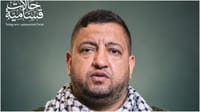
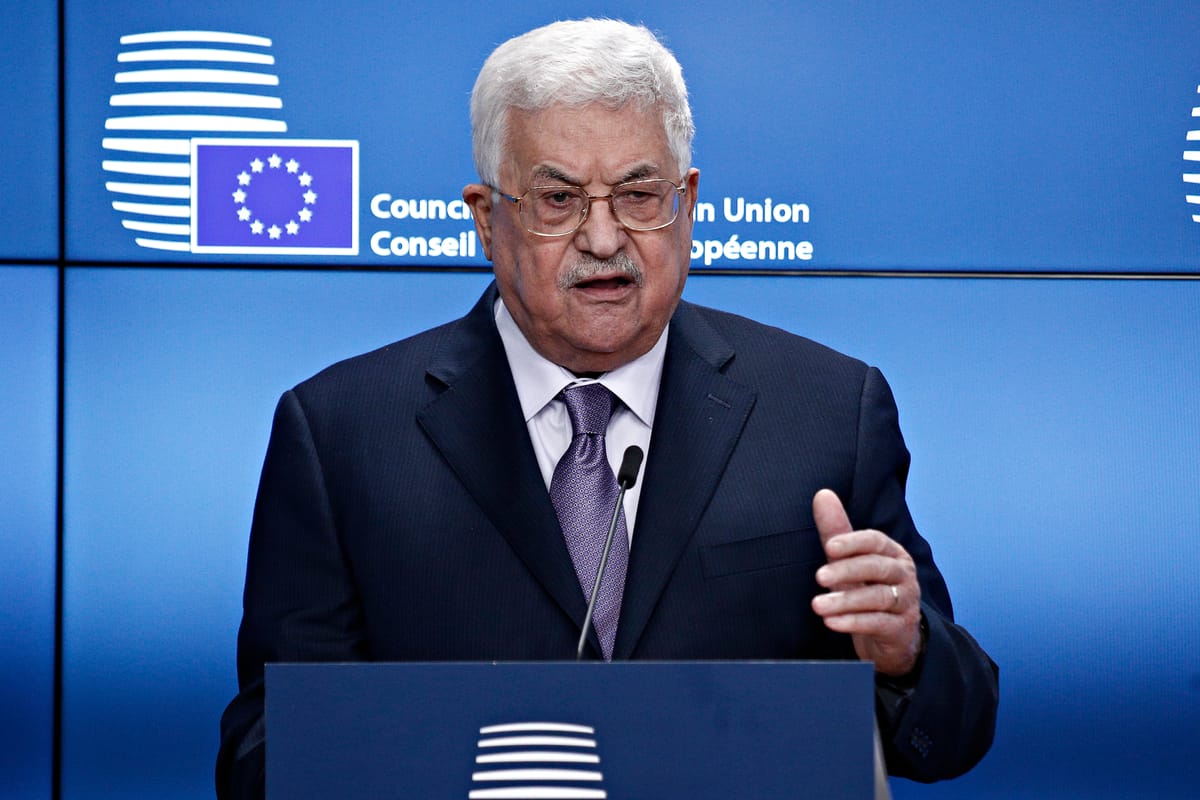
In a rare and extensive interview lasting over three hours, prominent Palestinian commentator Hani al-Masri disclosed behind-the-scenes details of the Palestinian leadership's dynamics, including Palestinian Authority President Mahmoud Abbas (Abu Mazen)'s initial response to the Hamas-led October 7, 2023, attack on Israel.Al-Masri, a seasoned analyst and director of the Masarat Palestinian Center for Policy Research and Strategic Studies, revealed that Abbas reportedly described October 7 as "the greatest day in Palestinian history," with the remarks made in front of dozens of people, not just in closed circles. "There was joy at the beginning," al-Masri confirmed.
According to al-Masri, in the immediate aftermath of the attack, contacts occurred between Fatah and Hamas, with Fatah inquiring what support was needed. However, a consensus emerged within Hamas not to provide Abbas a political "lifeline," viewing his era as over and believing he was seeking survival mechanisms.
The commentator also addressed internal divisions within Hamas, describing the late Yahya Sinwar as representing a more "nationalist" stream focused on Palestinian unity and improved relations with Egypt, in contrast to the ideological wing led by Khaled Meshaal and Mousa Abu Marzouk. Al-Masri recounted meeting Sinwar multiple times and noting his dominant nationalist dimension from the outset. Sinwar, he said, extended offers to Abbas through intermediaries that were "impossible to refuse," but Abbas and his inner circle misinterpreted them as signs of Hamas weakness, missing a significant opportunity for unity.
Reflecting on the 2006 elections, al-Masri, who was involved in preparations, described Fatah's miscalculation of Hamas's strength, assuming it could be contained within Palestinian institutions. Internal splits in Fatah, with multiple candidates competing in the same districts, contributed to Hamas's victory, while Hamas fielded unified slates.
He further detailed a 2020 agreement brokered between Fatah's Jibril Rajoub and Hamas's Saleh al-Arouri for a joint electoral list and Abbas as consensus presidential candidate, involving major concessions from Hamas. The elections were ultimately canceled amid competing lists and uncertainties.
Al-Masri analyzed ongoing rifts in Hamas as a power struggle beyond policy differences, warned against potential post-war arrangements worse than the Oslo Accords, and highlighted structural barriers to Palestinian unity, including avoiding substantive national project discussions, elitism, and lack of self-criticism.