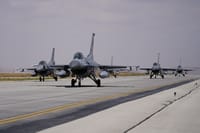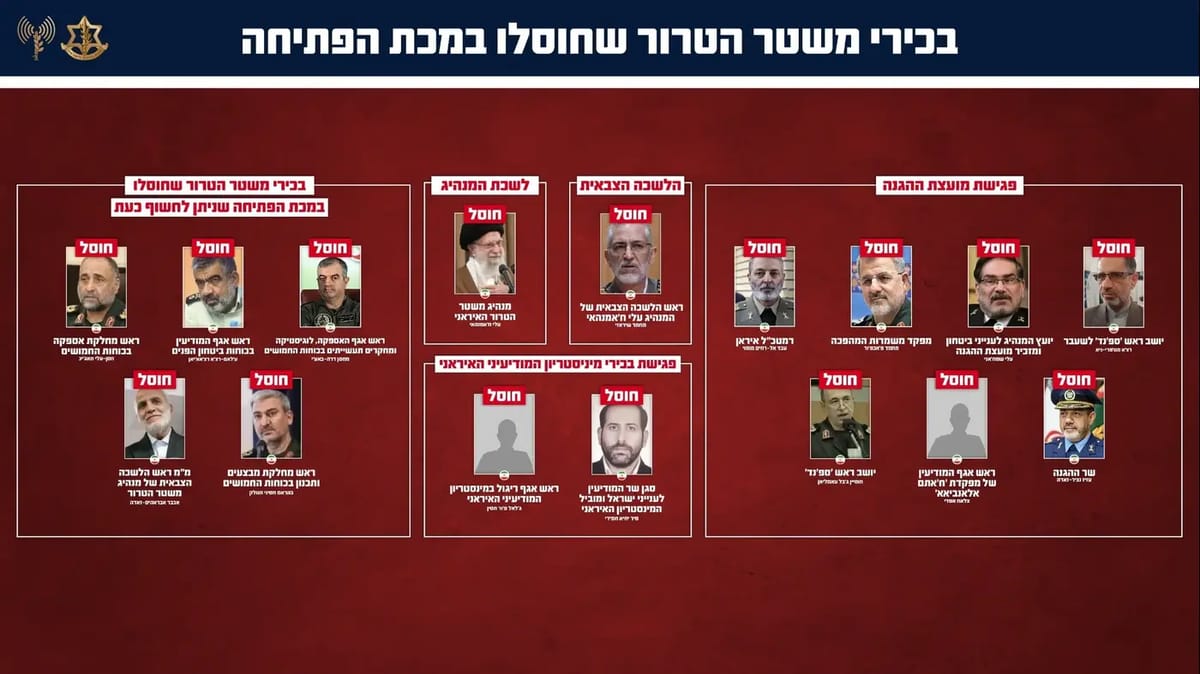
A sophisticated "battle of wits" is currently taking place between the combined forces of the IDF and the United States military against the missile units of the Iranian Revolutionary Guard Corps (IRGC). This daily war of attrition is focused on identifying and neutralizing the launchers and command centers responsible for firing ballistic missiles at Israeli territory. Intelligence officials have revealed that the campaign is meticulously divided by geography and tactical advantages, utilizing specific munitions for different terrains, from mountainous regions to densely populated urban centers. The success of this systematic dismantling has left the Iranian regime in a state of operational paralysis, with commanders increasingly hesitant to move or fire their remaining assets for fear of immediate detection and destruction.
Crushing the Launch Capacity
According to recent data, the Israeli Air Force and U.S. Central Command have made massive dents in Iran’s strategic capabilities. It is estimated that over 200 launchers have been completely destroyed, with an additional 150 rendered inoperable. This leaves roughly 100 functional launchers scattered across the country. A senior security official described the situation as a "daily war," noting that the Iranians are finding it nearly impossible to concentrate their efforts for a large-scale barrage. The destruction of command and control systems has shattered their oversight, and the fear of creating a "radar signature" means that the moment a missile is fired, its location is pinpointed and struck by available air assets in the area.
Decentralization and Deception
In response to the heavy losses sustained during Operation Rising Lion, the Iranian leadership has shifted its tactics toward decentralization. Authority has been delegated to local field units to decide the timing and scale of missile launches, hoping this will make the overall system harder to decapitate. The IRGC has also begun mounting missiles on civilian trucks to disguise their movement from intelligence agencies and is moving a significant portion of its remaining arsenal into underground complexes. These facilities are designed with retractable ceilings that open briefly for a launch before sealing the launcher back into a protected bunker. However, military intelligence is working around the clock to crack these new methods and track the movement of these mobile units.
The Munitions Economy
While some analysts suggest the IRGC is struggling to launch, others in the intelligence community believe the regime is managing a "munitions economy." By rationing their remaining missiles and carefully timing their strikes, they aim to exhaust the defensive systems of Israel and the United States in a prolonged war. Despite these attempts at repair and rehabilitation, the IDF remains focused on ensuring that no new missiles are being produced during the fighting. The goal is to create a reality where the regime’s military industry is so thoroughly degraded that it will take decades to rebuild, ensuring they cannot support their proxies in the Middle East for the foreseeable future.