
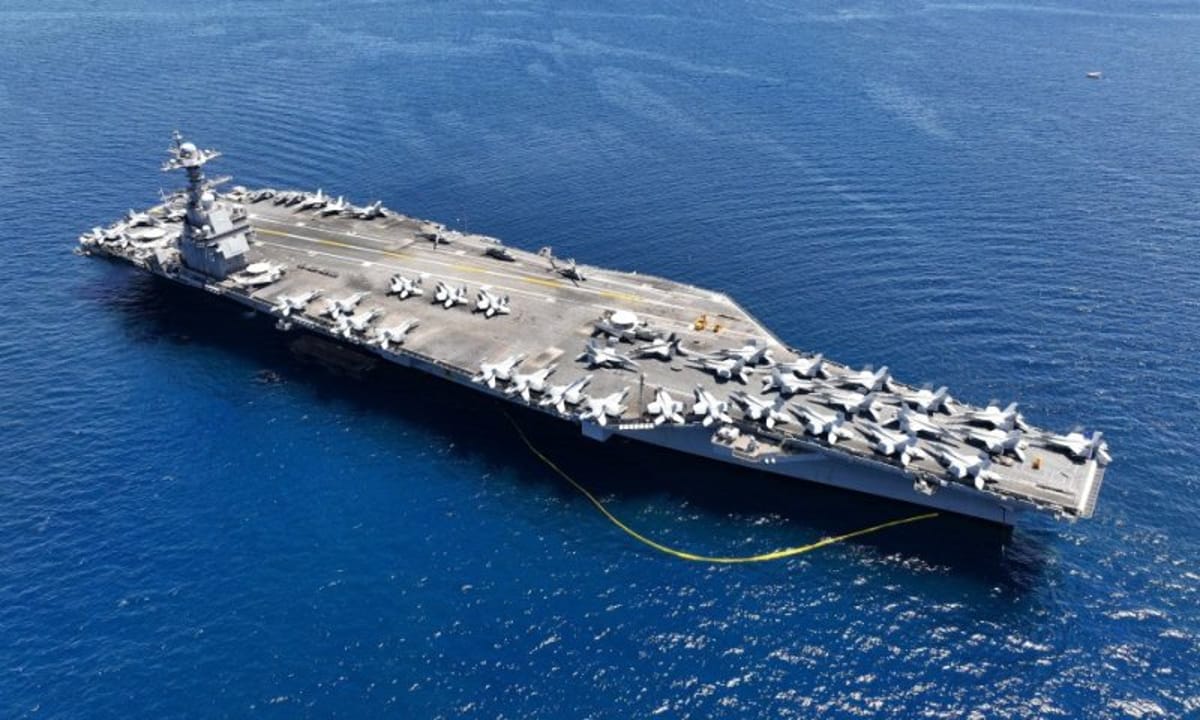
The USS Gerald R. Ford, the most technologically advanced aircraft carrier in the United States Navy, is scheduled to leave the Middle East in the coming days to return to its home port. This departure marks the end of a record breaking deployment that saw the massive vessel remain at sea for over 300 days, a feat not seen by an American carrier since World War II. While the return provides much needed relief for the approximately 4,500 crew members on board, military analysts warn that the move will reduce the immediate strike capabilities of the U.S. forces in the region at a time when tensions with Iran remain high.
During its ten months in the region, the Ford played a pivotal role in enforcing the American blockade on Iranian oil shipments and providing a visible deterrent against regional escalation. However, the prolonged stay led to significant mechanical wear and tear, forcing the Navy to delay scheduled maintenance cycles twice. Internal reports indicated that the ship faced a series of technical issues, including problems with the advanced sewage systems and a laundry room fire that injured several sailors. Standard deployments usually last between six and seven months to ensure the longevity of the ship's complex systems, but the demands of the current war against Iranian proxies necessitated the Ford’s extended presence.
The departure of the Ford will leave two American aircraft carriers, the USS George H.W. Bush and the USS Abraham Lincoln, to continue monitoring the Red Sea and the Arabian Sea. These vessels are tasked with intercepting vessels carrying sanctioned Iranian oil and providing air support if hostilities break out. Upon its arrival in the United States, the Ford is expected to enter an extensive overhaul period that could last several months. Navy leadership emphasized that while the Ford’s departure creates a temporary shift in the regional power balance, the remaining carrier groups are more than capable of maintaining the current blockade and responding to any immediate threats to international shipping or American interests.