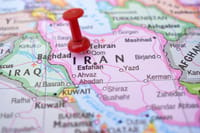
The persistent deadlock in negotiations between Tehran and Washington has pushed Iran into a state of emergency, as the regime prepares for the possibility that the current maritime war will intensify. While Iranian officials continue to blame the White House for the failure of diplomatic talks, they have begun implementing practical defensive measures. The governor of Tehran announced that 700 mosques across 22 districts have been retrofitted to serve as shelters and medical aid centers for civilians, in anticipation of what state media refers to as difficult scenarios.
This shift in strategy is accompanied by stern warnings from the Islamic Revolutionary Guard Corps. A political advisor to the commander of the Iranian Navy stated that any further mistake by Washington would be met with the unveiling of previously hidden capabilities. The regime’s narrative remains firm: Iran insists it has been acting with restraint, and that the ball remains in the American court. Ali Safari, a senior official in the Iranian Foreign Ministry, expressed surprise at President Donald Trump’s declaration that the naval blockade would continue, arguing that there is currently no foundation of trust to build upon. According to Safari, the crisis in the Strait of Hormuz is a direct result of American military actions, which he claims were designed to create chaos rather than secure global trade.
The rhetoric has expanded to include threats against other vital maritime chokepoints. Hossein Shariatmadari, the editor of the state-aligned newspaper Kayhan, openly discussed the possibility of closing the Bab el-Mandeb Strait to enemy nations. He argued that forcing commercial vessels to divert around the southern tip of Africa would add significant costs and delays, effectively using global trade as a strategic lever against the U.S. and its allies. Shariatmadari stated that closing this strategic artery is a legitimate response to the American naval blockade of Iranian ports, noting that resistance forces in Yemen have already declared their readiness to carry out such an operation. As both sides dig in, the prospect of a wider regional war appears increasingly likely.