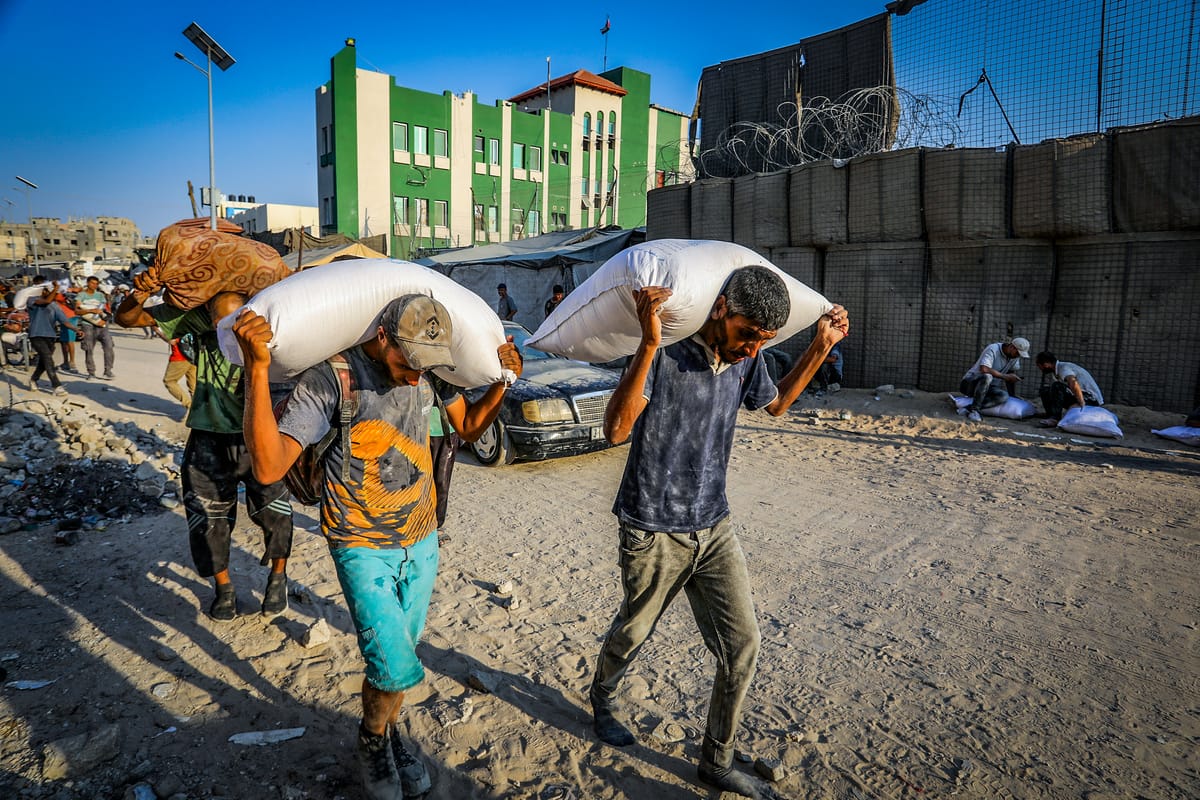
GHF, established earlier in 2025 with support from the U.S. and Israel, has faced international scrutiny due to civilian deaths at chaotic aid sites and its militarized coordination zones. GHF is not a perfect solution. In fact, it was never meant to be the entire solution. But it has successfully provided millions of meals to Gazans, which the UN refused to do. It's also a known fact that the UN trucks were consistently hijacked by Hamas, who either steal the food, store it in their own warehouses for personal use or re-sell it at exorbitant prices.The UN went so far as to refuse to transport trucks filled with aids to hungry Gazans, which are sitting there rotting in the punishing July heat.
Hamas has been to blame for many of the deaths at GHF zones, including stabbing Gazans waiting for aid parcels to create panic and stampeding and even shooting them. However, the leaked memo’s focus on Israel and GHF, without adequate context, has been described as a distortion of reality.
The backlash has been swift. *The Spectator*’s article highlights the memo’s prescriptive nature, suggesting a top-down editorial diktat that discards impartiality. Social media reactions have labeled the BBC’s approach as part of an “anti-Israel crusade,” with some accusing the organization of catering to a narrative that ignores Hamas’s actions. The memo’s timing is particularly sensitive, coinciding with UK Prime Minister Keir Starmer’s July 29, 2025, announcement to recognize Palestine at the UN, unless Israel takes peace-oriented steps, further intensifying the debate.
The incident occurs amidst rising antisemitism, with the Global Terrorism Index reporting a 28% increase in incidents in 2024, and the National Institute of Justice noting the radicalizing potential of online propaganda. Critics argue that such directives not only misinform the public but also contribute to a toxic environment, inciting further conflict and Jew hatred.
The BBC has not publicly responded to the leak.