
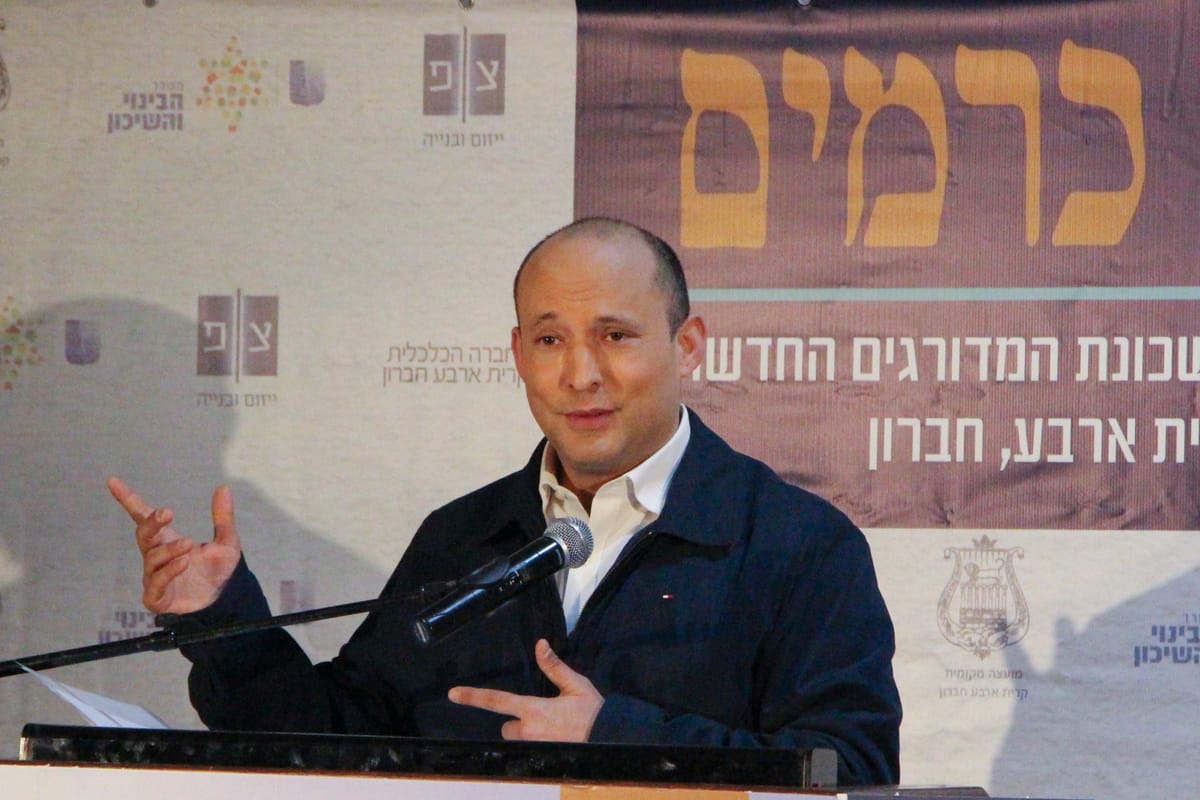
Iranian-linked hackers released a detailed cache of private communications attributed to former prime minister Naftali Bennett on Wednesday, exposing not only the scope of his personal and professional networks but also a series of blunt and disparaging remarks about senior Israeli political figures made behind closed doors.
Among the materials published by the group calling itself Handala were nearly 2,000 chat files, screenshots, and message logs, alongside 141 pages of phone numbers. The correspondence includes exchanges between Bennett and close advisers, internal group chats from his time in office, and private conversations that offer an unusually unfiltered look at how political allies and rivals were discussed away from the public eye.
Several of the leaked chats contain harsh language about prominent figures in Israeli politics. In one exchange attributed to Bennett or a close associate, Yisrael Beytenu leader Avigdor Liberman is described as appearing “drugged” during a television interview. In another, longtime political partner Ayelet Shaked is referred to as “terrible.” Elsewhere, a message discussing Benny Gantz includes the line “Benny was crap,” apparently referring to his conduct during a political standoff. The files do not always make clear whether the remarks were written directly by Bennett or by advisers communicating with him.
The release also includes internal coordination messages with spokespeople and aides. One message attributed to a Bennett spokesman reads, “We need to insist with Dadi,” widely understood as a reference to Mossad chief David Barnea, offering a glimpse into behind-the-scenes pressure and messaging dynamics during Bennett’s premiership.
Beyond political commentary, the hackers published personal correspondence, photographs, and private exchanges involving individuals outside government. Some of those named have denied the authenticity of the messages attributed to them, and cybersecurity experts have cautioned that the material appears to mix genuine content with manipulated or fabricated elements.
Still, the substance of the chats has drawn particular attention for the tone they reveal. The language is informal, cutting, and often dismissive, sharply contrasting with the careful public messaging associated with Bennett’s tenure.
Bennett said the materials were obtained illegally and are being reviewed by security authorities, stressing that their publication constitutes a criminal offense. He accused Israel’s enemies of attempting to harm him politically, but the disclosures have already sparked renewed scrutiny of how power is exercised and discussed behind the scenes at the highest levels of Israeli politics.