The United States government has unveiled a comprehensive and high stakes roadmap for the total reconstruction of the Gaza Strip, shifting the focus from humanitarian aid to economic independence. The plan, championed by Jared Kushner, outlines a decade-long transformation aimed at creating a demilitarized, modern civilian entity with a thriving free market economy by the year 2035. Unlike previous recovery efforts, this strategy is built on a strict "security first" principle, requiring the complete dismantling of Hamas and other terrorist organizations before significant investment begins. With a projected annual GDP of over $10 billion and the creation of half a million jobs, the vision seeks to replace a war torn landscape with advanced infrastructure, including a seaport, an airport, and a regional transportation hub.
The Foundation of Security and Governance
The cornerstone of the American vision is the absolute demilitarization of all armed factions within the Gaza Strip. According to the principles detailed by Kushner at Davos, all heavy weaponry, tunnels, and military infrastructures must be destroyed, while personal weapons are to be registered and eventually collected. Under this plan, only a single civilian authority, the National Council for the Administration of Gaza (NCAG), will be permitted to maintain an organized force. Kushner was explicit about the relationship between safety and money, stating, "Without security, there are no investments, and without demilitarization, there is no reconstruction."
The initial phase of governance will see a technocratic civilian leadership operating under an International Peace Council led by the President of the United States. Over time, and as reforms are implemented, the Palestinian Authority is expected to take a role. This process is supported by a broad regional coalition including Israel, Egypt, Saudi Arabia, the United Arab Emirates, Turkey, and Qatar, all of whom have been involved in the diplomacy surrounding the end of the war.
A Three-Stage Urban Transformation
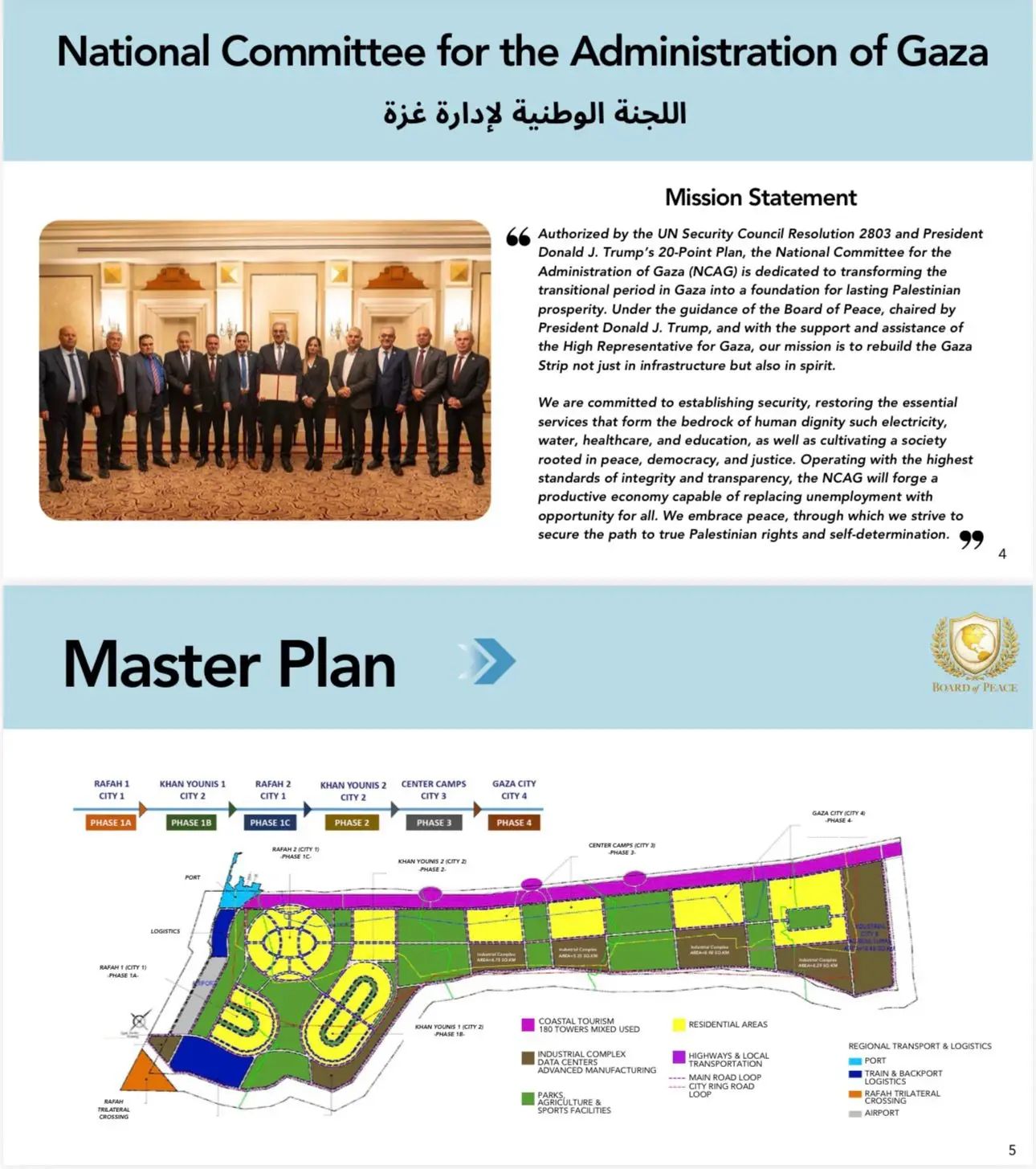
The reconstruction will move geographically from south to north in three distinct stages:
The first stage focuses on Rafah and Khan Yunis, expected to take between two and three years. This phase involves establishing logistics zones, a three-way border crossing, and the first permanent housing complexes. It also includes the massive task of clearing approximately 60 million tons of rubble. In Khan Yunis, the plan calls for a significant expansion of residential areas and light industry.
The second stage moves to the central camps, where the focus will shift to building educational institutions, vocational training centers, and public parks. This phase is designed to transition the local population away from a donor-dependent economy and toward productive labor.
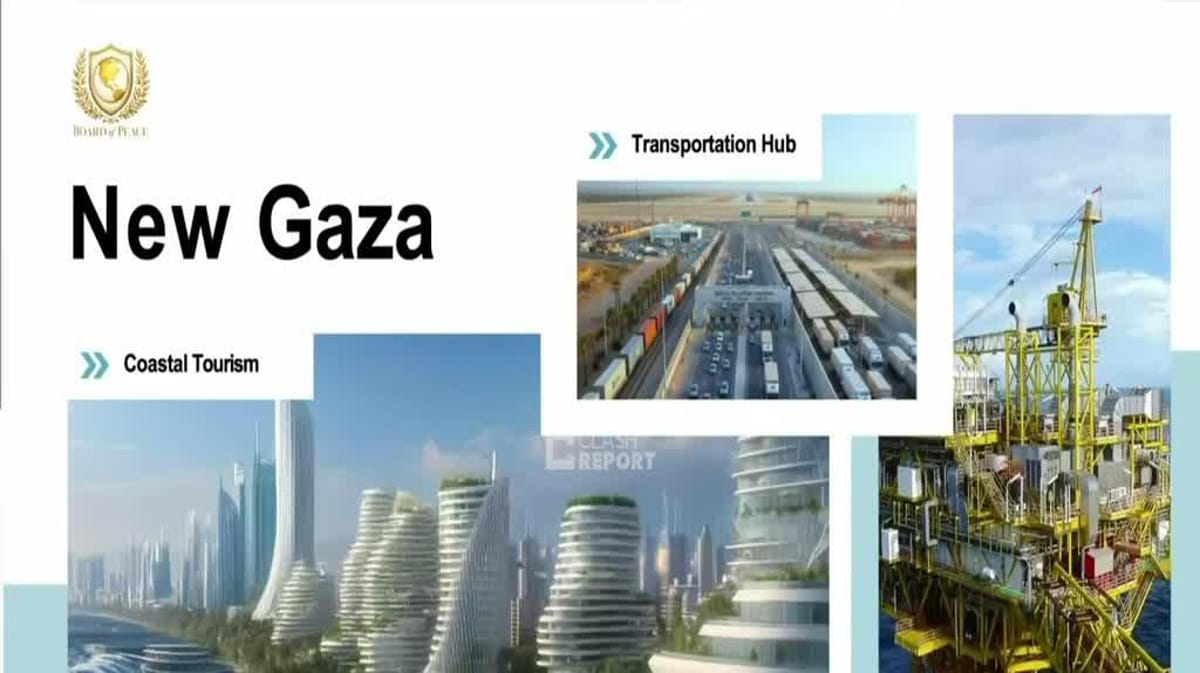
The final and most complex stage is the rebuilding of Gaza City. This terminal phase is planned for after security and civilian governance have stabilized in the south and center. The vision for Gaza City includes high-rise towers, advanced employment centers, and cultural institutions. Alongside urban development, the broader plan envisions a free trade zone with preferential customs arrangements, aiming to flip the current economic reality where 85% of the GDP relies on foreign aid.
A Call for Regional Calm
Despite the ambitious nature of the 2035 goals, Kushner closed his presentation at Davos with a plea for immediate diplomatic restraint. Addressing the heated rhetoric between various regional players, he urged all parties to stop the verbal escalations. "To the Israelis, the Palestinians, and the regional players: I see many accusations and verbal escalation, Israelis against Turkey, others against Qatar. Calm down for 30 days. The war is over," Kushner said. He argued that if the process is allowed to work without interference, there is a genuine opportunity to open a new chapter of security and dignity for both peoples.