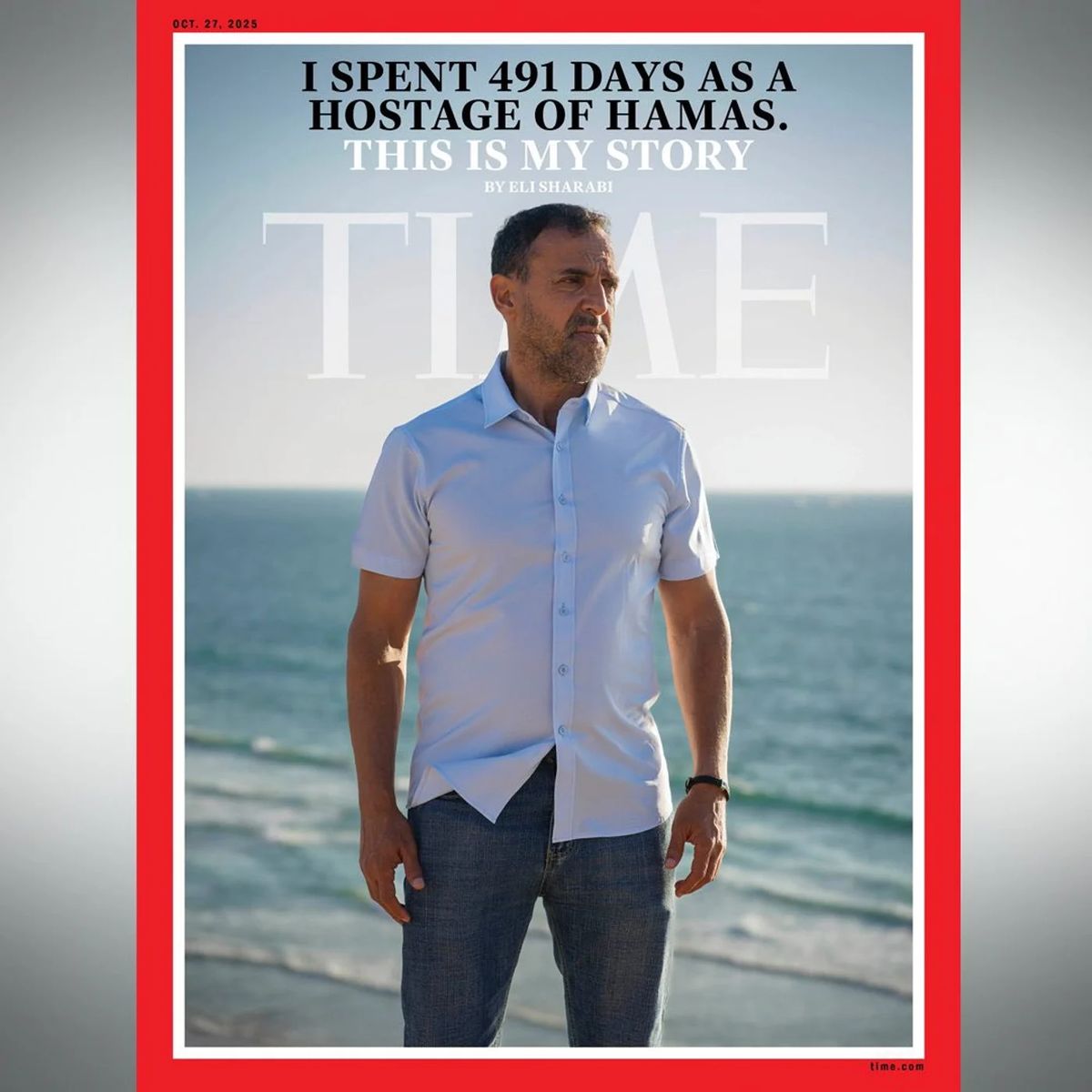
Eli Sharabi, who was abducted from his home in Kibbutz Be’eri during the October 7 Hamas attack, has become a global symbol of survival after appearing on the cover of TIME magazine’s October 2025 issue. The feature marks two years since the assault and coincides with the publication of Sharabi’s memoir, “Kidnapped,” one of the first full-length testimonies from hostages released after October 7.
Sharabi, 52, spent 491 days in captivity in Gaza after Hamas gunmen stormed his home, shot the family dog, and forced him, his wife Lianne, and daughters Noya (16) and Yael (13) into their shelter before setting the house ablaze. He was separated from his family within hours. Lianne, Noya, and Yael were later confirmed killed; his brother Yossi also died in captivity.
TIME published excerpts from the book describing Sharabi’s arrival in Gaza: a mob beating him as he was dragged from a vehicle before militants whisked him into a mosque, marking the beginning of his imprisonment. He recounts being led down a 30-meter shaft into Hamas’s tunnel network, fearing “at any moment the trapdoor would close above me.” The underground facilities were outfitted for living but plagued by hunger, filth, and extreme conditions.
Despite the horrors, Sharabi and fellow hostages drew strength from Jewish tradition. “I’m not a religious man,” he writes, “but these rituals gave me power.” Every Friday night they performed Kiddush over a cup of water. Sharabi would sing “Eishet Chayil,” closing his eyes and thinking of the women in his life: his mother, sisters, wife, and daughters. “It reminded me why I had to survive, for whom and for what,” he says.
He also reveals that even his February 8, 2025 release was **stage-managed by Hamas**, complete with rehearsals of how to walk, wave, and smile for the cameras. “My only goal,” he writes, “was to do whatever they wanted to ensure my safe release.”
The memoir ends with a powerful scene at the graves of his wife and daughters. “This is the bottom. I’ve seen it, touched it,” he writes. “Now - life.”
Sharabi’s story has sparked worldwide attention, casting a searing light on the human toll of Hamas captivity and the resilience of those who survived it.