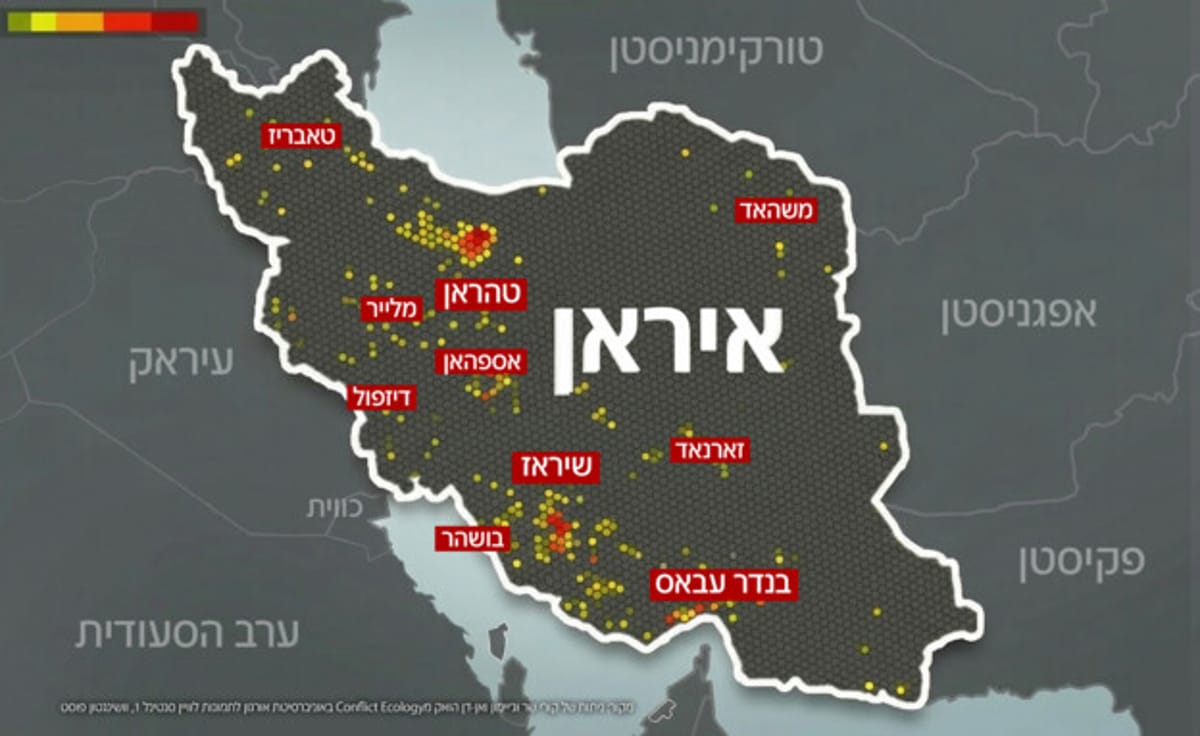
After more than two weeks of intense military operations, a new comprehensive battle map based on satellite imagery has revealed the staggering scale of the devastation across Iran. Analysis of Sentinel-1 satellite data confirms that thousands of targets have been struck from the Iraqi border in the west to the Afghan border in the east. While the fog of war initially obscured the results, it is now clear that the combined might of the Israeli and American air forces has systematically dismantled Iran's strategic infrastructure. U.S. Defense Secretary Pete Hegseth confirmed that the coalition has hit an average of 1,000 targets per day, totaling over 15,000 strikes. This relentless pressure has led to a 90% decrease in the number of Iranian missile and drone attacks compared to the start of the war.
The Three Hubs of Destruction
The satellite analysis highlights three primary zones where the majority of the air campaign has been concentrated: Tehran, Shiraz, and Bandar Abbas. The focus on Tehran is unsurprising, as it serves as the political and symbolic heart of the regime, housing the most sensitive government and security headquarters. The second major hub, Shiraz, is a critical center for Iran's ballistic missile and drone production. Military analysts noted that both production sites and launch pads in the Shiraz area have been leveled to ensure the regime cannot replenish its arsenal. Finally, the strategic port of Bandar Abbas has seen intense activity, with U.S. forces destroying at least 90 Iranian naval vessels and hitting over 40 key structures to ensure the Strait of Hormuz remains open for international shipping.
Shifting the Strategic Landscape
Most of the strikes have occurred in central and western Iran, a deliberate choice driven by the location of the regime’s primary threats against Israel and Iraq. While the regime attempted to move some assets to the eastern desert in recent months, the core of their strategic power remained in the west, where it has now been pulverized. The INSS (Institute for National Security Studies) reports that in addition to the naval losses, six major airports have been hit and hundreds of air defense systems have been taken out. This systematic removal of the regime’s "shield" has left their most important military facilities completely exposed to continued bombardment.
The Human and Material Cost
The toll of the war is becoming increasingly visible. According to the Iranian Ministry of Health, at least 1,444 people have been killed, though military experts believe the number of Revolutionary Guard casualties is likely much higher. The coalition's stated goal is not just to defend against current threats but to methodically dismantle the Iranian regime's ability to project power ever again. As the U.S. Central Command noted in recent briefings, the regime is losing air and naval capability every single day. This "insurance policy" of destruction ensures that on the day after the war, the "Axis of Evil" will find itself without the industrial or military strength to threaten its neighbors or support global terrorism.